Seminole County, Florida
Sell your land in Geneva for cash
Parcel Buyers buys vacant land in Geneva for cash, including five-acre rural tracts that use a private well and a septic system and that are permitted by Seminole County, not a city building department. You get a written, no-obligation cash offer within 24 hours, and closings run through an independent title company, typically in about 10 days, with no fees or commissions.
By Parcel Buyers · · Lot figures from the 2026 Florida property tax roll · How we made this page
Quick answers
- Who buys land for cash in Geneva?
- Parcel Buyers is a direct land buyer that makes written, no-obligation cash offers on vacant lots and acreage in Geneva, Seminole County, usually within 24 hours. Sales close through an independent title company, typically in about 10 days, with no fees or commissions to the seller.
- What did vacant lots in Geneva sell for in 2025?
- In 2025, vacant lots in Geneva sold for a median of $335,000 across 11 arm's-length sales; the middle half sold for $225,000 to $365,000.
- How many vacant lots are in Geneva?
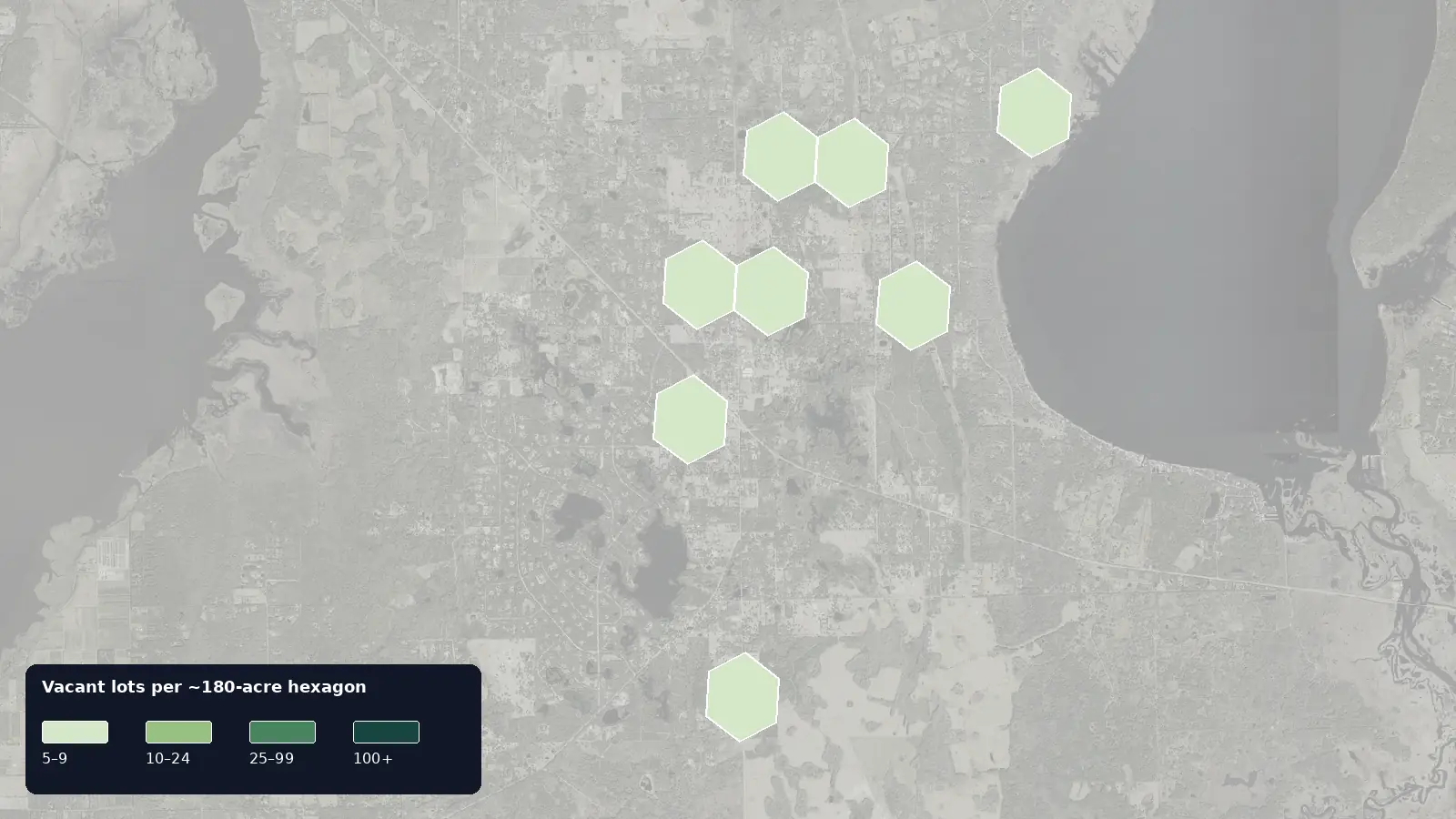
- The 2026 Florida property tax roll lists 169 vacant residential lots in Geneva; 41% are 5-acre ranchettes, and the median lot is 5.00 acre.
- How is a cash offer for land in Geneva set?
- We start from recent sales of similar lots nearby, like the 2025 prices on this page, then adjust for water and sewer, road access, flood zone, lot size and any title issues, and for the time and cost of reselling. You get one written number, not a range.
- How do I know a land buyer in Geneva is legitimate?
- A real buyer closes through an independent, licensed title company and never asks you to pay anything up front. We never charge sellers a fee, deposit or closing-cost advance, and the title company pays you by check or wire at closing.
- Who is buying lots in Geneva?
- In 2025, companies bought 18% of the vacant lots that sold in Geneva. Individuals bought the rest.
- How many vacant lots in Geneva got a home on the tax roll in 2025?
- 11 vacant lots in Geneva changed from vacant-residential use to a home with new-construction evidence on the 2026 preliminary tax roll.
Local data
Geneva land at a glance
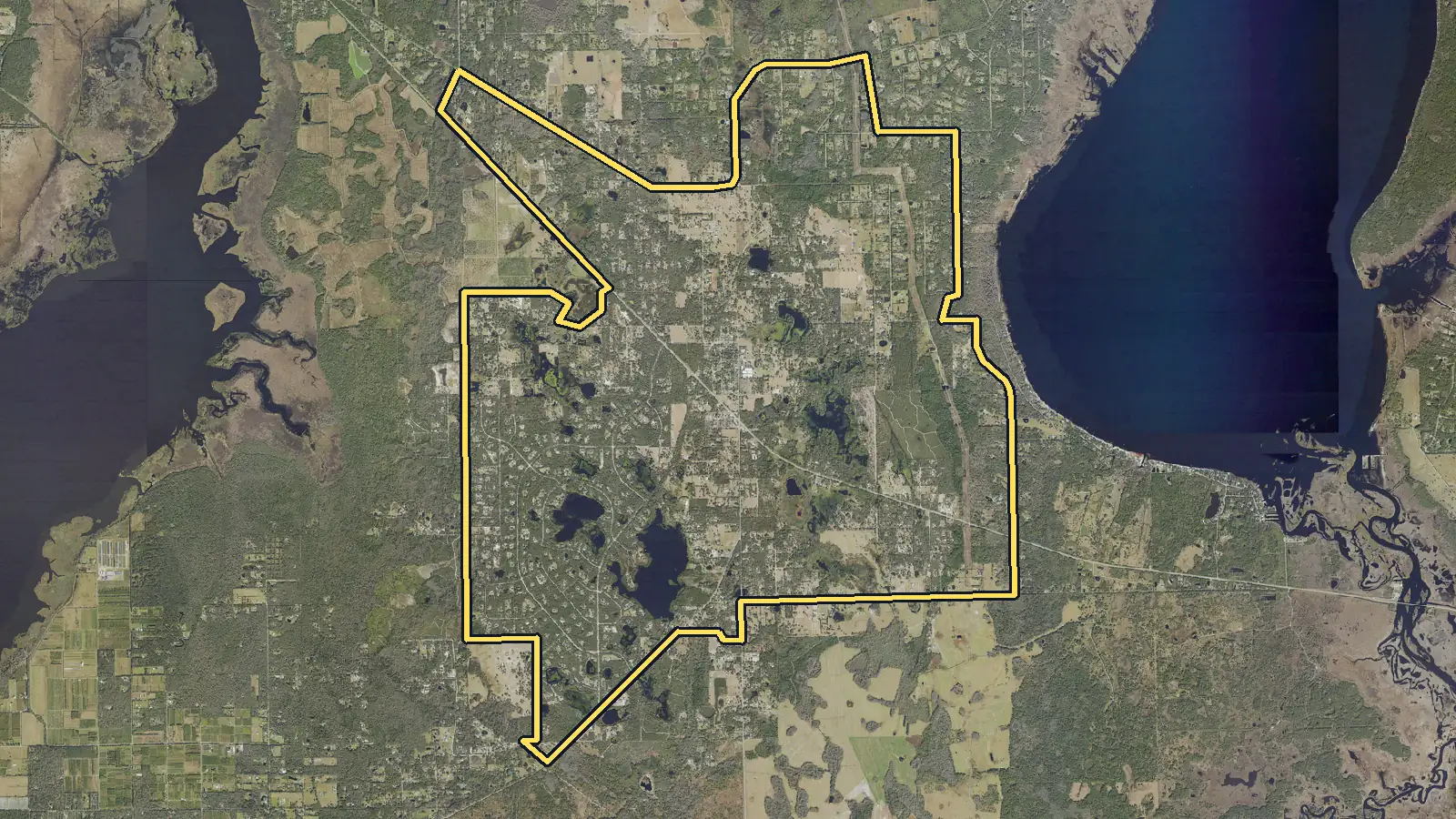
Tax-roll figures cover parcels whose property address city is Geneva in Seminole County. Local rules and services are sourced below.
| Vacant residential lots | 169 parcels classified vacant residential on the 2026 tax roll [1] |
|---|---|
| Most common lot size | 5-acre ranchette (210,000–280,000 sq ft): 41% of vacant lots; next, acreage tract (10+ acres) at 12%. Median lot: 5.00 acre (217,800 sq ft). [1] |
| Typical assessed value | $144,000 median just (market) value for a vacant lot; the middle half fall between $86,400 and $262,500 [1] |
| Recent lot sale prices | $335,000 median across 11 arm's-length sales of vacant lots in Geneva (Jan 2025–Dec 2025); the middle half sold for $225,000–$365,000 [1] |
| Who bought lots in 2025 | Companies made 18% of those purchases; individuals made the rest [1] |
| Owners who live elsewhere | 7% of vacant lots have an owner mailing address outside Florida (most often PA, MO, KY) [1] |
| Census place, not a city | The 2020 Census place file lists Geneva as a census designated place in Seminole County, not an incorporated place. County code officers cover the unincorporated area, and the county building division permits houses there. [2],[3],[7] |
| East Rural Area pattern | The January 2025 fact sheet says the East Rural Area is not planned for urban growth. It is large-lot land served primarily by on-site wells and septic tanks, with some rural roads unpaved or graveled. The 1977 plan encouraged one home per five acres. [4] |
| Rural-5 house limit | Rural-5 allows no more than one dwelling per five net buildable acres, plus agriculture. In the East Rural Area, net acres exclude road rights of way, power-line easements, natural lakes, wetlands, and floodprone land. [5],[6] |
| A-5 size and setbacks | The zoning table revised in October 2026 sets A-5 at a 5-acre minimum and 150 feet of width at the building line. Front and side-street setbacks are 50 feet, the side setback is 10 feet, and the rear setback is 30 feet. [6] |
| Septic fees and well desk | DOH-Seminole issues septic permits. The 2025-2026 fee sheet lists a new septic tank at $425 and a repair at $350. A private potable well is listed at $135. A department brochure assigns private well permits to the county building division. [8],[9],[10] |
| Freshwater lens shape | The lens covers about 26 square miles. At its center, fresh water exists only in the top 200 to 300 feet of the Upper Floridan Aquifer, at 0-50 mg/L chloride. It is surrounded by non-potable water above the 250 mg/L chloride standard. [11] |
| Fire and road millage | The fiscal year 2026/27 hearing packet lists a final Fire/Rescue MSTU rate of 2.7649 mills and a final unincorporated road MSTU rate of 0.1107 mills. Each is a millage rate applied to taxable value. [15] |
| Solid waste is per home | Proposed 2026 rates are $305 for collection option 1 and $293 for option 2, charged per dwelling in the unincorporated area. Agricultural zoning of 2.5 acres or more may apply before April 15 to skip collection, but a disposal fee can remain. [14],[17],[16] |
| Little Big Econ State Forest | Little Big Econ State Forest lies in eastern Seminole County at Geneva. Its 11,696 acres protect wetlands in the Econlockhatchee and St. Johns river floodplains. [19] |
| Vacant lots that got a home on the tax roll in 2025 | 11 recorded with new-construction evidence. [1] |
| 2026 so far (Jan-May) | County-level for Seminole County: 38 recorded vacant-lot sales; median $158,000. [1] |
Pricing
What is a lot in Geneva worth?
In 2025, vacant lots in Geneva sold for a median of $335,000 across 11 arm's-length sales; the middle half sold for $225,000 to $365,000. [1]
These are open-market sale prices. A direct cash offer is usually lower, because a cash buyer closes in days and takes on the time and cost of reselling the lot.
See what similar lots sold for
What moves the price in Geneva
Five-acre rules, not a small city lot, set the build count
Five-acre rules, not a small city lot, set the build count. The usual vacant tract is a 5-acre ranchette, median 5.00 acres (217,800 square feet), about 41% of the vacant mix. Policy FLU 3.5.2 caps Rural-5 at one dwelling per five net buildable acres. In the East Rural Area, net acres leave out road rights of way, power-line easements, lakes, wetlands, and floodprone ground, so a wet corner does not add a house. The October 2026 zoning table sets A-5 at 5 acres and 150 feet wide, with a 50-foot front yard, a 10-foot side yard, and a 30-foot rear yard. A cluster may use smaller lots only if half the site stays open and no lot falls under one-half acre. Middle assessments run $86,400–$262,500, median $144,000. That is not a sale price. In 2025, 11 vacant-land sales had a median of $335,000 ($225,000–$365,000). [5],[6],[1]
The rural plan relies primarily on wells and septic
Wells and septic are the planned service, not a county main. The January 2025 East Rural Area fact sheet describes large-lot homes served primarily by on-site wells and septic tanks, including where a road is still unpaved or graveled. Policies FLU 3.2.8 and FLU 3.2.9 keep wells and septic tanks as the service outside the urban area, and they bar central water or sewer on new development outside an adopted central service area. A house on septic needs a health-department septic permit or a contingency letter before the county issues the permit, and new work off Seminole County Utilities needs a utility letter. The 2025-2026 fee sheet prices a new septic tank at $425 and a repair at $350. It lists a private potable well at $135, while a brochure sends private well permits to the county building division. On an unpaved road, the finished floor must allow for a future paved height. [4],[5],[7],[8],[9],[10],[18]
County policy protects the Geneva freshwater lens
County policy protects the lens by name. Policy FLU 3.3.1 tells the county to seek grants for Geneva infrastructure that supports its historic character and requires East Rural Area standards that protect the Geneva Freshwater Lens, watersheds, and wetlands. A county overview says the lens covers about 26 square miles of the Floridan Aquifer and is protected through Florida Statutes Chapter 373.4597. At the center of the lens, fresh water exists only in the top 200 to 300 feet of the Upper Floridan Aquifer, at 0-50 mg/L chloride. The lens is surrounded by non-potable water above the 250 mg/L chloride standard. Lake Harney and the St. Johns River bound it on the north and east. Policy CON 1.8 requires development to show that groundwater withdrawals will not harm the lens, and has the county work with the water district on whether a groundwater model is needed to review well permits. [5],[11],[12]
Flood rules and unincorporated rates are separate checks
The county flood page names Lake Harney and the St. Johns River among low-lying places that flood when water rises, and any development in the floodplain needs a building permit. The county's current flood map took effect September 28, 2007. A special flood hazard area has a 1 percent chance of flooding in a given year. If work reaches 50 percent of a building's market value, it is a substantial improvement, and the living area typically must rise one foot above base flood elevation. The fiscal year 2026/27 packet lists a final Fire/Rescue MSTU of 2.7649 mills and a final unincorporated road MSTU of 0.1107 mills. Proposed 2026 solid-waste collection is $305 for option 1 and $293 for option 2, per dwelling. [13],[15],[14],[17]
Common situations
Selling land in Geneva in these situations
A vacant tract with no county water or sewer can still be sold
A vacant tract with no county water or sewer can still be sold. East Rural Area policy expects individual wells and septic tanks, and it tells new projects outside an adopted central service area not to draw central water or sewer into the design. A missing main or a gravel road is a site fact, not a hole in the deed. Parcel Buyers buys vacant land for cash in that condition, including land with no water, sewer, or road work. Utilities, access, and title are checked before an offer. The only contingency is a land inspection, and a failed inspection costs the seller nothing. A later house still needs the county packet: a septic permit or contingency letter if the lot stays on septic, and a utility letter when the project is not on county utilities. The $425 new-septic fee and the $135 private-well line are builder costs, not a charge to sell. [5],[7],[9]
Holding an empty tract means millage, not a flat village fee
Holding an empty tract means millage, not a flat village fee. In the fiscal year 2026/27 hearing packet, the final Fire/Rescue MSTU is 2.7649 mills, the final unincorporated road MSTU is 0.1107 mills, and countywide millage is 5.3751 mills. Each line follows taxable value, and none is a district drawn only around this community. Solid waste is per dwelling. Proposed 2026 rates are $305 for collection option 1 and $293 for option 2. A new house in the unincorporated area pays a solid-waste fee when the building permit is issued, based on option 1, and collection starts after the certificate of occupancy. Raw acreage with no house is not on that path by itself. Agricultural zoning of 2.5 acres or more may file before April 15 for a collection exemption. If granted, a disposal fee remains. The rate sheet shows $70 on the collection-exempt line. [15],[14],[17],[16]
A river-edge tract and an upland tract are not the same risk
A river-edge tract and an upland tract are not the same risk. The lens overview places Lake Harney and the St. Johns River on the north and east, and the county flood page names those waters among low-lying areas that flood from rising water. A special flood hazard area is the 1 percent annual-chance flood. Work in the floodplain needs a building permit so a new house is built above that hazard. A substantial improvement, at 50 percent of market value, typically means lifting the living area one foot above base flood elevation. A lot that stayed dry in a recent storm can still flood later. Do not price a whole tract as if every corner shared one zone. Sellers can sign electronically, close by mail, and be paid by check or wire. [11],[13]
Older parcels and family subdivisions have specific rules
93% of owners on these vacant tracts have a Florida mailing address, 7% have an address in another state, and 0% have a foreign address. Policy FLU 3.2.12 allows lots and parcels of record from before the 1991 comprehensive plan to be built on despite current site-area minimums when other development rules are met. It gives Suburban Estates its own legally-created-before-1991 test, and its parcel-of-record definition includes a subdivision plat, Five-Acre Resolution, or subdivision waiver approved before the plan. For Rural-5 and Rural-10 family subdivisions, the policy allows up to three immediate-family primary residences on at least 10 acres, with no new lot smaller than 1 acre. Those rules require parcel-specific review. [5],[1]
Step by step
How do I sell my land in Geneva?
From your first message to money in hand, with nothing left out. Requesting an offer costs nothing and commits you to nothing.
See every detail of the process-
Tell us about your land
Fill out the short form (about 60 seconds) or email us. A land specialist reaches out to confirm the details, usually the same business day.
-
Get your cash offer within 24 hours
We review the property and send a written, no-obligation cash offer within 24 hours. It is a real number, not a range. Take it or leave it, with no pressure either way.
-
Sign electronically
If you accept, everyone signs the purchase agreement electronically. There is nothing to print or mail at this stage.
-
We inspect, the title company verifies
Our team inspects the land and an independent title company runs a title search for liens or taxes owed. If the land does not pass inspection, you are never charged anything.
-
Close and get paid
The title company prepares the closing documents for notarization and issues your funds by standard check, overnight check, or wire transfer. A typical sale closes in 10 days.
Questions
Selling land in Geneva: common questions
Can I sell my vacant land in Geneva if it has no county water or sewer?
Yes. Vacant acreage here is planned around a private well and a septic tank, not a county water main. East Rural Area policy says new development outside an adopted central service area shall not be designed or built with central water or sewer. A missing tap does not stop a deed. A later house permit, if the lot stays on septic, needs a health-department septic permit or a contingency letter before the county will issue it. The 2025-2026 fee sheet lists $425 for a new septic tank. The private-well line on that sheet is $135, and a department brochure sends private well permits to the county building division.
Who issues the building permit and handles code cases on this land?
Seminole County does, because this is not a city. The Census Bureau lists it as a census designated place, not an incorporated place. The county building division takes the house-permit packet, including the utility letter when the project is not on county utilities and the septic paper when the lot is on a tank. Since October 1, 2025, code enforcement has sat in Development Services, and those officers cover the unincorporated area. A city hall does not zone this acreage or write the rural-lot rules.
What does a new septic system or a private well cost to permit?
The health department's 2025-2026 fee sheet lists a new septic tank at $425 and a repair permit at $350. A re-inspection is $100, and abandoning a system is $125. The same sheet lists a private potable well and private irrigation well at $135, well abandonment at $45, and a non-potable irrigation well at $80. DOH-Seminole issues and inspects the septic permit. Its brochure assigns private well permitting to the Seminole County Building Department and keeps limited-use commercial and community wells at the health department. Those are permit fees, not the cost of the tank, the drainfield, or the driller.
What do I pay each year to hold an empty tract?
You pay millage on taxable value, not a flat fee invented for this community. The fiscal year 2026/27 hearing packet lists a final Fire/Rescue MSTU of 2.7649 mills, covering unincorporated land, a final unincorporated road MSTU of 0.1107 mills, and a countywide rate of 5.3751 mills. Solid waste is per dwelling: proposed 2026 collection is $305 with yard waste and $293 without it. A new house pays a solid-waste fee at building-permit time. Agricultural zoning of 2.5 acres or more may apply before April 15 to drop collection, and an approved exemption still leaves a disposal fee. The rate sheet shows $70 for collection-exempt service.
Is every acre in Geneva inside a flood zone?
No. Flood rules follow the map on each tract, not the place name. The county flood page names Lake Harney and the St. Johns River among low-lying areas that flood from rising water, and those waters also bound the freshwater lens on the north and east. A special flood hazard area is the 1 percent annual-chance flood. Work in the floodplain needs a county building permit. The county's current flood map took effect September 28, 2007. A lot that stayed dry in the last storm can still flood later, so the map, not a neighbor's story, is the record.
Can an older lot that is under five acres still be a homesite?
Sometimes. Policy FLU 3.2.12 allows pre-1991 lots and parcels of record to be built on despite current site-area minimums when all other development rules are met. Suburban Estates has a separate test for residentially zoned lots legally created before 1991. The parcel-of-record definition includes a subdivision plat, Five-Acre Resolution, or subdivision waiver approved before the plan. Current A-5 zoning starts at 5 acres and 150 feet wide, and Rural-5 caps density at one dwelling per five net buildable acres. Wetland, floodplain, septic, and other development rules still apply.
Owner resources
Guides for your situation
- How to Sell Land in a Flood Zone
Flood-zone land can be sellable and sometimes buildable. A FEMA flood zone describes mapped risk; it is not a building permit. The buyer must verify the current effective Flood Insurance Rate Map and any map changes, then ask the local floodplain administrator what elevation, floodway, coastal, permit, and design rules apply.[1][2][4] Vacant land itself is not covered by an NFIP policy; flood insurance covers qualifying buildings and contents, not land value.[5][6]
- Can You Build on a Vacant Lot?
Maybe. A vacant lot is buildable only if the proposed use fits the rules that apply to that parcel and the site can satisfy access, utility, environmental, and permit requirements. Start with the local planning or zoning office, confirm that the parcel is a legal lot, and get a written parcel-specific answer. A zoning label or tax parcel number alone is not approval to build.[1][2]
- Water, Sewer, Septic, and Wells on Vacant Lots
A vacant lot may use public water, a private well, public sewer, or an onsite septic system, but nearby pipes and neighboring homes do not prove what the parcel can use. Ask each utility for a written availability decision, ask the permitting office whether connection is mandatory, and obtain a qualified site evaluation before saying septic will fit. Keep every response, permit, plan, test, and receipt.
More places in Seminole County
Your written offer
Get your cash offer
Four short steps, about 60 seconds. We review your property and send a written, no-obligation cash offer within 24 hours. You can take it or leave it.
What happens after you send this
- A land specialist reaches out, usually the same business day, to confirm the details.
- You get a written cash offer within 24 hours: a real number, not a range.
- You decide. Requesting an offer costs nothing and commits you to nothing.
You will never be asked to pay us anything. No deposit, no processing fee, no closing-cost advance.
Nearby areas we buy
- Seminole County
6,159 vacant lots countywide
- Sanford
1,500 vacant lots · 2025 median lot sale $50,000
- Oviedo
278 vacant lots
- Osteen
1,078 vacant lots · 2025 median lot sale $232,500
How we made this page
Parcel Buyers is a land-buying company based in Florida. We buy vacant land directly from owners and publish these local pages so owners can see what land in their area is doing before they sell, to us or anyone else. We count the tax-roll figures ourselves from state data, take local rules and fees from the official sources listed below, and use AI tools to help research and draft the text. Every number links to its source, and we update the page when the data changes.
Method and sources
Tax-roll figures cover parcels whose property address city is Geneva. Source [1] is our own count of the Florida Department of Revenue's 2026 preliminary property tax roll: "vacant residential" means land-use code 000; lot sizes use the land square footage on the roll; values are the county property appraiser's just (market) value as of January 1, 2026; sale prices count only arm's-length sales of a single lot that was vacant when it sold and was still vacant on January 1, 2026 (bulk and multi-parcel deeds removed). Page updated October 26, 2026. Exact cross-roll matching found that 5.3% of current vacant lots lacked a unique prior-roll match; parcel splits, combinations, renumbering, and missing IDs are not guessed. The reviewed 2026 recorded-sale window runs from January through May 2026; unreviewed recent sales are excluded. County-level figures are used on this place page.
- [1] Florida Department of Revenue (data); Parcel Buyers (analysis), Parcel Buyers analysis of the 2026 preliminary Name-Address-Legal (NAL) property tax roll (accessed 2026-10-03)
- [2] U.S. Census Bureau, 2020 Census National Place Codes (accessed 2026-09-30)
- [3] Seminole County, Code Enforcement (accessed 2026-09-30)
- [4] Seminole County, East Rural Area Fact Sheet, January 2025 (accessed 2026-09-30)
- [5] Seminole County, Comprehensive Plan Future Land Use Goal 3 (accessed 2026-09-30)
- [6] Seminole County, Table of Zoning District Regulations, updated October 2026 (accessed 2026-10-26)
- [7] Seminole County Building Division, Residential Permit Submittal Guide, revised September 14, 2026 (accessed 2026-10-26)
- [8] Florida Department of Health in Seminole County, Onsite Sewage and Disposal (accessed 2026-09-30)
- [9] Florida Department of Health in Seminole County, Environmental Public Health Fee Schedule 2025-2026 (accessed 2026-09-30)
- [10] Florida Department of Health in Seminole County, Environmental Public Health Services Brochure (accessed 2026-09-30)
- [11] Seminole County, Geneva Lens Water Quality and Levels Monitoring Overview (accessed 2026-09-30)
- [12] Seminole County, Comprehensive Plan Conservation Element (accessed 2026-09-30)
- [13] Seminole County, Flood-Prone Areas (accessed 2026-09-30)
- [14] Seminole County, Proposed Non-Ad Valorem Assessment Rates 2026 (accessed 2026-09-30)
- [15] Seminole County, FY 2026/27 Second Public Hearing Budget Document (accessed 2026-09-30)
- [16] Seminole County, MSBU Helpful Information (accessed 2026-09-30)
- [17] Seminole County, MSBU Public Services Offered (accessed 2026-09-30)
- [18] Seminole County, Lot Grading and Drainage Improvement Guidelines (accessed 2026-09-30)
- [19] Florida Department of Agriculture and Consumer Services, Little Big Econ State Forest (accessed 2026-10-02)