Miami-Dade County, Florida
Sell your land in Miami for cash
Parcel Buyers buys vacant lots in Miami for cash, including small city lots where Miami 21 zoning, utilities and flood rules can change the plan. You get a written, no-obligation cash offer within 24 hours, and closings run through an independent title company, typically in about 10 days, with no fees or commissions.
By Parcel Buyers · · Lot figures from the 2026 Florida property tax roll · How we made this page
Quick answers
- Who buys land for cash in Miami?
- Parcel Buyers is a direct land buyer that makes written, no-obligation cash offers on vacant lots and acreage in Miami, Miami-Dade County, usually within 24 hours. Sales close through an independent title company, typically in about 10 days, with no fees or commissions to the seller.
- What did vacant lots in Miami sell for in 2025?
- In 2025, vacant lots in Miami sold for a median of $477,500 across 24 arm's-length sales; the middle half sold for $320,000 to $762,500.
- How many vacant lots are in Miami?
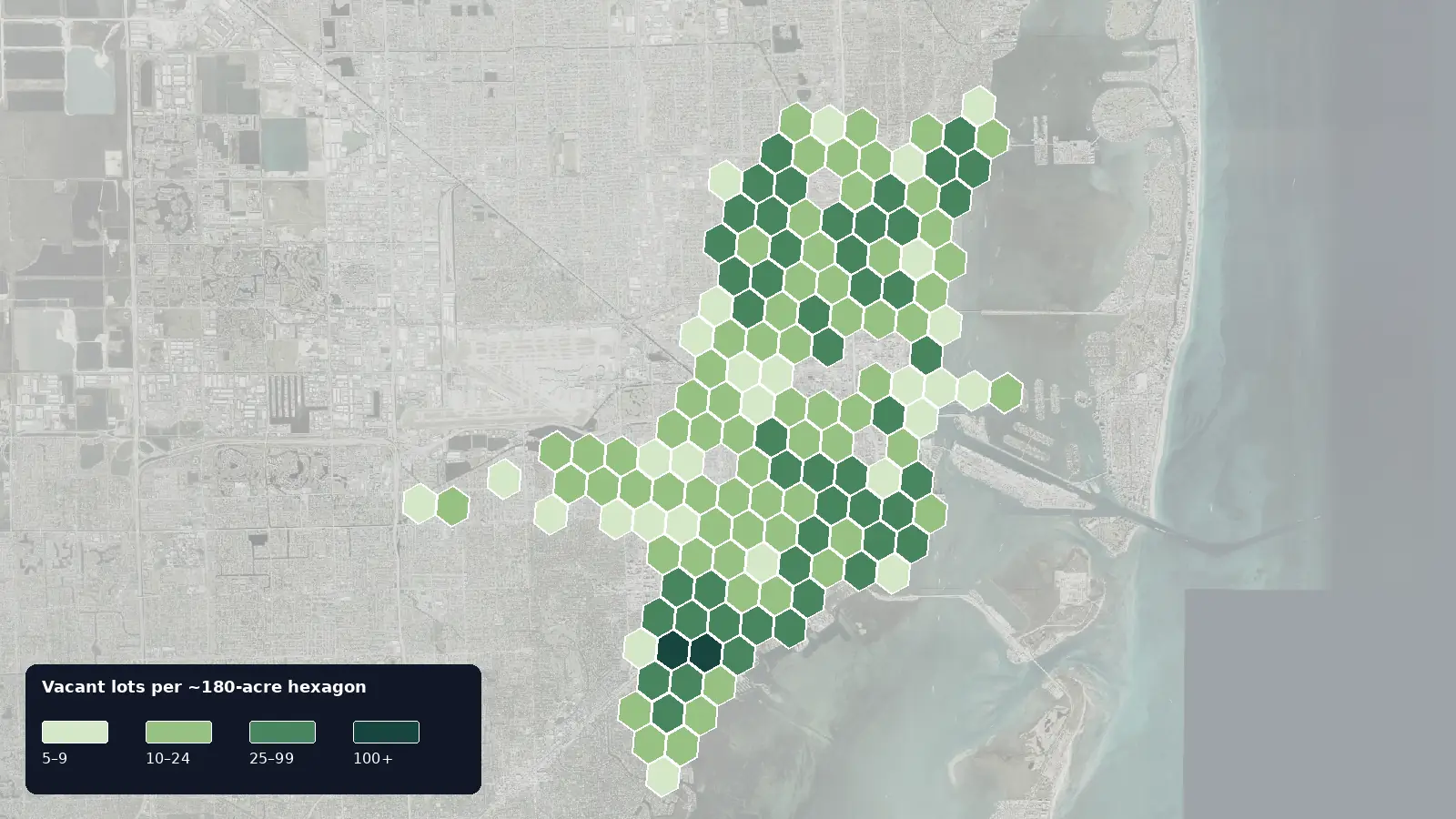
- The 2026 Florida property tax roll lists 3,872 vacant residential lots in Miami; 38% are patio-home lots, and the median lot is 0.13 acre.
- How is a cash offer for land in Miami set?
- We start from recent sales of similar lots nearby, like the 2025 prices on this page, then adjust for water and sewer, road access, flood zone, lot size and any title issues, and for the time and cost of reselling. You get one written number, not a range.
- How do I know a land buyer in Miami is legitimate?
- A real buyer closes through an independent, licensed title company and never asks you to pay anything up front. We never charge sellers a fee, deposit or closing-cost advance, and the title company pays you by check or wire at closing.
- Who is buying lots in Miami?
- In 2025, companies bought 71% of the vacant lots that sold in Miami, including 17% bought by homebuilders. Individuals bought the rest.
- Are vacant lots in Miami in a FEMA high-risk flood zone?
- About 26.5% of vacant lots in Miami have their center point in a FEMA high-risk flood zone (effective maps dated September 11, 2009). This is map screening, not a determination; check FEMA's Map Service Center for your parcel.
- How many vacant lots in Miami got a home on the tax roll in 2025?
- 215 vacant lots in Miami changed from vacant-residential use to a home with new-construction evidence on the 2026 preliminary tax roll.
Local data
Miami land at a glance
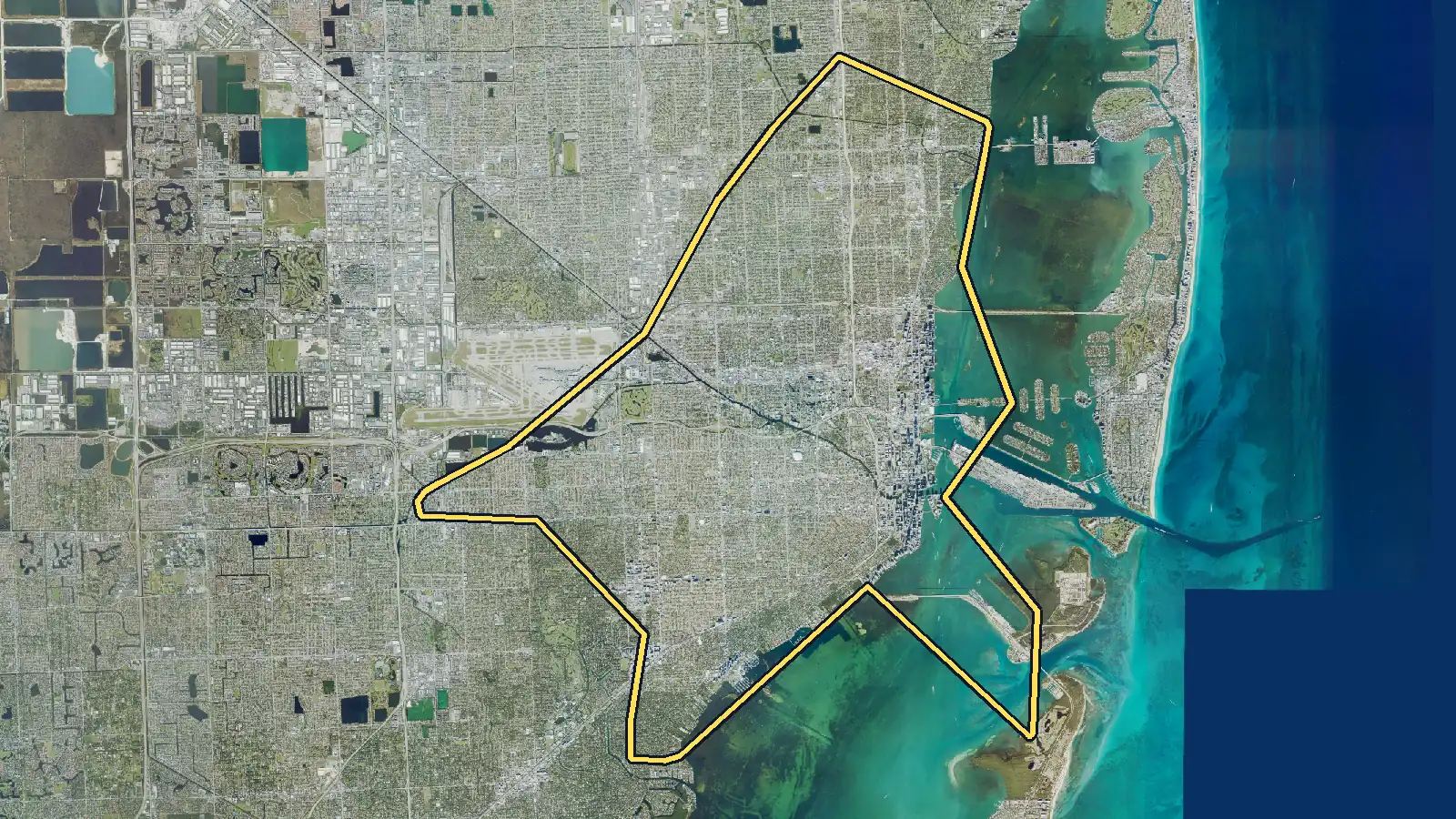
Tax-roll figures cover parcels whose property address city is Miami, plus lots with no street address that sit in neighborhoods, census block groups or survey sections where nearly all addressed parcels are Miami in Miami-Dade County. Local rules and services are sourced below.
| Vacant residential lots | 3,872 parcels classified vacant residential on the 2026 tax roll [1] |
|---|---|
| Most common lot size | Patio-home lot (5,000–7,000 sq ft): 38% of vacant lots; next, micro lot at 24%. Median lot: 0.13 acre (5,800 sq ft). [1] |
| Typical assessed value | $298,200 median just (market) value for a vacant lot; the middle half fall between $175,600 and $637,500 [1] |
| Recent lot sale prices | $477,500 median across 24 arm's-length sales of vacant lots in Miami (Jan 2025–Dec 2025); the middle half sold for $320,000–$762,500 [1] |
| Who bought lots in 2025 | Companies made 71% of those purchases, including 17% by homebuilders; individuals made the rest [1] |
| Owners who live elsewhere | 3% of vacant lots have an owner mailing address outside Florida (most often NY, VA, NJ) [1] |
| Postal city is not the permit jurisdiction | This page follows the Miami property-address label and also includes unaddressed lots inferred from their local area; it is not limited to City of Miami boundaries. County e-Maps can locate a parcel by address or folio and identify its municipality. [2] |
| City permits use ePlan Review | For a parcel inside city limits, the Planning and Zoning office and Building Department use the ePlan Review system. Building permits are required to construct, enlarge, alter, move, demolish or change a structure's occupancy. [3] |
| Miami 21 controls city development | Miami 21 is the city's zoning ordinance. The city map can show a parcel's transect zone, zoning rules, districts, land use and owner information before a buyer assumes that a plan fits the lot. [3] |
| Water and sewer need a connection review | Miami-Dade Water and Sewer maintains over 8,500 miles of water lines and about 4,100 miles of sewer lines. It reviews plans, connection points, service agreements, new mains and meters; a nearby line is not a confirmed service commitment. [5] |
| New septic systems face 2022 rules | Miami-Dade adopted Ordinance 22-83 on July 7, 2022. Its DERM Water and Wastewater Division reviews and approves new and total-replacement septic systems, including the water-supply question of public water versus an onsite potable well. [6] |
| Vacant city lots have no SWU charge | Inside City limits, the published stormwater procedure gives vacant property zero equivalent residential units and no stormwater fee. Developed lots pay $3.50 monthly per ERU; one ERU equals 1,191 square feet of impervious area. [7] |
| Flood zone is parcel-specific | Miami-Dade's flood map tool shows FEMA zones by address. Zone AE has flood depths over three feet, while coastal Zone VE adds wave hazards; both have mandatory flood-insurance requirements. The county says the map or hotline confirms the official designation. [8] |
| Miami International Airport | Miami International Airport's official rental-car directions send downtown traffic by Le Jeune Road (SR 953), SR 836 and I-95. Those are the documented road links between the airport and downtown. [9] |
| Vacant lots that got a home on the tax roll in 2025 | 215 recorded with new-construction evidence. [1] |
| Years of lot supply at the 2025 building pace | 18.0 years; simple ratio, not a forecast. [1] |
| Owner-type shares | Individuals 66.3%; companies 32.1%; trusts 0.1%; estates/heirs 0.6%; government/associations 0.9%. [1] |
| 2026 so far (Jan-May) | County-level for Miami-Dade County: 12 recorded vacant-lot sales; median $1,775,000. [1] |
| FEMA high-risk flood-zone screen | About 26.5% of vacant lots in Miami have their center point in a FEMA high-risk flood zone (effective maps dated September 11, 2009). This is map screening, not a determination; check FEMA's Map Service Center for your parcel. |
| Springs BMAP small-lot screen | About 0% of located vacant lots in Miami are 1 acre or less and have their center point in an adopted Florida springs BMAP. |
Pricing
What is a lot in Miami worth?
In 2025, vacant lots in Miami sold for a median of $477,500 across 24 arm's-length sales; the middle half sold for $320,000 to $762,500. [1]
These are open-market sale prices. A direct cash offer is usually lower, because a cash buyer closes in days and takes on the time and cost of reselling the lot.
See what similar lots sold for
What moves the price in Miami
The transect code can change a build plan
Zoning can change the usable value of a vacant lot. Inside city limits, Miami 21 is the zoning ordinance, and the city's property map can show a parcel's transect zone, zoning rules, districts, land use and owner information. A project needing a warrant, waiver, exception or variance may require special-permit review. The July 2025 ePlan guide also says a pre-application meeting is required or recommended for Miami 21 special permits, rezonings, comprehensive-plan amendments and Special Area Plan amendments. That is why the same-size patio-home lots can support different plans and offers. [3]
Water, sewer and septic can alter the budget
Utility status can alter a builder's budget before construction starts. Miami-Dade Water and Sewer maintains more than 8,500 miles of water pipe and about 4,100 miles of sewer pipe, but it still reviews each development's connection point, service agreement, new mains and meters. Where public sewer is not confirmed and septic is proposed, Miami-Dade's 2022 septic ordinance requires DERM's Water and Wastewater Division to review and approve a new or total-replacement system. The property may also need an onsite potable-well decision. Do not treat a postal address or a line near the street as proof of a buildable utility plan. [5],[6]
Flood mapping affects design and insurance
Flood risk affects design and financing. Miami-Dade's FEMA map service lets an owner search the address, but the zone must be confirmed for the actual parcel. The county describes Zone AE as an area with flood depths greater than three feet and Zone VE as a coastal area with added storm-wave hazards; mandatory flood-insurance requirements apply to both. Its preliminary county maps were published in 2021 and are not currently effective, so use the current digital FIRM layer or request confirmation rather than pricing a lot from a general neighborhood label. [8]
Sales provide a starting point, not a promise
Recent lot sales provide a starting point, not a cash-offer promise. The 2025 tax-roll set contains 24 arm's-length, single-parcel vacant-lot sales in this page's address-city scope, with a median sale price of $477,500 and middle half from $320,000–$762,500. The roll's median just value is $298,200, which is a tax value rather than a sale price. Zoning jurisdiction, entitlement work, utility connection, septic approval, flood design and access can move a particular lot far above or below that starting point. [1]
Common situations
Selling land in Miami in these situations
You inherited a lot and do not know its rules
Yes. You can sell an inherited lot without first solving every construction question. Start with the folio and any title documents you have. The City of Miami's online system has a zoning-verification request that identifies a property's zoning designation, permitted uses and consistency with its future-land-use designation. That process is relevant only if the parcel is inside city limits; Miami-Dade's map can help identify the municipality first. We check utilities, access and title before offering, and closing runs through an independent, licensed title company. [3],[2]
You own an empty lot with no utility account
Yes. An empty lot can still be sold when it has no active water or sewer account. For a parcel inside the City of Miami, the city's published stormwater procedure says there is no stormwater utility fee on a vacant property because it has zero ERUs. That does not prove public water or sewer is available for a future building. Miami-Dade Water and Sewer reviews actual connection points, service agreements, new mains and meters. We buy vacant land as it is, including lots with no water, sewer or road work; utilities and site constraints affect the offer. [7],[5]
You live outside Florida
Yes. You can sell from outside Florida. 3% of vacant-lot owners in this Miami-address scope have mailing addresses outside Florida. Remote sales can use electronic signing and a mail-away closing through an independent, licensed title company. Closing is typically about 10 days after the purchase agreement is signed, depending on title. Liens or back taxes can be paid from sale proceeds at closing with the seller's consent. [1]
Step by step
How do I sell my land in Miami?
From your first message to money in hand, with nothing left out. Requesting an offer costs nothing and commits you to nothing.
See every detail of the process-
Tell us about your land
Fill out the short form (about 60 seconds) or email us. A land specialist reaches out to confirm the details, usually the same business day.
-
Get your cash offer within 24 hours
We review the property and send a written, no-obligation cash offer within 24 hours. It is a real number, not a range. Take it or leave it, with no pressure either way.
-
Sign electronically
If you accept, everyone signs the purchase agreement electronically. There is nothing to print or mail at this stage.
-
We inspect, the title company verifies
Our team inspects the land and an independent title company runs a title search for liens or taxes owed. If the land does not pass inspection, you are never charged anything.
-
Close and get paid
The title company prepares the closing documents for notarization and issues your funds by standard check, overnight check, or wire transfer. A typical sale closes in 10 days.
Questions
Selling land in Miami: common questions
Is my Miami-address lot automatically in the City of Miami?
No. A Miami property address does not by itself establish that the parcel lies in the City of Miami. This page's data uses the property-address city and local-area inference for unaddressed lots, so it can extend beyond one municipal boundary. Miami-Dade e-Maps can locate a parcel by address or folio and identify its municipality. Verify that jurisdiction before using City permit, zoning or stormwater rules.
Can I sell my lot in Miami if it has no water or sewer?
Yes. We buy vacant lots with no water, sewer or road work. Whether a future building can connect is a separate due-diligence question: Miami-Dade Water and Sewer reviews connection points, service agreements, new mains and meters. If a new septic system is proposed instead, the county's Water and Wastewater Division must review and approve it under the 2022 septic ordinance.
Do empty Miami lots pay a stormwater fee?
No, if the parcel is inside the City of Miami and remains vacant. The city's published procedure classifies a vacant property as 100 percent pervious with zero ERUs, so it has no stormwater utility fee. The same procedure lists a $3.50 monthly charge per ERU for developed property. County, municipal and tax-bill charges vary by jurisdiction and parcel.
How do I check flood risk before I sell or build?
Use Miami-Dade's flood-zone map with the property address, then obtain confirmation for the actual parcel when the result matters to insurance or a building plan. FEMA maps show several risk categories. The county identifies AE as moderate-to-high risk with flood depths over three feet and VE as a coastal high-risk zone with wave hazards; both can trigger mandatory flood insurance.
When does Miami require a survey for zoning verification?
It depends on the request. The City requires surveys for zoning-verification requests involving lot subdivisions or setbacks, and it also lists a survey among the documents for nonconformity requests. A basic zoning-designation request has different backup-document requirements.
Owner resources
Guides for your situation
- How to Sell Land During a Divorce
Florida land can be sold during a divorce when the people with authority to convey title sign and the sale follows every applicable agreement and court order. Divorce law may treat land as marital even when only one spouse appears on the deed.[1][2] If ownership, signing authority, or the division of proceeds is unsettled, have a Florida attorney and the closing title company resolve those issues before closing.
- Can You Sell Land With a Lien?
Yes. Land with a lien can often be sold, but signing a deed does not by itself erase a valid claim. The lien may need to be paid, released, discharged, or otherwise resolved under the law that applies. With the seller's consent, an approved payoff can come from sale proceeds at closing. If the balance or lien is wrong, dispute it before closing and require proof of the cure.
- Can You Build on a Vacant Lot?
Maybe. A vacant lot is buildable only if the proposed use fits the rules that apply to that parcel and the site can satisfy access, utility, environmental, and permit requirements. Start with the local planning or zoning office, confirm that the parcel is a legal lot, and get a written parcel-specific answer. A zoning label or tax parcel number alone is not approval to build.[1][2]
More places in Miami-Dade County
Your written offer
Get your cash offer
Four short steps, about 60 seconds. We review your property and send a written, no-obligation cash offer within 24 hours. You can take it or leave it.
What happens after you send this
- A land specialist reaches out, usually the same business day, to confirm the details.
- You get a written cash offer within 24 hours: a real number, not a range.
- You decide. Requesting an offer costs nothing and commits you to nothing.
You will never be asked to pay us anything. No deposit, no processing fee, no closing-cost advance.
Nearby areas we buy
- South Miami
219 vacant lots
- Miami-Dade County
21,112 vacant lots countywide
How we made this page
Parcel Buyers is a land-buying company based in Florida. We buy vacant land directly from owners and publish these local pages so owners can see what land in their area is doing before they sell, to us or anyone else. We count the tax-roll figures ourselves from state data, take local rules and fees from the official sources listed below, and use AI tools to help research and draft the text. Every number links to its source, and we update the page when the data changes.
Method and sources
Tax-roll figures cover parcels whose property address city is Miami, plus lots with no street address that sit in neighborhoods, census block groups or survey sections where nearly all addressed parcels are Miami. Source [1] is our own count of the Florida Department of Revenue's 2026 preliminary property tax roll: "vacant residential" means land-use code 000; lot sizes use the land square footage on the roll; values are the county property appraiser's just (market) value as of January 1, 2026; sale prices count only arm's-length sales of a single lot that was vacant when it sold and was still vacant on January 1, 2026 (bulk and multi-parcel deeds removed). Page updated October 5, 2026. The reviewed 2026 recorded-sale window runs from January through May 2026; unreviewed recent sales are excluded. County-level figures are used on this place page. Flood and springs-BMAP figures screen tax-roll parcel center points, not parcel boundaries. They are aggregate map screens, not flood-zone, insurance, buildability, elevation, septic, or permitting determinations.
- [1] Florida Department of Revenue (data); Parcel Buyers (analysis), Parcel Buyers analysis of the 2026 preliminary Name-Address-Legal (NAL) property tax roll (accessed 2026-10-03)
- [2] Miami-Dade County, Miami-Dade e-Maps (accessed 2026-10-05)
- [3] City of Miami Department of Planning and Office of Zoning, OAS User Guide, July 2025 (accessed 2026-10-05)
- [4] City of Miami, Get a Zoning Verification Letter (accessed 2026-10-05)
- [5] Miami-Dade County, Water and Sewer Department (accessed 2026-10-05)
- [6] Miami-Dade County, Onsite Sewage Treatment and Disposal Systems (accessed 2026-10-05)
- [7] City of Miami Public Works, Procedures and Criteria to Determine Stormwater Utility Fee (accessed 2026-10-05)
- [8] Miami-Dade County, Flood Zone Maps (accessed 2026-10-05)
- [9] Miami-Dade Aviation Department, Rental Car Center driving directions (accessed 2026-10-05)