Miami-Dade County, Florida
Sell your land in Florida City for cash
Parcel Buyers buys vacant land in Florida City for cash, including narrow remnants and residential lots that need zoning, utility or flood review. You get a written, no-obligation cash offer within 24 hours. Closings use an independent title company, typically take about 10 days after signing, and have no seller fees or commissions.
By Parcel Buyers · · Lot figures from the 2026 Florida property tax roll · How we made this page
Quick answers
- Who buys land for cash in Florida City?
- Parcel Buyers is a direct land buyer that makes written, no-obligation cash offers on vacant lots and acreage in Florida City, Miami-Dade County, usually within 24 hours. Sales close through an independent title company, typically in about 10 days, with no fees or commissions to the seller.
- How many vacant lots are in Florida City?
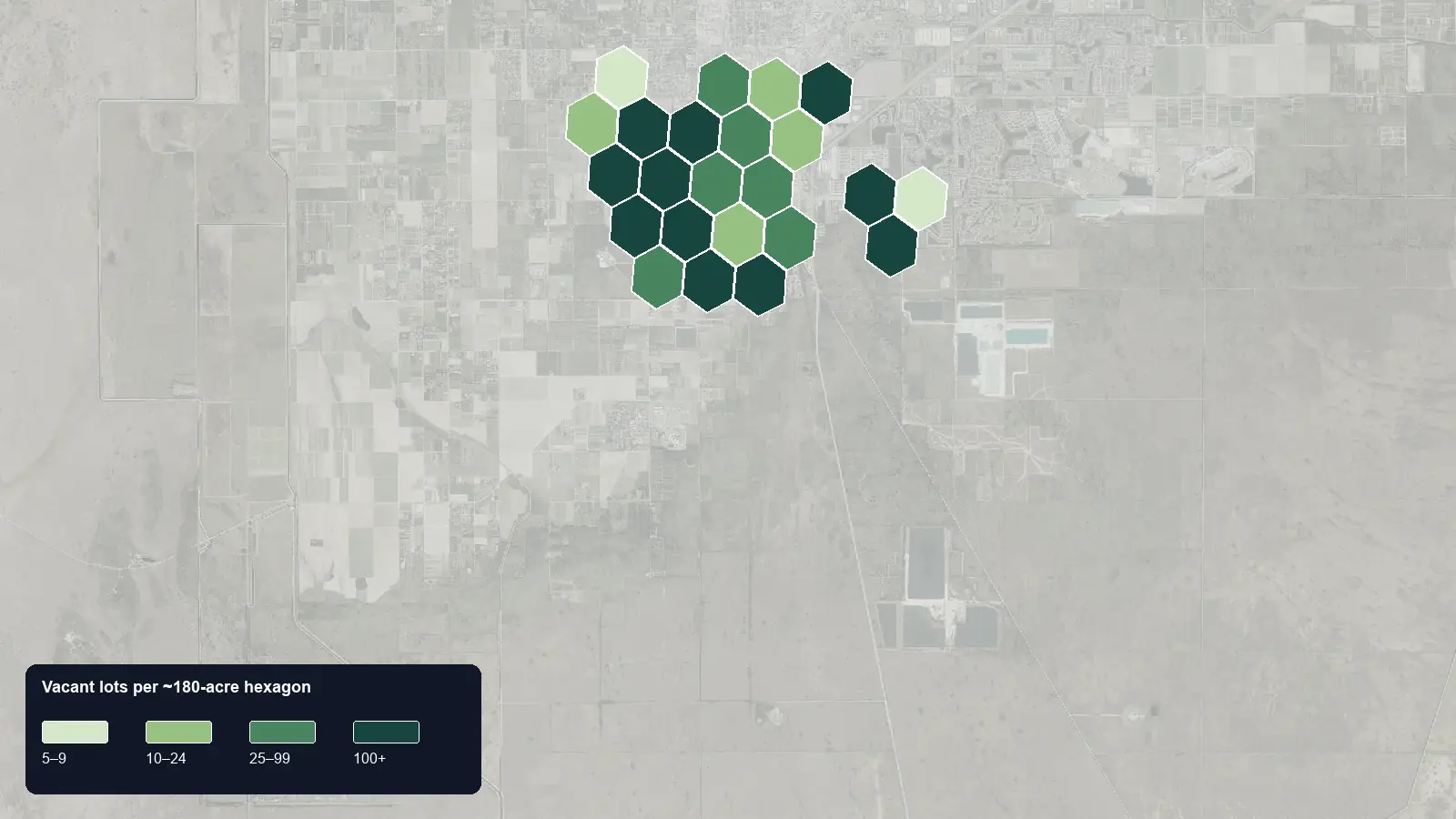
- The 2026 Florida property tax roll lists 3,011 vacant residential lots in Florida City; 64% are sliver / remnants, and the median lot is 0.04 acre.
- How is a cash offer for land in Florida City set?
- We start from recent sales of similar lots nearby, like the 2025 prices on this page, then adjust for water and sewer, road access, flood zone, lot size and any title issues, and for the time and cost of reselling. You get one written number, not a range.
- How do I know a land buyer in Florida City is legitimate?
- A real buyer closes through an independent, licensed title company and never asks you to pay anything up front. We never charge sellers a fee, deposit or closing-cost advance, and the title company pays you by check or wire at closing.
- Are vacant lots in Florida City in a FEMA high-risk flood zone?
- About 88.9% of vacant lots in Florida City have their center point in a FEMA high-risk flood zone (effective maps dated September 11, 2009). This is map screening, not a determination; check FEMA's Map Service Center for your parcel.
- How many vacant lots in Florida City got a home on the tax roll in 2025?
- 860 vacant lots in Florida City changed from vacant-residential use to a home with new-construction evidence on the 2026 preliminary tax roll.
Local data
Florida City land at a glance
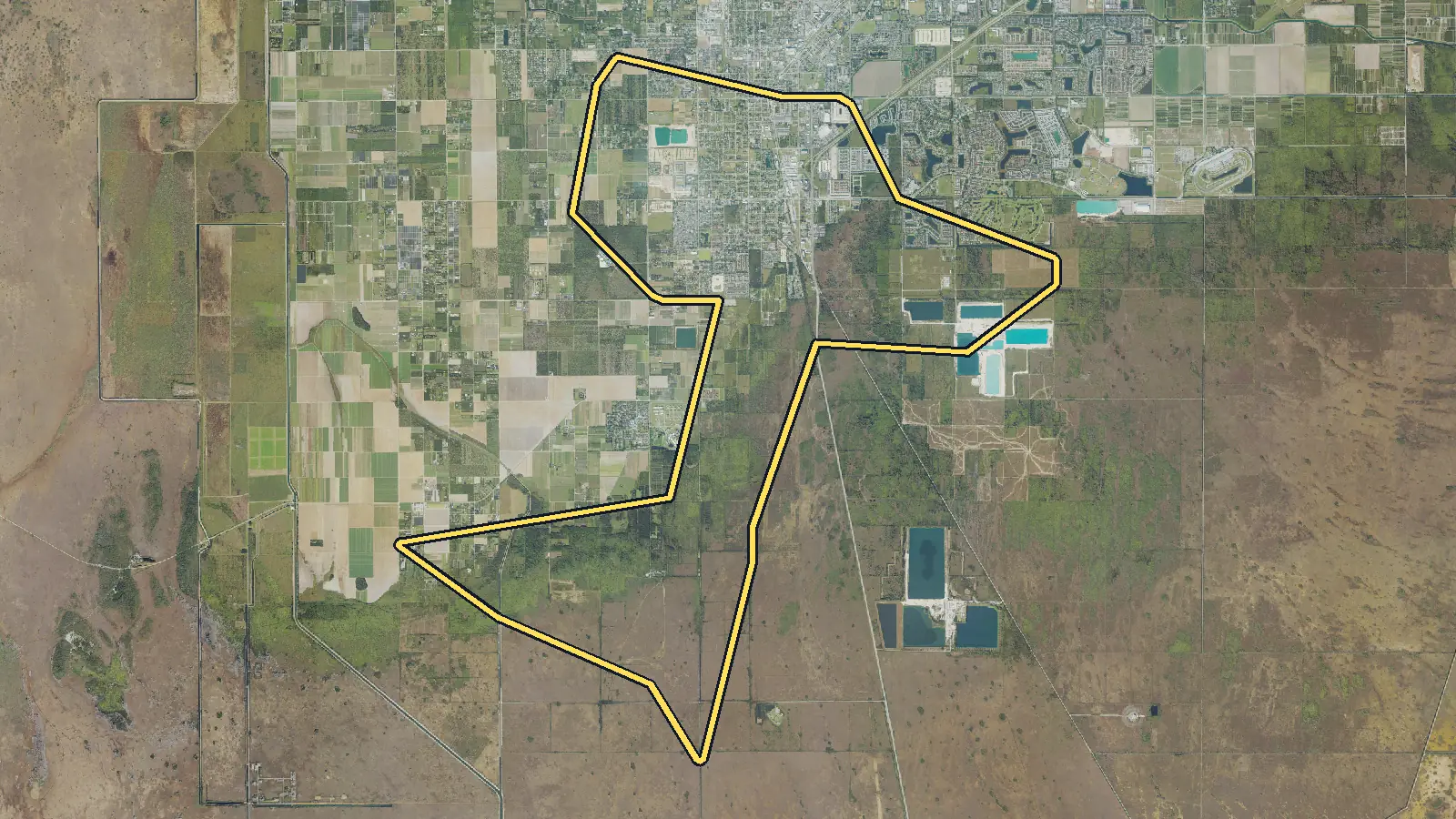
Tax-roll figures cover parcels whose property address city is Florida City, plus lots with no street address that sit in neighborhoods or census block groups where nearly all addressed parcels are Florida City in Miami-Dade County. Local rules and services are sourced below.
| Vacant residential lots | 3,011 parcels classified vacant residential on the 2026 tax roll [1] |
|---|---|
| Most common lot size | Sliver / remnant (0–2,000 sq ft): 64% of vacant lots; next, micro lot at 17%. Median lot: 0.04 acre (1,870 sq ft). [1] |
| Typical assessed value | $34,500 median just (market) value for a vacant lot; the middle half fall between $24,900 and $53,900 [1] |
| Recent lot sale prices | Too few arm's-length vacant-lot sales in 2025 to report a reliable median for Florida City [1] |
| Owners who live elsewhere | 40% of vacant lots have an owner mailing address outside Florida (most often AZ, TX, MA) [1] |
| Everglades gateway | National Park Service directions to the main Everglades entrance follow the Turnpike to U.S. 1 at Florida City, then Palm Drive (SW 344 St.) to the park. Flamingo is 38 miles south of that entrance. [2] |
| City permits | Florida City is incorporated and runs its own Building Department. Construction, alteration, removal or demolition inside city limits requires a city permit. [3],[4] |
| Planning review | The city reviews zoning, site plans, variances, rezoning and subdivisions. That review comes before assuming a vacant parcel can take a house or another use. [3] |
| Water and sewer locations | City plan instructions tell applicants to contact the city engineer for actual water and sewer lateral locations and show those locations on the site plan. [5] |
| RS-5 lot standards | The RS-5 district allows up to 15 units per net acre, with a 3,000-square-foot minimum lot, 40-foot width and 50% maximum lot coverage. [6] |
| Flood check by parcel | Miami-Dade's interactive flood-zone tool shows the FEMA zone for an address. The county says AE and VE zones carry mandatory flood insurance purchase rules; in X zones it is not federally required. [7] |
| Early land expansion | Florida City incorporated in 1914. Its limits were extended to Biscayne Bay in 1925, and landowners later petitioned successfully to restore the original boundaries. [4] |
| Vacant lots that got a home on the tax roll in 2025 | 860 recorded with new-construction evidence. [1] |
| Years of lot supply at the 2025 building pace | 3.5 years; simple ratio, not a forecast. [1] |
| Owner-type shares | Individuals 32.2%; companies 52.0%; trusts 0.0%; estates/heirs 13.7%; government/associations 2.1%. [1] |
| 2026 so far (Jan-May) | County-level for Miami-Dade County: 12 recorded vacant-lot sales; median $1,775,000. [1] |
| FEMA high-risk flood-zone screen | About 88.9% of vacant lots in Florida City have their center point in a FEMA high-risk flood zone (effective maps dated September 11, 2009). This is map screening, not a determination; check FEMA's Map Service Center for your parcel. |
| Springs BMAP small-lot screen | About 0% of located vacant lots in Florida City are 1 acre or less and have their center point in an adopted Florida springs BMAP. |
Pricing
What is a lot in Florida City worth?
These are open-market sale prices. A direct cash offer is usually lower, because a cash buyer closes in days and takes on the time and cost of reselling the lot.
See what similar lots sold for
What moves the price in Florida City
City zoning decides whether the parcel has a practical use
Zoning is the first practical value check because the city, not Miami-Dade's unincorporated-area office, reviews development inside Florida City. Its Community Development Department handles site plans, variances, rezoning and subdivisions. In RS-5, for example, the published minimum is 3,000 square feet with 40 feet of width, but those figures do not make every small parcel buildable. Setbacks, access, easements, plat restrictions and the parcel's actual district still matter. A narrow or irregular remnant may therefore be worth less than a conventional homesite even when both are vacant. [3],[6]
Utility confirmation belongs on the site plan
Public utility proximity is not the same as a confirmed connection. Florida City's plan instructions require the applicant to contact the city engineer for actual water and sewer lateral locations and place them on the site plan. That makes a parcel-specific inquiry more reliable than seeing a main in the street or a neighboring house with service. If the proposed use cannot connect as expected, the owner must determine whether another lawful water or wastewater approach is possible and what approvals it needs. Connection work, extensions and capacity can materially change a builder's budget and therefore a land offer. [5],[3]
Flood designation changes design and insurance questions
Flood risk must be checked against the parcel, not inferred from the mailing city. Miami-Dade's official flood-zone tool lets an owner enter an address and see the mapped FEMA zone. The county says AE and VE zones carry mandatory flood insurance purchase requirements, while flood insurance is not federally required in X zones. The map is a screening tool, not a survey or a promise that a parcel will never flood. A buyer still evaluates finished-floor elevation, drainage, access during heavy rain and any current building requirements. Those site costs can separate two lots that appear similar on the tax roll. [7],[3]
A very small sale sample does not establish a trend
The 2025 qualified-sale set for this page contains only a handful of arm's-length, single-parcel vacant-land transfers, so it is too small to support a price trend or a dependable citywide benchmark. Parcel Buyers instead compares the specific lot's size, shape, street access, zoning, utilities, flood designation and title. The tax roll shows that the most common vacant-parcel category in this scope is sliver / remnant, representing 64% of vacant residential parcels. That category describes the roll; it does not prove that a particular remnant can be developed or assembled with adjoining land. [1],[3]
Common situations
Selling land in Florida City in these situations
You own a narrow strip or leftover parcel
A narrow strip can still be sold, but its value depends on what it can legally and physically support. The local roll contains many parcels categorized as sliver / remnants. A strip may serve as an assemblage piece, added yard area, access or a buffer even when it is not a stand-alone homesite. We check the legal description, dimensions, frontage, adjoining ownership, zoning and recorded access before offering. That avoids treating every vacant parcel as a conventional residential lot. Our inspection is the only contingency; if the parcel does not work for us, the seller pays nothing. [1],[3],[6]
You inherited land and do not know its history
Inherited land can be sold even when the heirs do not know why it was purchased. Florida City's boundary and development history reaches back more than a century, and old ownership does not reveal present zoning or utility status. We can review parcel records, access, utilities and title before making an offer. If the record owner died, the independent title company identifies the documents needed to transfer ownership, which may include a death certificate, probate papers or signatures from the people who now hold title. Closing timing depends on resolving those title requirements. [4],[3]
You live outside Florida and want a remote closing
An out-of-state owner can sell without traveling to the parcel. 40% of owners in this page's vacant-land scope use a mailing address outside Florida. We provide a written offer after reviewing the property, and an independent title company handles the title search and closing. Documents can generally be signed electronically or through a mail-away process, subject to the title company's requirements. Closing is typically about 10 days after the agreement is signed, depending on title. Payment can be made by check or wire. [1]
Step by step
How do I sell my land in Florida City?
From your first message to money in hand, with nothing left out. Requesting an offer costs nothing and commits you to nothing.
See every detail of the process-
Tell us about your land
Fill out the short form (about 60 seconds) or email us. A land specialist reaches out to confirm the details, usually the same business day.
-
Get your cash offer within 24 hours
We review the property and send a written, no-obligation cash offer within 24 hours. It is a real number, not a range. Take it or leave it, with no pressure either way.
-
Sign electronically
If you accept, everyone signs the purchase agreement electronically. There is nothing to print or mail at this stage.
-
We inspect, the title company verifies
Our team inspects the land and an independent title company runs a title search for liens or taxes owed. If the land does not pass inspection, you are never charged anything.
-
Close and get paid
The title company prepares the closing documents for notarization and issues your funds by standard check, overnight check, or wire transfer. A typical sale closes in 10 days.
Questions
Selling land in Florida City: common questions
Who issues building permits for land in Florida City?
Florida City's Building Department issues permits inside the incorporated city. The city says construction, alteration, removal and demolition require a permit, while its planning staff handles zoning, site plans, variances, rezoning and subdivisions. Confirm that the parcel is actually inside city limits before relying on that process.
How do I know whether a lot has water and sewer service?
Ask the city to confirm the specific parcel and proposed use. Florida City's plan instructions say applicants must contact the city engineer for actual water and sewer lateral locations and show them on the site plan. A nearby pipe or serviced neighbor does not by itself confirm a connection, capacity or connection cost.
Is every small vacant parcel a buildable residential lot?
No. A vacant tax-roll classification does not establish buildability. The city reviews zoning and development, while dimensional rules vary by district. RS-5, for example, publishes a 3,000-square-foot minimum and 40-foot width, but access, setbacks, easements, plat restrictions, utilities and flood requirements still have to work for the parcel.
Can I sell land that has no assigned street address?
Yes. Parcel Buyers can evaluate land without a street address by using the parcel folio, legal description and map location. The statistics on this page include no-address lots only where surrounding addressed parcels strongly identify the Florida City area. The parcel's actual jurisdiction, access, zoning and utilities still need separate confirmation.
How fast can I receive and close a cash offer?
You can receive a written, no-obligation cash offer within 24 hours after we identify and review the parcel. Once a purchase agreement is signed, closing through an independent title company is typically about 10 days, depending on title. There are no seller fees or commissions, and we cover closing costs.
Owner resources
Guides for your situation
- How to Sell Inherited Land in Florida
Yes, inherited land can be sold, but the person signing must have legal authority and the title must show who owns it. In Florida, land held only in the deceased owner's name is generally a probate asset, while survivorship ownership may pass outside probate.[1] Start with the deed, death certificate, and any will; then let a probate attorney and title company identify the right path.
- Selling Land When the Owner Died Without a Will
Florida land can be sold after an owner dies without a will, but no relative automatically has authority to convey the estate's whole interest. Intestacy law identifies the heirs and their shares.[1] Probate may be needed for land held only in the deceased owner's name.[3] For a sale by the personal representative of an intestate estate, no title passes until the court authorizes or confirms the sale.[9]
- How to Sell Land From Another State
You usually do not have to travel to sell land in another state. A title company, escrow company, or closing attorney can coordinate title review, approved signing and notarization, recording, and payment by check or wire. The main limits are state-specific deed rules and title: every owner and signer must have authority. Independently verify the parcel, closing company, and payment instructions before signing.
More places in Miami-Dade County
Your written offer
Get your cash offer
Four short steps, about 60 seconds. We review your property and send a written, no-obligation cash offer within 24 hours. You can take it or leave it.
What happens after you send this
- A land specialist reaches out, usually the same business day, to confirm the details.
- You get a written cash offer within 24 hours: a real number, not a range.
- You decide. Requesting an offer costs nothing and commits you to nothing.
You will never be asked to pay us anything. No deposit, no processing fee, no closing-cost advance.
Nearby areas we buy
- Homestead
2,208 vacant lots
- Miami-Dade County
21,112 vacant lots countywide
How we made this page
Parcel Buyers is a land-buying company based in Florida. We buy vacant land directly from owners and publish these local pages so owners can see what land in their area is doing before they sell, to us or anyone else. We count the tax-roll figures ourselves from state data, take local rules and fees from the official sources listed below, and use AI tools to help research and draft the text. Every number links to its source, and we update the page when the data changes.
Method and sources
Tax-roll figures cover parcels whose property address city is Florida City, plus lots with no street address that sit in neighborhoods or census block groups where nearly all addressed parcels are Florida City. Source [1] is our own count of the Florida Department of Revenue's 2026 preliminary property tax roll: "vacant residential" means land-use code 000; lot sizes use the land square footage on the roll; values are the county property appraiser's just (market) value as of January 1, 2026; sale prices count only arm's-length sales of a single lot that was vacant when it sold and was still vacant on January 1, 2026 (bulk and multi-parcel deeds removed). Page updated October 8, 2026. Exact cross-roll matching found that 47.8% of current vacant lots lacked a unique prior-roll match; parcel splits, combinations, renumbering, and missing IDs are not guessed. The reviewed 2026 recorded-sale window runs from January through May 2026; unreviewed recent sales are excluded. County-level figures are used on this place page. Flood and springs-BMAP figures screen tax-roll parcel center points, not parcel boundaries. They are aggregate map screens, not flood-zone, insurance, buildability, elevation, septic, or permitting determinations.
- [1] Florida Department of Revenue (data); Parcel Buyers (analysis), Parcel Buyers analysis of the 2026 preliminary Name-Address-Legal (NAL) property tax roll (accessed 2026-10-03)
- [2] National Park Service, Directions and transportation to Everglades National Park (accessed 2026-10-08)
- [3] City of Florida City, Community Development (accessed 2026-10-08)
- [4] City of Florida City, City History (accessed 2026-10-08)
- [5] City of Florida City, Plans Process Log In (accessed 2026-10-08)
- [6] City of Florida City, RS-5 Residential Zero Lot Line Housing District (accessed 2026-10-08)
- [7] Miami-Dade County, Flood zone maps (accessed 2026-10-08)