Madison County, Florida
Sell your land in Greenville for cash
Parcel Buyers buys vacant land in Greenville for cash, including in-town parcels that need town zoning and county building review and outlying tracts that need well, septic and access checks. You get a written, no-obligation cash offer within 24 hours, and closings run through an independent title company, typically in about 10 days, with no fees or commissions.
By Parcel Buyers · · Lot figures from the 2026 Florida property tax roll · How we made this page
Quick answers
- Who buys land for cash in Greenville?
- Parcel Buyers is a direct land buyer that makes written, no-obligation cash offers on vacant lots and acreage in Greenville, Madison County, usually within 24 hours. Sales close through an independent title company, typically in about 10 days, with no fees or commissions to the seller.
- How many vacant lots are in Greenville?
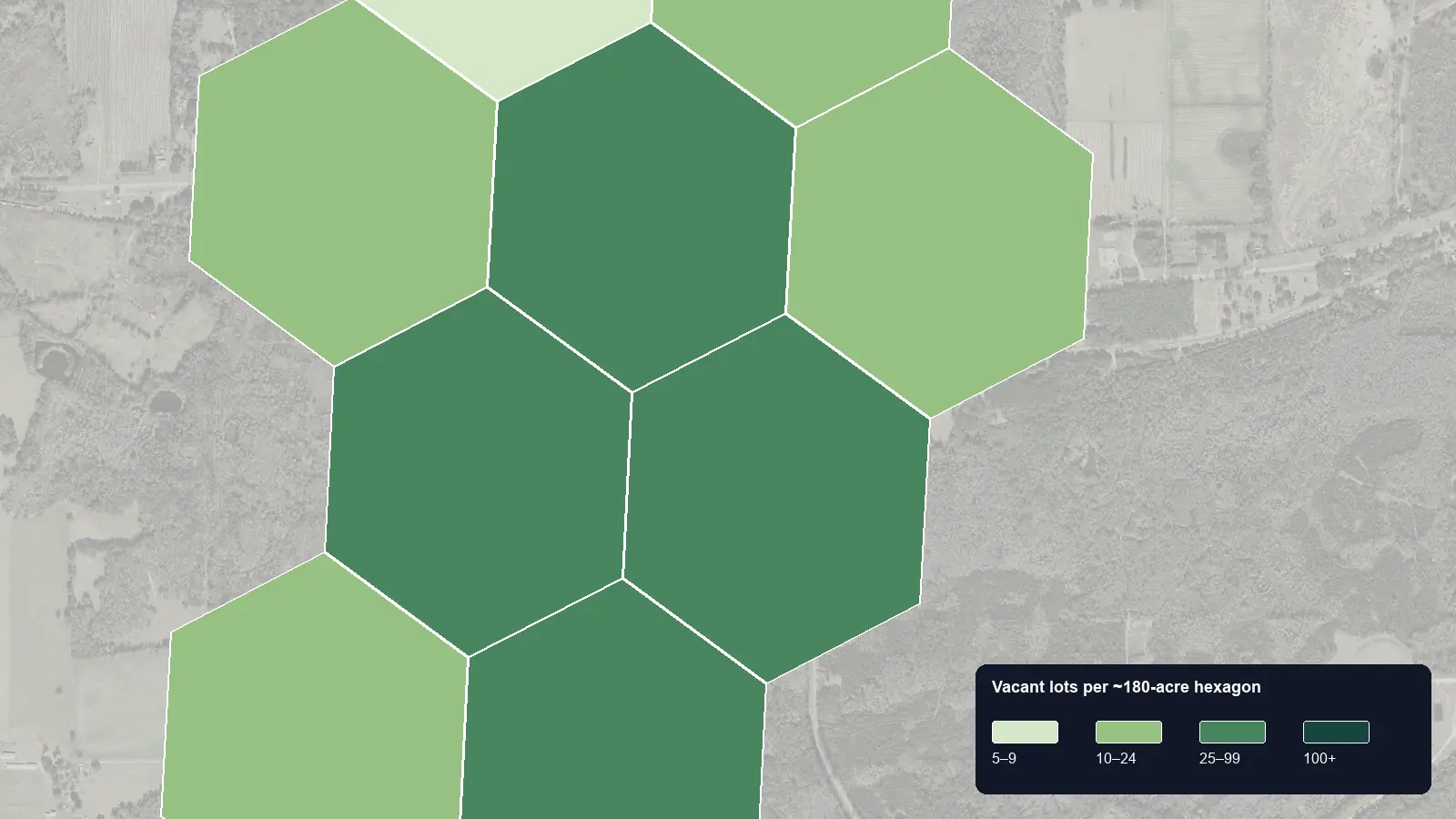
- The 2026 Florida property tax roll lists 755 vacant residential lots in Greenville; 14% are one-acre homesites, and the median lot is 1.00 acre.
- How is a cash offer for land in Greenville set?
- We start from recent sales of similar lots nearby, like the 2025 prices on this page, then adjust for water and sewer, road access, flood zone, lot size and any title issues, and for the time and cost of reselling. You get one written number, not a range.
- How do I know a land buyer in Greenville is legitimate?
- A real buyer closes through an independent, licensed title company and never asks you to pay anything up front. We never charge sellers a fee, deposit or closing-cost advance, and the title company pays you by check or wire at closing.
- How much are estimated annual ad valorem taxes on a typical vacant lot in Greenville?
- A typical vacant lot in Greenville has estimated 2025 ad valorem taxes about $122 a year; most lots here also pay non-ad valorem charges (listed below).
- Are vacant lots in Greenville in a FEMA high-risk flood zone?
- About 22.5% of vacant lots in Greenville have their center point in a FEMA high-risk flood zone (effective maps dated May 4, 2009 to April 23, 2025). This is map screening, not a determination; check FEMA's Map Service Center for your parcel.
- How many vacant lots in Greenville got a home on the tax roll in 2025?
- 7 vacant lots in Greenville changed from vacant-residential use to a home with new-construction evidence on the 2026 preliminary tax roll.
Local data
Greenville land at a glance
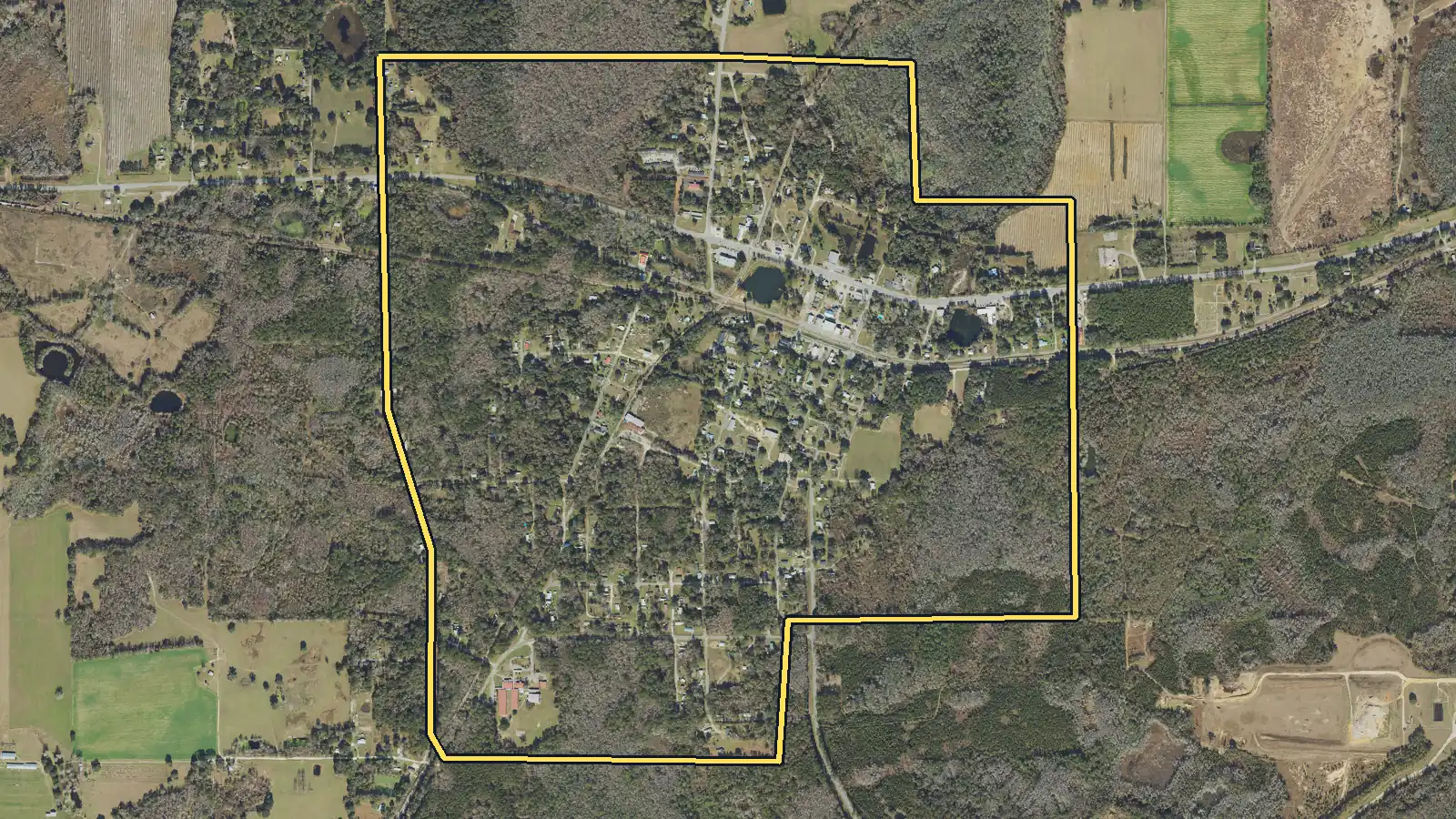
Tax-roll figures cover parcels whose property address city is Greenville in Madison County. Local rules and services are sourced below.
| Vacant residential lots | 755 parcels classified vacant residential on the 2026 tax roll [1] |
|---|---|
| Most common lot size | One-acre homesite (40,000–46,000 sq ft): 14% of vacant lots; next, mini-estate (2-3 acres) at 13%. Median lot: 1.00 acre (43,560 sq ft). [1] |
| Typical assessed value | $8,900 median just (market) value for a vacant lot; the middle half fall between $4,400 and $22,000 [1] |
| Recent lot sale prices | Too few arm's-length vacant-lot sales in 2025 to report a reliable median for Greenville [1] |
| Owners who live elsewhere | 14% of vacant lots have an owner mailing address outside Florida (most often GA, MA, PA) [1] |
| An incorporated town | Greenville is an incorporated town, not an unincorporated place. The town's official site dates incorporation to 1907 and directs residents to its own offices and ordinances. [2] |
| County building permits | Madison County's Building Department says only projects inside the City of Madison use city permits; all other county residents, including Greenville, use the county for permits and inspections. [3] |
| Town water and sewer billing | The town operates water, sewer and garbage billing. Its utility page says bills are due on the first, receive a 10% late fee after the 15th, and incur a $25 reconnect fee after shutoff. [4] |
| Septic permits where applicable | Florida DEP's current county list places Madison outside the DEP-run permitting group. The Madison County health department says it handles onsite-sewage permits and inspections for counties outside that group. [6],[5] |
| Town land-development rules | The town publishes its own land development code with zoning districts, lot standards and utility-based density rules. County building review does not replace the town's zoning approval. [7],[3] |
| Flood permits still apply | The town's 2025 flood ordinance requires floodplain development permits and assigns administration to the town floodplain administrator, with building-official review where the building code applies. [8] |
| Interstate 10 access | FDOT identifies Exit 241 on Interstate 10 as the US 221 interchange. January 2025 Town Council minutes record the vice mayor's wish to consider annexing unincorporated property along US 221 south toward I-10. [10],[11] |
| Vacant lots that got a home on the tax roll in 2025 | 7 recorded with new-construction evidence. [1] |
| Typical annual ad valorem taxes | A typical vacant lot in Greenville has estimated 2025 ad valorem taxes about $122 a year; most lots here also pay non-ad valorem charges (listed below). |
| 2026 so far (Jan-Jun) | County-level for Madison County: 43 recorded vacant-lot sales; median $30,000. [1] |
| FEMA high-risk flood-zone screen | About 22.5% of vacant lots in Greenville have their center point in a FEMA high-risk flood zone (effective maps dated May 4, 2009 to April 23, 2025). This is map screening, not a determination; check FEMA's Map Service Center for your parcel. |
| Springs BMAP small-lot screen | About 41.9% of located vacant lots in Greenville are 1 acre or less and have their center point in an adopted Florida springs BMAP. |
Pricing
What is a lot in Greenville worth?
These are open-market sale prices. A direct cash offer is usually lower, because a cash buyer closes in days and takes on the time and cost of reselling the lot.
See what similar lots sold for
What moves the price in Greenville
Town zoning and county permits are separate checks
Greenville is incorporated, but Madison County handles its building permits and inspections. The county department expressly says only the City of Madison issues its own city permits; everyone else uses the county. At the same time, Greenville publishes a town land development code with zoning districts and lot standards. That means a prospective homesite can need town confirmation of use, setbacks and lot compliance before the county reviews construction documents. A buyer who checks only the county permit portal can miss the local zoning layer, while a seller should not assume an old plat automatically creates a buildable lot today. [2],[3],[7]
Public utilities versus a private system
The town operates water and sewer billing, but the existence of a municipal utility does not prove that mains, taps and capacity reach every vacant parcel in the property-address scope. An in-town buyer should obtain written availability and connection requirements from the town. Where an onsite system is necessary, the Madison County health department remains the local permit and inspection office. Its program explains that onsite systems must be properly designed, constructed and maintained. Road frontage, a legal well location, soil and enough usable area for wastewater treatment can materially change what a larger or edge-of-town tract is worth. [4],[6],[5]
One-acre homesites lead this address scope
This page covers parcels whose property address city is Greenville, not just parcels inside the town boundary. The median vacant residential parcel is 1.00 acres, or 43,560 square feet, and one-acre homesites account for 14% of the 755 vacant residential parcels. The scope also includes agricultural land beyond ordinary in-town homesites. That mix makes location essential: a town lot near utility lines, a wooded homesite beyond them and working acreage can share a mailing city while facing different zoning, access, water, wastewater and flood questions. [1],[7],[4],[5]
Sparse 2025 sales do not define the market
The qualifying 2025 arm's-length sale sample falls below the site's publication threshold. It cannot describe a reliable direction across town lots, rural homesites and acreage, so no sale-price trend or median is stated here. The median just value among vacant residential parcels is $8,900, with a middle-half range of $4,400–$22,000; those are property-tax values, not completed-sale prices. For the individual tract, zoning authority, frontage, utility position, onsite-system feasibility, flood review, title and unpaid charges matter more. [1],[3],[4],[5]
Common situations
Selling land in Greenville in these situations
You inherited a town lot or rural tract
Yes. Inherited property can be sold even when the heirs are unsure whether it is inside the town limits. The title company confirms who has authority to sign, and we check utilities, access and title before offering. The property-address city alone does not establish that public water and sewer are at the boundary. Heirs do not need to order house plans or apply for permits before requesting an offer. [7],[3],[4],[8]
The parcel has stayed vacant for years
Yes. You can sell land that has remained unused while tax bills continued. For an in-town parcel, Greenville's zoning and utility records matter; for a larger tract, well, septic, access and flood review may be more important. Our land inspection is the only contingency, and a failed inspection costs the seller nothing. If taxes or recorded liens are due, the independent title company obtains the payoff and can satisfy it from sale proceeds with the seller's consent. [7],[4],[5],[8]
You own from outside Florida
Yes. You can transfer Greenville-area land while remaining in another state. The roll assigns 14% of vacant-residential owner mailing addresses to locations outside Florida and 86% inside Florida. Town zoning and county building permits are separate layers here, and we check utilities, access and title before offering. A title company can circulate remote signatures, record the deed and deliver proceeds by the seller's selected check or wire method. [1]
Step by step
How do I sell my land in Greenville?
From your first message to money in hand, with nothing left out. Requesting an offer costs nothing and commits you to nothing.
See every detail of the process-
Tell us about your land
Fill out the short form (about 60 seconds) or email us. A land specialist reaches out to confirm the details, usually the same business day.
-
Get your cash offer within 24 hours
We review the property and send a written, no-obligation cash offer within 24 hours. It is a real number, not a range. Take it or leave it, with no pressure either way.
-
Sign electronically
If you accept, everyone signs the purchase agreement electronically. There is nothing to print or mail at this stage.
-
We inspect, the title company verifies
Our team inspects the land and an independent title company runs a title search for liens or taxes owed. If the land does not pass inspection, you are never charged anything.
-
Close and get paid
The title company prepares the closing documents for notarization and issues your funds by standard check, overnight check, or wire transfer. A typical sale closes in 10 days.
Questions
Selling land in Greenville: common questions
Does the town issue the building permit?
No. Madison County's Building Department says only the City of Madison uses a city building-permit office; all other county residents use the county for permitting and inspections. Greenville still controls its own zoning and land-development rules, so both layers matter. Confirm the permitted use and lot standards with the town, then submit the construction permit through the county. Do not treat a county building review as approval of a conflicting town zoning issue.
Does every parcel have town water and sewer?
No. The town operates water and sewer billing, but its utility page does not promise that mains or taps serve every vacant parcel associated with a Greenville address. Request written availability and connection requirements for the specific property. Where public wastewater is unavailable, the Madison County health department handles onsite-system permits and inspections. A buyer also needs enough usable land, suitable siting and any required well separation before assuming a home can be built.
How should I check flood risk on vacant land?
Start with the parcel and current flood map, then ask which local office administers the review. Greenville's 2025 ordinance requires a floodplain development permit for work in mapped flood hazard areas and assigns that process to the town floodplain administrator, with building-official duties where the building code applies. The county separately warns that local flood risks include ponding on low, flat land. A survey and permit review are more reliable than a communitywide label.
What can happen after taxes go unpaid?
After two years counted from April 1 in the year a tax certificate was issued, section 197.502 permits the holder to submit that certificate with a tax-deed application. The collector may charge $75, and the applicant must fund required tax amounts, notices and sale costs before an auction. A Greenville-area owner can still pursue a voluntary transfer first: the closing agent verifies every delinquency and uses approved sale proceeds to clear the title.
Owner resources
Guides for your situation
- Can You Build on a Vacant Lot?
Maybe. A vacant lot is buildable only if the proposed use fits the rules that apply to that parcel and the site can satisfy access, utility, environmental, and permit requirements. Start with the local planning or zoning office, confirm that the parcel is a legal lot, and get a written parcel-specific answer. A zoning label or tax parcel number alone is not approval to build.[1][2]
- How to Sell Inherited Land in Florida
Yes, inherited land can be sold, but the person signing must have legal authority and the title must show who owns it. In Florida, land held only in the deceased owner's name is generally a probate asset, while survivorship ownership may pass outside probate.[1] Start with the deed, death certificate, and any will; then let a probate attorney and title company identify the right path.
- How to Sell Land During a Divorce
Florida land can be sold during a divorce when the people with authority to convey title sign and the sale follows every applicable agreement and court order. Divorce law may treat land as marital even when only one spouse appears on the deed.[1][2] If ownership, signing authority, or the division of proceeds is unsettled, have a Florida attorney and the closing title company resolve those issues before closing.
More places in Madison County
Your written offer
Get your cash offer
Four short steps, about 60 seconds. We review your property and send a written, no-obligation cash offer within 24 hours. You can take it or leave it.
What happens after you send this
- A land specialist reaches out, usually the same business day, to confirm the details.
- You get a written cash offer within 24 hours: a real number, not a range.
- You decide. Requesting an offer costs nothing and commits you to nothing.
You will never be asked to pay us anything. No deposit, no processing fee, no closing-cost advance.
Nearby areas we buy
- Madison
1,527 vacant lots · 2025 median lot sale $42,500
- Lee
1,536 vacant lots · 2025 median lot sale $45,000
- Live Oak
5,340 vacant lots · 2025 median lot sale $40,000
- Madison County
4,148 vacant lots countywide
How we made this page
Parcel Buyers is a land-buying company based in Florida. We buy vacant land directly from owners and publish these local pages so owners can see what land in their area is doing before they sell, to us or anyone else. We count the tax-roll figures ourselves from state data, take local rules and fees from the official sources listed below, and use AI tools to help research and draft the text. Every number links to its source, and we update the page when the data changes.
Method and sources
Tax-roll figures cover parcels whose property address city is Greenville. Source [1] is our own count of the Florida Department of Revenue's 2026 preliminary property tax roll: "vacant residential" means land-use code 000; lot sizes use the land square footage on the roll; values are the county property appraiser's just (market) value as of January 1, 2026; sale prices count only arm's-length sales of a single lot that was vacant when it sold and was still vacant on January 1, 2026 (bulk and multi-parcel deeds removed). Page updated October 4, 2026. Holding-cost estimates use 2025 taxable values and 2025 millage for FDOR vacant-residential code 000 parcels. They cover ad valorem taxes only, not a parcel-specific bill or non-ad valorem assessments. The reviewed 2026 recorded-sale window runs from January through June 2026; unreviewed recent sales are excluded. County-level figures are used on this place page. Flood and springs-BMAP figures screen tax-roll parcel center points, not parcel boundaries. They are aggregate map screens, not flood-zone, insurance, buildability, elevation, septic, or permitting determinations.
- [1] Florida Department of Revenue (data); Parcel Buyers (analysis), Parcel Buyers analysis of the 2026 preliminary Name-Address-Legal (NAL) property tax roll (accessed 2026-10-03)
- [2] Town of Greenville, Town of Greenville official website (accessed 2026-10-04)
- [3] Madison County Government, Building Department (accessed 2026-10-04)
- [4] Town of Greenville, Utility information (accessed 2026-10-04)
- [5] Florida Department of Health in Madison County, Onsite sewage program (accessed 2026-10-04)
- [6] Florida Department of Environmental Protection, Onsite sewage permitting frequently asked questions (accessed 2026-10-04)
- [7] Town of Greenville, Town of Greenville land development code (accessed 2026-10-04)
- [8] Town of Greenville, Ordinance 2025-286, floodplain management (accessed 2026-10-04)
- [9] Madison County Government, Flood information (accessed 2026-10-04)
- [10] Florida Department of Transportation, Interstate 10 exit numbers (accessed 2026-10-04)
- [11] Town of Greenville, Town Council regular meeting minutes, January 13, 2025 (accessed 2026-10-04)
- [12] Florida Legislature, Florida Statutes section 197.502, application for a tax deed (accessed 2026-10-04)