Putnam County, Tennessee
Sell your land in Algood for cash
Parcel Buyers buys vacant lots and land for cash in Algood, including lots where city water or sewer availability, a septic permit, or a building plan still needs work. You get a written, no-obligation cash offer within 24 hours, and closings run through an independent title company, typically in about 10 days, with no fees or commissions.
By Parcel Buyers · · Lot figures from the 2026 Tennessee parcel and assessment data · How we made this page
Quick answers
- Who buys land for cash in Algood?
- Parcel Buyers is a direct land buyer that makes written, no-obligation cash offers on vacant lots and acreage in Algood, Putnam County, usually within 24 hours. Sales close through an independent title company, typically in about 10 days, with no fees or commissions to the seller.
- How many vacant lots are in Algood?
- The 2026 Tennessee parcel and assessment data lists 163 vacant residential lots in Algood; 14% are half-acre lots, and the median lot is 0.55 acre.
- How is a cash offer for land in Algood set?
- We start from recent sales of similar lots nearby, like the 2025 prices on this page, then adjust for water and sewer, road access, flood zone, lot size and any title issues, and for the time and cost of reselling. You get one written number, not a range.
- How do I know a land buyer in Algood is legitimate?
- A real buyer closes through an independent, licensed title company and never asks you to pay anything up front. We never charge sellers a fee, deposit or closing-cost advance, and the title company pays you by check or wire at closing.
Local data
Algood land at a glance
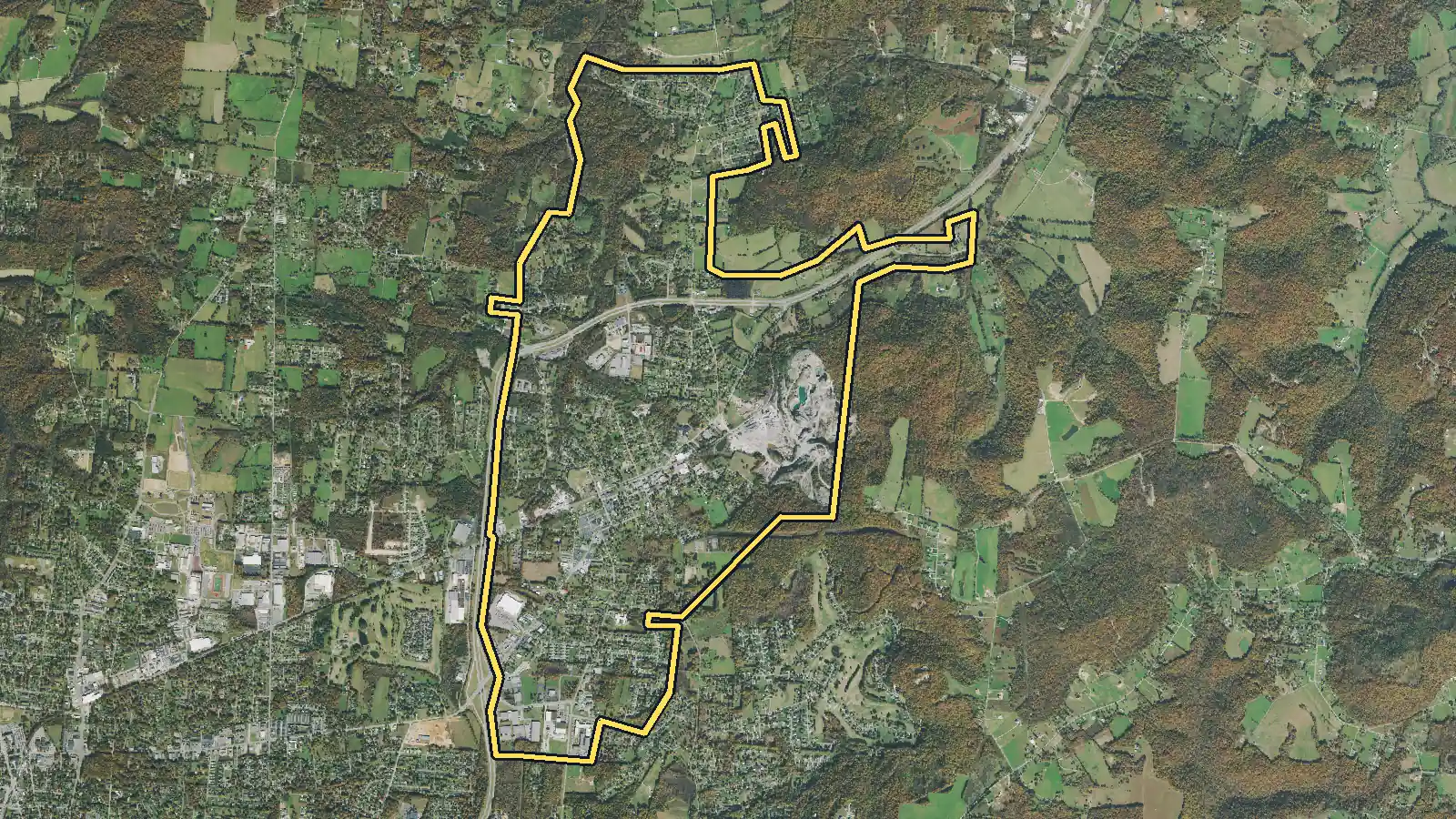
Tax-roll figures cover parcels on the Putnam County roll whose community code is Algood in Putnam County. Local rules and services are sourced below.
| Vacant residential lots | 163 parcels classified vacant residential on the 2026 Tennessee parcel and assessment data [1] |
|---|---|
| Most common lot size | Half-acre lot (19,000–24,000 sq ft): 14% of vacant lots; next, third-acre lot at 11%. Median lot: 0.55 acre (23,960 sq ft). [1] |
| Typical appraised value | $25,000 median appraised value for a vacant lot; the middle half fall between $22,500 and $35,000 [1] |
| Recent lot sale prices | Too few arm's-length vacant-lot sales in 2025 to report a reliable median for Algood [1] |
| Owners who live elsewhere | 10% of vacant lots have an owner mailing address outside Tennessee (most often GA, IN, FL) [1] |
| City building permits | Algood is an incorporated city. Its zoning ordinance says its Building Inspector grants building and use-and-occupancy permits; a structure cannot be erected, moved, added to, or structurally altered without that permit. [2],[5] |
| Planning review fees | The city zoning ordinance lists $125 for a special exception, administrative review, rezoning, zoning-text amendment, variance, or site-plan review. Its Planning Commission and Board of Zoning Appeals meet on the fourth Tuesday of each month. [2] |
| Water connection costs | Algood publishes water taps for a single residence at $2,225 for a 3/4-inch line or $2,475 for a 1-inch line inside city limits. Its schedule has different prices outside the city limits. [3] |
| Sewer connection costs | The city publishes a $2,000 single-residence sewer tap. Sewer charges are based on water used, with a $26.47 charge for the first 2,000 gallons under the schedule effective January 1, 2025. [3] |
| Septic is a state permit | When public sewer is not the route, TDEC requires a septic permit before dirt work or building construction. A subdivision using septic needs a state evaluation, survey, and soils map before staff review it. [4] |
| Floodplain development review | For development under the city floodplain ordinance, an application goes to the ordinance administrator—the Public Works Director—before work and can require scaled plans, elevations, drainage details, and later as-built elevation certification. [2] |
| Interstate 40 | Putnam County's transportation plan says Interstate 40 bisects the county from west to east and serves Algood via Highway 111, a partially limited-access arterial built to interstate standards. [6] |
Pricing
What is a lot in Algood worth?
These are open-market sale prices. A direct cash offer is usually lower, because a cash buyer closes in days and takes on the time and cost of reselling the lot.
What moves the price in Algood
City permits shape what a vacant lot can become
Algood building permits are issued by the City Building Inspector. The city ordinance says a building or structure cannot be erected, moved, added to, or structurally altered without that permit. It also makes the building-permit application an application for a use-and-occupancy permit. For commercial, industrial, and R-3 multifamily work, the inspector requires a site plan and specifications; the city and Planning Commission must approve that material before a permit issues. This page covers only parcels on the Putnam County roll whose community code is Algood, not a surveyed city-boundary set, so identify the parcel's jurisdiction before treating any city rule as its exact approval path. Permit status, allowed use, setbacks, access, and utility route can all change what a builder can do with land. [2],[1]
Water and sewer are priced as connections, not assumptions
The city publishes water and sewer connection charges, but its rate schedule is not proof that a given parcel has a usable connection. Algood lists a $2,225 tap for a 3/4-inch single-residence water line inside city limits and $2,475 for a 1-inch line. The listed single-residence sewer tap is $2,000. The city also publishes separate water prices for outside-city customers, which matters because this page's tax-roll scope is not a city-boundary map. A buyer will still need to confirm line location, capacity, extension work, easements, and the applicable fee schedule for the actual lot. [3],[1]
Septic suitability matters where sewer is not available
A septic route needs state review before construction starts. TDEC says a conventional septic permit is required to install a conventional system serving a residence, retail building, commercial building, or certain accessory buildings, and that the permit should be obtained before dirt work or a building pad. For an alternative system, the state calls for an extra-high-intensity soils map prepared by a Tennessee-licensed soils consultant. A proposed subdivision that will use septic also needs a state evaluation with a survey and soils map; the state excludes divisions where every tract is at least 5 acres from that subdivision definition. Those documents do not decide a cash offer by themselves, but they are meaningful buildability records for a vacant lot. [4]
Floodplain records can add plans and elevation work
Floodplain review matters if the parcel is in an area governed by the city's floodplain rules. The ordinance requires a development-permit application before development activities and can require plans showing structures, fill, storage, and drainage facilities. Where base-flood elevations are available, the application includes the proposed lowest-floor elevation; for new construction and substantial improvements, the permit holder later provides certification of the regulatory floor elevation or floodproofing level. The ordinance also warns that land outside a special flood-hazard area is not guaranteed free from flood damage. That is why a flood-map label alone is not enough to price a lot without looking at the planned use and site records. [2]
Common situations
Selling land in Algood in these situations
You inherited a vacant parcel and do not plan to build
Yes. Parcel Buyers buys vacant land for cash when an owner does not plan to build. The useful starting records are the deed, parcel identification, any utility bill, and any permit or site-plan material the family has. For a parcel inside city limits, Algood's rules make future construction a city-permit question, while city water and sewer schedules show that connection work can have separate charges. We review utilities, access and title before offering. A written offer is no obligation, and closing uses an independent, licensed title company. If the land inspection does not work, it costs the seller nothing. [2],[3]
Your lot has no confirmed sewer connection
Yes. We buy vacant lots even when sewer service is not confirmed. Algood publishes a single-residence sewer-tap charge, but that fee is not a statement that every community-code parcel is connected or ready to connect. If public sewer is not the route for a future home, TDEC requires a septic-system permit before dirt work or building construction. Its process can call for information about the lot, a sketch of the proposed house, well, driveway, and utilities; alternative systems can require a licensed consultant's soils map. Those facts are why utility availability and a septic record are checked lot by lot rather than assumed from a mailing address. [3],[4]
You own a small homesite or a larger tract
Both can be sold, but size does not settle buildability. In this tax-roll scope, there are 163 vacant residential parcels, and half-acre lots are the most common size group at 14%. A buyer still needs to see the parcel lines, road access, city zoning, utility route, and any floodplain requirements. For a new subdivision using septic, TDEC requires a survey and soils map before it evaluates the proposal. For certain city development, the city requires site plans and approval before a building permit issues. We buy land with no water, sewer, or road work and evaluate those conditions before making an offer. [1],[4],[2]
Step by step
How do I sell my land in Algood?
From your first message to money in hand, with nothing left out. Requesting an offer costs nothing and commits you to nothing.
See every detail of the process-
Tell us about your land
Fill out the short form (about 60 seconds) or email us. A land specialist reaches out to confirm the details, usually the same business day.
-
Get your cash offer within 24 hours
We review the property and send a written, no-obligation cash offer within 24 hours. It is a real number, not a range. Take it or leave it, with no pressure either way.
-
Sign electronically
If you accept, everyone signs the purchase agreement electronically. There is nothing to print or mail at this stage.
-
We inspect, the title company verifies
Our team inspects the land and an independent title company runs a title search for liens or taxes owed. If the land does not pass inspection, you are never charged anything.
-
Close and get paid
The title company prepares the closing documents for notarization and issues your funds by standard check, overnight check, or wire transfer. A typical sale closes in 10 days.
Questions
Selling land in Algood: common questions
Can I sell my Algood lot if it has no water or sewer?
Yes. We buy vacant lots with no water, sewer, or road work. Algood publishes water and sewer connection schedules, but those schedules do not prove that a particular community-code parcel is served. If public sewer is not available for a future build, TDEC requires a septic permit before dirt work or construction. We check utilities, access and title on every parcel before offering.
Who issues a building permit for a lot in Algood?
The City Building Inspector issues building permits under Algood's zoning ordinance. The ordinance says no building or structure may be erected, moved, added to, or structurally altered without that permit, and the inspector also has authority over use-and-occupancy permits. Because this page is defined by the county roll's community code rather than city-boundary data, confirm the parcel's jurisdiction before planning a project.
What does a new city water or sewer connection cost?
Algood lists $2,225 for a 3/4-inch single-residence water tap and $2,475 for a 1-inch tap inside city limits. Its listed single-residence sewer tap is $2,000. Those are published schedule figures, not a quote for extending lines, repairing a road, or serving a specific parcel; the city says road-repair time after utility work is billed at $50 per hour plus materials.
Do I need a septic permit before I build?
Yes, if the future building will use septic. TDEC says a conventional septic permit is required for installation and should be obtained before dirt work or building construction. An alternative system is generally used when soil or site conditions are not favorable for a conventional system, and TDEC requires an extra-high-intensity soils map for that application.
Do floodplain rules affect a vacant lot in Algood?
They can. Under the city floodplain ordinance, development in the regulated setting needs a city development-permit application before work, and the submittal can require plans, drainage details, and elevation information. The ordinance says even land outside a special flood-hazard area is not guaranteed to be free from flooding, so a parcel-specific review is more useful than a broad neighborhood label.
Owner resources
Guides for your situation
- Can You Build on a Vacant Lot?
Maybe. A vacant lot is buildable only if the proposed use fits the rules that apply to that parcel and the site can satisfy access, utility, environmental, and permit requirements. Start with the local planning or zoning office, confirm that the parcel is a legal lot, and get a written parcel-specific answer. A zoning label or tax parcel number alone is not approval to build.[1][2]
- How Cash Land Buyers Price Offers
A cash-land offer may start with verified sales of land with similar use, then adjust those sales for meaningful differences.[1] Buyers may also account for access, utilities, legal use, size, shape, flood and soil questions, title issues, demand, and costs and risk they will carry. No universal assessed-value percentage applies. Compare each written offer by expected net proceeds, contingencies, seller work, and timing—not one asking price or headline number.
- How to Sell Land in a Flood Zone
Flood-zone land can be sellable and sometimes buildable. A FEMA flood zone describes mapped risk; it is not a building permit. The buyer must verify the current effective Flood Insurance Rate Map and any map changes, then ask the local floodplain administrator what elevation, floodway, coastal, permit, and design rules apply.[1][2][4] Vacant land itself is not covered by an NFIP policy; flood insurance covers qualifying buildings and contents, not land value.[5][6]
More places in Putnam County
Your written offer
Get your cash offer
Four short steps, about 60 seconds. We review your property and send a written, no-obligation cash offer within 24 hours. You can take it or leave it.
What happens after you send this
- A land specialist reaches out, usually the same business day, to confirm the details.
- You get a written cash offer within 24 hours: a real number, not a range.
- You decide. Requesting an offer costs nothing and commits you to nothing.
You will never be asked to pay us anything. No deposit, no processing fee, no closing-cost advance.
Nearby areas we buy
- Cookeville
1,379 vacant lots · 2025 median lot sale $58,000
- Putnam County
5,558 vacant lots countywide
How we made this page
Parcel Buyers is a land-buying company based in Florida. We buy vacant land directly from owners and publish these local pages so owners can see what land in their area is doing before they sell, to us or anyone else. We count the tax-roll figures ourselves from state data, take local rules and fees from the official sources listed below, and use AI tools to help research and draft the text. Every number links to its source, and we update the page when the data changes.
Method and sources
Parcel and assessment figures cover parcels on the Putnam County roll whose community code is Algood. Source [1] is our own count of the Tennessee Comptroller of the Treasury's county parcel and assessment files (assessment data dated August 28, 2026): a vacant lot is a residential parcel with no buildings, mobile home or improvement value; values are the county assessor's appraised (market) value; sale prices count only 2025 warranty-deed sales of a single lot that was vacant when it sold, at $1,000 or more, with bulk deeds and development-land deals removed. Treat medians as a guide to recent recorded amounts, not as an offer or an appraisal. Page updated October 8, 2026.
- [1] Tennessee Comptroller of the Treasury (data); Parcel Buyers (analysis), Tennessee Comptroller of the Treasury, Office of Local Government parcel and assessment data (accessed 2026-10-01)
- [2] City of Algood, Algood Zoning Ordinance, amended 2022 (accessed 2026-10-08)
- [3] City of Algood, Water, sewer and sanitation rates and tap fees (accessed 2026-10-08)
- [4] Tennessee Department of Environment and Conservation, Online application for septic related services (accessed 2026-10-08)
- [5] University of Tennessee Municipal Technical Advisory Service, Algood city directory, charter and code (accessed 2026-10-08)
- [6] Putnam County, Tennessee, Putnam County Land Use and Transportation Policy Plan (accessed 2026-10-08)