Tennessee
Sell your land in Lincoln County for cash
Parcel Buyers buys vacant lots and land for cash in Lincoln County, including rural parcels that need zoning, road, utility, septic, and floodplain checks before development. You get a written, no-obligation cash offer within 24 hours, and closings run through an independent, licensed title company, typically about 10 days after the purchase agreement is signed, depending on title, with no fees or commissions.
By Parcel Buyers · · Lot figures from the 2026 Tennessee parcel and assessment data · How we made this page
Quick answers
- Who buys land for cash in Lincoln County?
- Parcel Buyers is a direct land buyer that makes written, no-obligation cash offers on vacant lots and acreage in Lincoln County, Tennessee, usually within 24 hours. Sales close through an independent title company, typically in about 10 days, with no fees or commissions to the seller.
- What did vacant lots in Lincoln County sell for in 2025?
- In 2025, vacant lots in Lincoln County sold for a median of $49,000 across 67 arm's-length sales; the middle half sold for $26,000 to $85,600.
- How many vacant lots are in Lincoln County?
- The 2026 Tennessee parcel and assessment data lists 1,808 vacant residential lots in Lincoln County; 15% are mini-estate (2-3 acres)s, and the median lot is 1.49 acre.
- How is a cash offer for land in Lincoln County set?
- We start from recent sales of similar lots nearby, like the 2025 prices on this page, then adjust for water and sewer, road access, flood zone, lot size and any title issues, and for the time and cost of reselling. You get one written number, not a range.
- How do I know a land buyer in Lincoln County is legitimate?
- A real buyer closes through an independent, licensed title company and never asks you to pay anything up front. We never charge sellers a fee, deposit or closing-cost advance, and the title company pays you by check or wire at closing.
- Who is buying lots in Lincoln County?
- In 2025, companies bought 3% of the vacant lots that sold in Lincoln County, including 1% bought by homebuilders. Individuals bought the rest.
- What was the median recorded 2025 sale price by lot size in Lincoln County?
- The median recorded 2025 sale price for a 5-acre ranchette in Lincoln County was $70,000 across 15 sales.
Local data
What is land in Lincoln County worth?
In 2025, vacant lots in Lincoln County sold for a median of $49,000 across 67 arm's-length sales; the middle half sold for $26,000 to $85,600. [1]
These are open-market sale prices. A direct cash offer is usually lower, because a cash buyer closes in days and takes on the time and cost of reselling the lot.
Recorded 2025 sale prices by lot size in Lincoln County
| Lot-size class | 2025 sales | 2025 median lot sale |
|---|---|---|
| 5-acre ranchette210,000–279,999 sq ft | 15 | $70,000 |
| Small acreage tract (7-10 acres)280,000–435,599 sq ft | 11 | $110,000 |
These are open-market sale prices. A direct cash offer is usually lower, because a cash buyer closes in days and takes on the time and cost of reselling the lot.
| Vacant residential lots | 1,808 parcels classified vacant residential on the 2026 Tennessee parcel and assessment data [1] |
|---|---|
| Most common lot size | Mini-estate (2-3 acres) (70,000–140,000 sq ft): 15% of vacant lots; next, 5-acre ranchette at 11%. Median lot: 1.49 acre (64,900 sq ft). [1] |
| Typical appraised value | $41,100 median appraised value for a vacant lot; the middle half fall between $26,900 and $72,000 [1] |
| Recent lot sale prices | $49,000 median across 67 arm's-length sales of vacant lots in Lincoln County (Jan 2025–Dec 2025); the middle half sold for $26,000–$85,600 [1] |
| Who bought lots in 2025 | Companies made 3% of those purchases, including 1% by homebuilders; individuals made the rest [1] |
| Owners who live elsewhere | 17% of vacant lots have an owner mailing address outside Tennessee (most often AL, GA, FL) [1] |
| County property officials | Lincoln County lists Tammy Painter as Property Assessor, Mary Jane Porter as Trustee, Randy Delap as Register of Deeds, and Traci Perkins for Planning and Zoning. [2] |
| Zoning and subdivision review | The Planning and Zoning Department administers county zoning and subdivision regulations, including current planning, future planning, and zoning compliance. [3] |
| Building and flood permits | The county says state law requires permits for certain construction and publishes permit requirements, culvert approvals, a flood-damage resolution, and a floodplain-development application. [4] |
| Public-utility posted rates | The county Board of Public Utilities schedule dated July 1, 2025 lists a $27.77 monthly water minimum and $6.26 per 1,000 gallons for residential and commercial service. [6] |
| State septic permitting | TDEC handles septic site review because Lincoln is not one of the nine contract counties. Processing can take up to 45 days after a complete application, and TDEC may request a detailed site plan or soils map. [7],[8] |
| Elk River restoration | TWRA reported in April 2026 that removing Harms Mill Dam in Lincoln County restored free flow on the Elk River, with 1,114 free-flowing miles of river and tributaries. The project took more than three years to plan, fund and implement. [9] |
| Public deed records | The Register records deeds, trust deeds, and other instruments, and says county records date to 1810. The records are public during regular office hours. [5] |
| Tax deadline and interest | February 28 is Tennessee's last day to pay the prior year's property tax without interest. A 1.5% charge begins March 1 and is added each month thereafter. [11],[12] |
| Flintville Hatchery | TWRA lists Flintville Hatchery east of Fayetteville on Hwy. 64 in Lincoln County, with approximately 750 acres open to hunting, fishing and recreational use. [14] |
| 2025 sale price by lot size | The median recorded 2025 sale price for a 5-acre ranchette in Lincoln County was $70,000 across 15 sales. [1] |
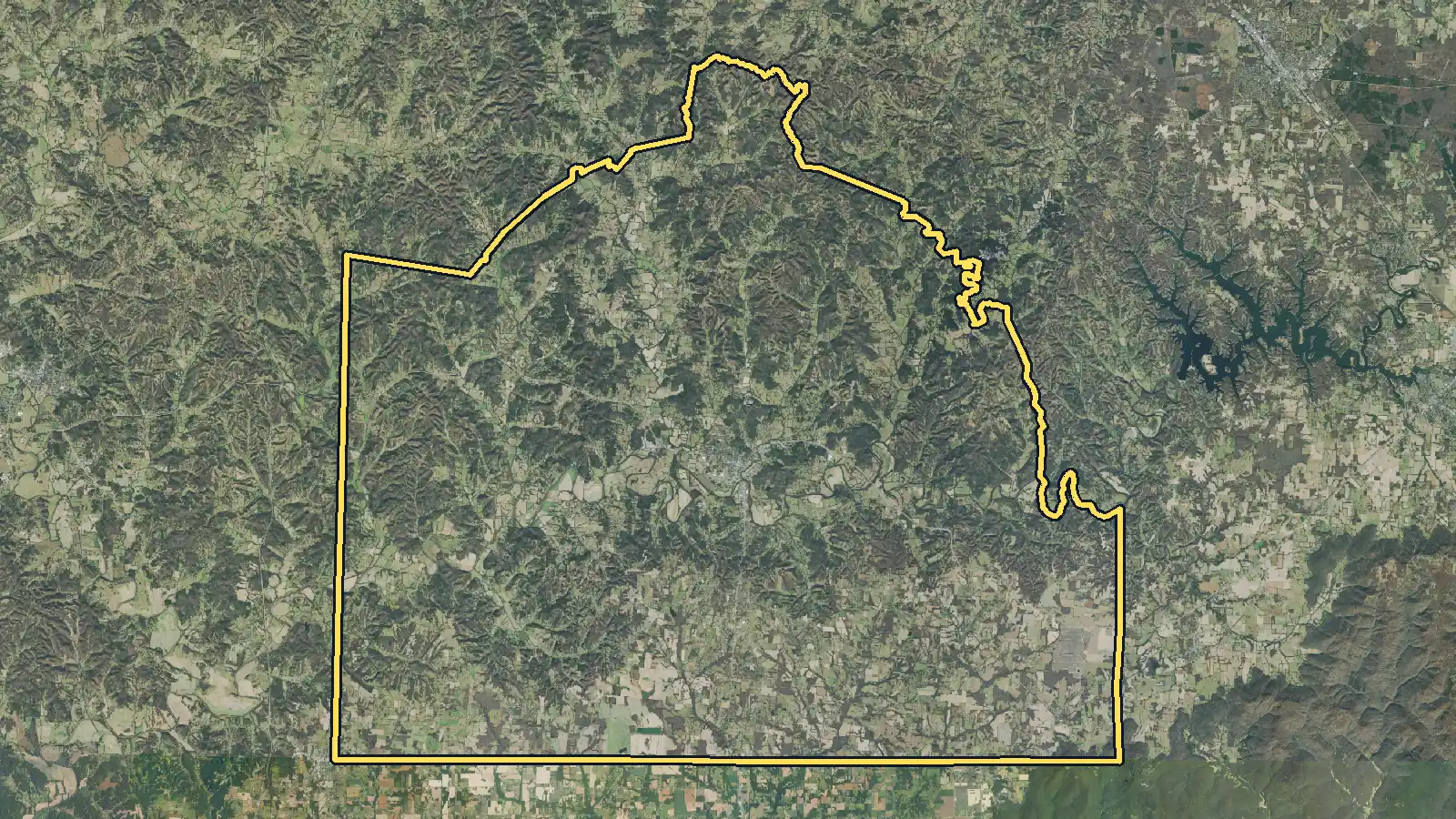
Where we buy
Areas we cover in Lincoln County
- Fayetteville
245vacant lots
These pages cover the largest lot markets in Lincoln County. We buy land anywhere else in the county too: send the parcel details through the form below.
Selling here
How selling land works in Lincoln County
Zoning, subdivision, and access checks come before building
A county parcel needs planning review before anyone assumes a house, split, or driveway will work. Lincoln County's Planning and Zoning Department administers zoning and subdivision regulations and handles zoning compliance, current planning, and future planning. The county building-permit hub adds requirements for certain construction and links culvert approvals, floodplain development, variances, special exceptions, and rezoning. Those are separate checks, so an assessor parcel number does not establish a buildable lot. The roll contains 1,808 vacant residential parcels. Median size is 1.49 acres, about 64,900 square feet, and the largest size group is mini-estate (2-3 acres) at 15% of the set. A buyer still needs parcel-specific zoning, legal access, road, and plat answers. [3],[4],[1]
Water rates do not prove service, and septic remains separate
Utility cost and utility availability are different questions. The Board of Public Utilities schedule dated July 1, 2025 lists a $27.77 monthly minimum for residential and commercial water, $6.26 per 1,000 gallons, and a 9.5% tax. Those posted rates apply where the system serves and accepts a connection; they do not prove a main or available tap at every county tract. If no sewer serves the site, TDEC evaluates septic suitability. Lincoln is not one of the nine contract counties, so the state handles the work. Property lines and the proposed house site must be marked, TDEC may request a detailed site plan or soils map, and a complete review can take up to 45 days. A water meter never substitutes for wastewater approval. [6],[7],[8]
River and floodplain land requires the correct map panel
Land near the Elk River or a tributary needs a parcel-level flood and access review. TWRA describes the Elk as a 195-mile tributary of the Tennessee River and reported in April 2026 that removing Lincoln County's Harms Mill Dam restored free flow, with 1,114 free-flowing miles of river and tributaries. Those regional facts do not place every tract in a flood zone. The county publishes a flood-damage-prevention resolution and a floodplain-development application, while TEMA advises owners to identify the correct map and contact the local floodplain administrator. Before pricing a low tract, confirm mapped zone, base-flood information, road approach, drainage, and any elevation or fill requirement. River proximity can add appeal while also increasing development review. [9],[4],[10]
Lot sales and appraisals need title and site adjustments
Countywide figures frame the market but do not price one parcel. Median appraised value in this vacant residential set is $41,100, with the middle half in $26,900–$72,000. Appraised value is the assessor's estimate, not assessed value and not a completed sale. From January through November 2025, 67 warranty-deed lot sales had a median of $49,000; the middle half was $26,000–$85,600. These are lot sales, not every deed recorded in that period. Zoning, legal access, public-road frontage, water-line reach, septic feasibility, flood exposure, and usable acreage can make one parcel differ from the median. The Register of Deeds records the instruments affecting ownership and says county records date to 1810, giving the title company the public chain it needs to review. [1],[3],[5]
Late taxes and recorded liens can be handled through title
A late tax bill or recorded lien does not automatically block a voluntary sale. February 28 is the final day to pay the prior year's tax without interest. On March 1, Tennessee adds 1.5%, with another charge each later month, and the trustee cannot waive it. The Register records trust deeds and other public instruments, so an independent title company can identify releases or payoffs needed for closing. For tax sales confirmed on or after July 1, 2026, Public Chapter 971 generally provides one year to redeem when the delinquency was three years or less and 90 days when it exceeded three years. That clock matters only after a court-confirmed sale. Liens or back taxes can be paid from the sale proceeds at closing, with the seller's consent. [11],[12],[5],[13]
Step by step
How do I sell my land in Lincoln County?
From your first message to money in hand, with nothing left out. Requesting an offer costs nothing and commits you to nothing.
See every detail of the process-
Tell us about your land
Fill out the short form (about 60 seconds) or email us. A land specialist reaches out to confirm the details, usually the same business day.
-
Get your cash offer within 24 hours
We review the property and send a written, no-obligation cash offer within 24 hours. It is a real number, not a range. Take it or leave it, with no pressure either way.
-
Sign electronically
If you accept, everyone signs the purchase agreement electronically. There is nothing to print or mail at this stage.
-
We inspect, the title company verifies
Our team inspects the land and an independent title company runs a title search for liens or taxes owed. If the land does not pass inspection, you are never charged anything.
-
Close and get paid
The title company prepares the closing documents for notarization and issues your funds by standard check, overnight check, or wire transfer. A typical sale closes in 10 days.
Questions
Selling land in Lincoln County: common questions
Who handles zoning and building permits in Lincoln County?
The county Planning and Zoning Department administers zoning and subdivision regulations and handles zoning compliance. The county building-permit hub states that permits are required for certain construction under state law and publishes related applications, including floodplain development and culvert approvals. A vacant parcel can be sold without a construction permit, but a buyer will confirm jurisdiction, zoning district, legal access, subdivision status, and the intended project before treating it as buildable.
Does every Lincoln County parcel have public water or sewer?
No service claim can be made from the county name alone. The Board of Public Utilities posts a water schedule dated July 1, 2025 with a $27.77 monthly minimum and a $6.26 per-1,000-gallon residential and commercial rate, but a rate sheet does not prove a nearby main, capacity, or tap. Verify the provider and connection at the parcel. Without sewer, a future structure needs a TDEC-approved septic path, which can require soil mapping and up to 45 days of review.
How do I check flood risk near the Elk River?
Find the parcel's flood map and contact the local floodplain administrator. Lincoln County publishes a flood-damage resolution and floodplain-development application, and TEMA says requirements vary by mapped zone and ordinance. TWRA identifies the Elk as a 195-mile river and reports 1,114 reconnected river and tributary miles after the removal of Harms Mill Dam in Lincoln County, but that does not determine one parcel's zone. Confirm road elevation, drainage, and building requirements directly.
Can I sell Lincoln County land with a title problem?
Often, yes. The Register of Deeds records deeds, trust deeds, and related instruments, with public county records dating to 1810. An independent title company reviews that chain and identifies unreleased loans, estate documents, judgments, or corrective instruments needed before closing. If the defect can be cured or paid, the company can coordinate it and record the buyer's deed. Cash papers can be signed electronically or by mail, and funds can move by check or wire.
Can delinquent property taxes be deducted from sale proceeds?
Yes, with a confirmed payoff and the seller's authorization. February 28 is the last interest-free payment day, and 1.5% interest begins March 1 and repeats monthly. Liens or back taxes can be paid from the sale proceeds at closing, with the seller's consent. If a tax sale was already confirmed, the case requires immediate deadline review. For confirmation orders on or after July 1, 2026, the usual redemption period is one year or 90 days depending on how long the taxes were delinquent.
Owner resources
Guides for your situation
- Can You Sell Land With a Lien?
Yes. Land with a lien can often be sold, but signing a deed does not by itself erase a valid claim. The lien may need to be paid, released, discharged, or otherwise resolved under the law that applies. With the seller's consent, an approved payoff can come from sale proceeds at closing. If the balance or lien is wrong, dispute it before closing and require proof of the cure.
- Can You Build on a Vacant Lot?
Maybe. A vacant lot is buildable only if the proposed use fits the rules that apply to that parcel and the site can satisfy access, utility, environmental, and permit requirements. Start with the local planning or zoning office, confirm that the parcel is a legal lot, and get a written parcel-specific answer. A zoning label or tax parcel number alone is not approval to build.[1][2]
- How to Sell Land in a Flood Zone
Flood-zone land can be sellable and sometimes buildable. A FEMA flood zone describes mapped risk; it is not a building permit. The buyer must verify the current effective Flood Insurance Rate Map and any map changes, then ask the local floodplain administrator what elevation, floodway, coastal, permit, and design rules apply.[1][2][4] Vacant land itself is not covered by an NFIP policy; flood insurance covers qualifying buildings and contents, not land value.[5][6]
Your written offer
Get your cash offer
Four short steps, about 60 seconds. We review your property and send a written, no-obligation cash offer within 24 hours. You can take it or leave it.
What happens after you send this
- A land specialist reaches out, usually the same business day, to confirm the details.
- You get a written cash offer within 24 hours: a real number, not a range.
- You decide. Requesting an offer costs nothing and commits you to nothing.
You will never be asked to pay us anything. No deposit, no processing fee, no closing-cost advance.
How we made this page
Parcel Buyers is a land-buying company based in Florida. We buy vacant land directly from owners and publish these local pages so owners can see what land in their area is doing before they sell, to us or anyone else. We count the tax-roll figures ourselves from state data, take local rules and fees from the official sources listed below, and use AI tools to help research and draft the text. Every number links to its source, and we update the page when the data changes.
Method and sources
Parcel and assessment figures cover all parcels in Lincoln County. Source [1] is our own count of the Tennessee Comptroller of the Treasury's county parcel and assessment files (assessment data dated August 28, 2026): a vacant lot is a residential parcel with no buildings, mobile home or improvement value; values are the county assessor's appraised (market) value; sale prices count only 2025 warranty-deed sales of a single lot that was vacant when it sold, at $1,000 or more, with bulk deeds and development-land deals removed. Treat medians as a guide to recent recorded amounts, not as an offer or an appraisal. Page updated September 30, 2026. Lot-size sale rows use the same qualified 2025 sale cohort and canonical square-foot classes; classes with fewer than 10 sales are omitted.
- [1] Tennessee Comptroller of the Treasury (data); Parcel Buyers (analysis), Tennessee Comptroller of the Treasury, Office of Local Government parcel and assessment data (accessed 2026-10-01)
- [2] Lincoln County, Tennessee, Lincoln County officials (accessed 2026-09-30)
- [3] Lincoln County, Tennessee, Planning and Zoning Department (accessed 2026-09-30)
- [4] Lincoln County, Tennessee, Building permits and floodplain documents (accessed 2026-09-30)
- [5] Lincoln County, Tennessee, Register of Deeds (accessed 2026-09-30)
- [6] Lincoln County Board of Public Utilities, Water and wastewater rates effective July 1, 2025 (accessed 2026-09-30)
- [7] Tennessee Department of Environment and Conservation, Subsurface sewage disposal system frequently asked questions (accessed 2026-09-30)
- [8] Tennessee Department of Environment and Conservation, Online application for septic-related services (accessed 2026-09-30)
- [9] Tennessee Wildlife Resources Agency, Dam removal provides benefits for the Elk River (accessed 2026-09-30)
- [10] Tennessee Emergency Management Agency, Floodplain management (accessed 2026-09-30)
- [11] Tennessee Comptroller of the Treasury, Property tax assessment schedule (accessed 2026-09-30)
- [12] University of Tennessee County Technical Assistance Service, Interest on delinquent property taxes (accessed 2026-09-30)
- [13] Tennessee General Assembly, Public Chapter 971: tax-sale redemption periods (accessed 2026-09-30)
- [14] Tennessee Wildlife Resources Agency, Flintville Hatchery directions and hunting rules (accessed 2026-10-02)