Tennessee
Sell your land in Decatur County for cash
Parcel Buyers buys vacant lots and land for cash in Decatur County, including river-area property where flood mapping, septic approval and access can affect a build plan. You get a written, no-obligation cash offer within 24 hours, and closings run through an independent title company, typically in about 10 days, with no fees or commissions.
By Parcel Buyers · · Lot figures from the 2026 Tennessee parcel and assessment data · How we made this page
Quick answers
- Who buys land for cash in Decatur County?
- Parcel Buyers is a direct land buyer that makes written, no-obligation cash offers on vacant lots and acreage in Decatur County, Tennessee, usually within 24 hours. Sales close through an independent title company, typically in about 10 days, with no fees or commissions to the seller.
- What did vacant lots in Decatur County sell for in 2025?
- In 2025, vacant lots in Decatur County sold for a median of $25,000 across 88 arm's-length sales; the middle half sold for $14,200 to $41,000.
- How many vacant lots are in Decatur County?
- The 2026 Tennessee parcel and assessment data lists 4,190 vacant residential lots in Decatur County; 14% are half-acre lots, and the median lot is 0.53 acre.
- How is a cash offer for land in Decatur County set?
- We start from recent sales of similar lots nearby, like the 2025 prices on this page, then adjust for water and sewer, road access, flood zone, lot size and any title issues, and for the time and cost of reselling. You get one written number, not a range.
- How do I know a land buyer in Decatur County is legitimate?
- A real buyer closes through an independent, licensed title company and never asks you to pay anything up front. We never charge sellers a fee, deposit or closing-cost advance, and the title company pays you by check or wire at closing.
- Who is buying lots in Decatur County?
- In 2025, companies bought 7% of the vacant lots that sold in Decatur County. Individuals bought the rest.
Local data
What is land in Decatur County worth?
In 2025, vacant lots in Decatur County sold for a median of $25,000 across 88 arm's-length sales; the middle half sold for $14,200 to $41,000. [1]
These are open-market sale prices. A direct cash offer is usually lower, because a cash buyer closes in days and takes on the time and cost of reselling the lot.
| Vacant residential lots | 4,190 parcels classified vacant residential on the 2026 Tennessee parcel and assessment data [1] |
|---|---|
| Most common lot size | Half-acre lot (19,000–24,000 sq ft): 14% of vacant lots; next, quarter-acre lot at 8%. Median lot: 0.53 acre (22,900 sq ft). [1] |
| Typical appraised value | $17,400 median appraised value for a vacant lot; the middle half fall between $10,000 and $32,300 [1] |
| Recent lot sale prices | $25,000 median across 88 arm's-length sales of vacant lots in Decatur County (Jan 2025–Dec 2025); the middle half sold for $14,200–$41,000 [1] |
| Who bought lots in 2025 | Companies made 7% of those purchases; individuals made the rest [1] |
| Owners who live elsewhere | 8% of vacant lots have an owner mailing address outside Tennessee (most often FL, MS, IL) [1] |
| Assessor keeps maps and values | The Decatur County Assessor of Property appraises and assesses taxable real property and maintains the county's property maps. [2] |
| Trustee collects county taxes | The County Trustee is the county's tax collector. The county FAQ lists a property-tax rate of $2.58 per $100 of value. [2],[3] |
| Deeds and plats are recorded | The Register of Deeds preserves recorded deeds, deeds of trust, liens, contracts and plats, among other instruments. [2] |
| Water and sewer providers vary | The county's utility directory names municipal providers and two utility districts for water and sewer, so service must be confirmed for the tract. [4] |
| Septic permit comes before site work | TDEC says a septic permit should be obtained before dirt work or construction. Alternative systems need a licensed consultant's soils map. [6] |
| River frontage needs flood review | The county reports more than 50 miles of Tennessee River shoreline. FEMA flood-map layers and local floodplain rules can affect a particular parcel. [5],[7] |
| Greenbelt can change sale math | Qualifying agricultural, forest and open-space land is valued by present use. Losing that status can trigger rollback taxes. [8] |
| Kentucky Lake | Kentucky Reservoir, the Tennessee River lake formed by Kentucky Dam, reaches into Decatur County. TVA's land plan for it guides private water-use permits and covers 74,713.6 acres of public land, 55,314.2 of them zoned natural-resource conservation. [11] |
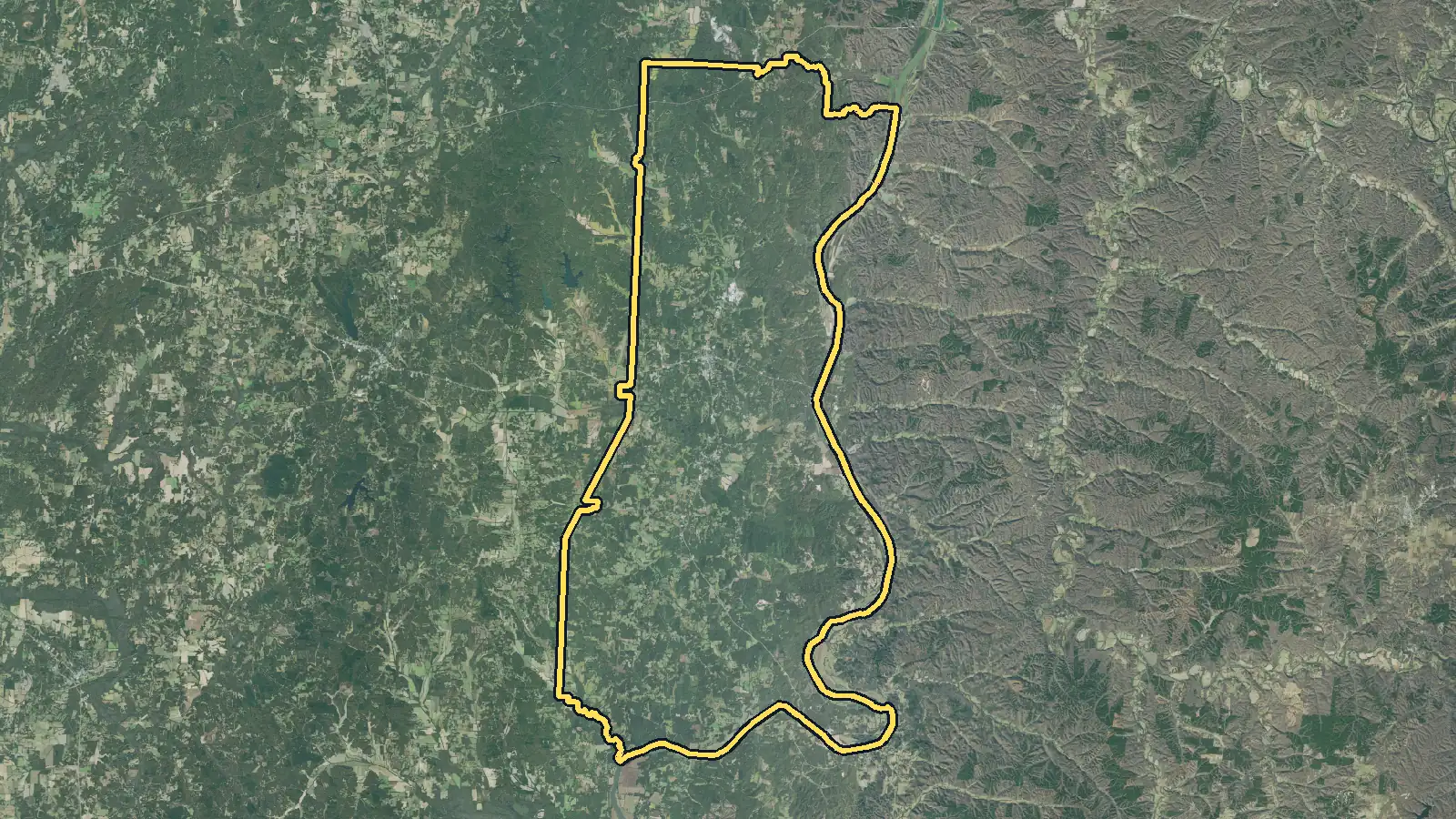
Where we buy
Areas we cover in Decatur County
- Woodlawn Shores
216vacant lots
These pages cover the largest lot markets in Decatur County. We buy land anywhere else in the county too: send the parcel details through the form below.
Selling here
How selling land works in Decatur County
Start with the parcel record, tax bill and deed record
Start with the county records before deciding what to do with vacant land. The Assessor of Property determines appraised and assessed values for taxable real property and keeps the property maps. Use that office to confirm the parcel ID, acreage, map and current classification. The Trustee is the county's tax collector, and the county FAQ publishes a rate of $2.58 per $100 of value. That rate is a tax input, not a cash value. For chain of title, liens, plats and recorded restrictions, use the Register of Deeds. Its office preserves deeds, deeds of trust, liens, contracts and plats. These offices answer different questions, so a tax bill, assessor record and recorded deed are not substitutes for one another. Parcel Buyers checks title, utilities and access before making an offer, and liens or back taxes can be paid from sale proceeds at closing with the seller's consent. [2],[3]
Water, sewer, septic and road access change the build budget
Water and sewer service varies by location. The county utility directory identifies municipal providers plus the North and Perryville utility districts. A provider must confirm service, capacity and tap cost for the tract. Where a future home will use septic, TDEC says to get the permit before any dirt work or construction, including the building pad. An alternative system may be needed when soils do not favor a conventional system; its review requires a soils map from a Tennessee-licensed consultant. When land is divided for homes using septic, TDEC requires a subdivision evaluation; divisions where every tract is five acres or larger are excluded. The county highway department maintains and builds county roads, but a nearby public road does not prove a legal driveway or recorded access. Resolve these costs and approvals before a buyer prices a deal. [4],[6],[2]
River shoreline and flood maps matter parcel by parcel
River setting is a real part of Decatur County land due diligence. The county says it has more than 50 miles of shoreline along the Tennessee River. River-area lots can differ in access, elevation, shoreline rights and flood exposure. TEMA says FEMA Flood Insurance Rate Maps show flood-risk areas and are used for development and permitting decisions. Its Tennessee Property Viewer lets users search available counties by parcel number, owner, street address or subdivision, then turn on the FEMA flood layer. Maps can change, and local communities manage floodplain requirements. Review the official map and ask the local floodplain administrator about development rules, elevation certificates or a regulated floodplain before treating river proximity as a buildable-site feature. Flood mapping helps identify site limits. [5],[7]
Taxes, Greenbelt and a direct cash sale
State parcel data lists 4,190 vacant residential lots countywide. In 2025, it includes 88 single-parcel warranty-deed vacant-lot sales, with median recorded consideration of $25,000 and a middle range of $14,200–$41,000. These are lot sales, not a promise of what any parcel will bring. Tennessee realty transfer tax uses the greater of consideration or property value, so a recorded figure is not always the parties' agreed price. Greenbelt values eligible agricultural, forest and open-space land by present use. A first-time application is due March 15. Disqualification can create rollback taxes for three years on agricultural and forest land, or five years on open space; the assessor calculates them. A delinquent-tax sale is court ordered and run by the court clerk, who reports it to the judge for confirmation. A title company can identify payoffs in a voluntary sale. [1],[10],[8],[9]
Step by step
How do I sell my land in Decatur County?
From your first message to money in hand, with nothing left out. Requesting an offer costs nothing and commits you to nothing.
See every detail of the process-
Tell us about your land
Fill out the short form (about 60 seconds) or email us. A land specialist reaches out to confirm the details, usually the same business day.
-
Get your cash offer within 24 hours
We review the property and send a written, no-obligation cash offer within 24 hours. It is a real number, not a range. Take it or leave it, with no pressure either way.
-
Sign electronically
If you accept, everyone signs the purchase agreement electronically. There is nothing to print or mail at this stage.
-
We inspect, the title company verifies
Our team inspects the land and an independent title company runs a title search for liens or taxes owed. If the land does not pass inspection, you are never charged anything.
-
Close and get paid
The title company prepares the closing documents for notarization and issues your funds by standard check, overnight check, or wire transfer. A typical sale closes in 10 days.
Questions
Selling land in Decatur County: common questions
Can I sell Decatur County land if it has no sewer connection?
Yes. Parcel Buyers buys vacant land with no water, sewer or road work. The county directory shows that water and sewer are provided by different municipal providers and utility districts, so service needs confirmation for the individual tract. If a future home will use septic, TDEC says to get a septic permit before any dirt work or construction. We check utilities, access and title before offering.
What should I check before splitting a Decatur County tract?
Start with septic, access and plat records. TDEC requires a subdivision evaluation, survey and soils map when land is divided into two or more lots for present or future building with septic; divisions where every tract is at least five acres are excluded from that definition. The Register of Deeds is where recorded plats and deed restrictions are preserved.
Can I sell Greenbelt land in Decatur County?
Yes. You can sell Greenbelt land, but the classification should be reviewed before signing. Greenbelt values qualifying land by current use, and a disqualifying change can create rollback taxes. Agricultural and forest land can carry three years of recaptured savings; open-space land can carry five. The Assessor of Property calculates the rollback amount.
What happens if property taxes on my land are unpaid?
Unpaid taxes can lead to a court-ordered delinquent-tax sale. Tennessee's Attorney General explains that the court clerk conducts the public sale after a court order, gives required notice and reports the sale for judicial confirmation. Before that point, a title company can identify tax and lien payoffs for a voluntary sale; back taxes may be paid from sale proceeds with the seller's consent.
Do I need to check a flood map before selling river-area land?
Yes. A flood map is worth checking before you describe a river-area tract to a buyer. TEMA says FEMA maps identify flood-hazard areas and support permitting and development decisions. Map status does not prove a specific building plan, so ask the applicable local floodplain administrator about local requirements for the parcel.
Owner resources
Guides for your situation
- How to Sell Land in a Flood Zone
Flood-zone land can be sellable and sometimes buildable. A FEMA flood zone describes mapped risk; it is not a building permit. The buyer must verify the current effective Flood Insurance Rate Map and any map changes, then ask the local floodplain administrator what elevation, floodway, coastal, permit, and design rules apply.[1][2][4] Vacant land itself is not covered by an NFIP policy; flood insurance covers qualifying buildings and contents, not land value.[5][6]
- Can You Sell Land With a Lien?
Yes. Land with a lien can often be sold, but signing a deed does not by itself erase a valid claim. The lien may need to be paid, released, discharged, or otherwise resolved under the law that applies. With the seller's consent, an approved payoff can come from sale proceeds at closing. If the balance or lien is wrong, dispute it before closing and require proof of the cure.
- How Cash Land Buyers Price Offers
A cash-land offer may start with verified sales of land with similar use, then adjust those sales for meaningful differences.[1] Buyers may also account for access, utilities, legal use, size, shape, flood and soil questions, title issues, demand, and costs and risk they will carry. No universal assessed-value percentage applies. Compare each written offer by expected net proceeds, contingencies, seller work, and timing—not one asking price or headline number.
Your written offer
Get your cash offer
Four short steps, about 60 seconds. We review your property and send a written, no-obligation cash offer within 24 hours. You can take it or leave it.
What happens after you send this
- A land specialist reaches out, usually the same business day, to confirm the details.
- You get a written cash offer within 24 hours: a real number, not a range.
- You decide. Requesting an offer costs nothing and commits you to nothing.
You will never be asked to pay us anything. No deposit, no processing fee, no closing-cost advance.
How we made this page
Parcel Buyers is a land-buying company based in Florida. We buy vacant land directly from owners and publish these local pages so owners can see what land in their area is doing before they sell, to us or anyone else. We count the tax-roll figures ourselves from state data, take local rules and fees from the official sources listed below, and use AI tools to help research and draft the text. Every number links to its source, and we update the page when the data changes.
Method and sources
Parcel and assessment figures cover all parcels in Decatur County. Source [1] is our own count of the Tennessee Comptroller of the Treasury's county parcel and assessment files (assessment data dated August 28, 2026): a vacant lot is a residential parcel with no buildings, mobile home or improvement value; values are the county assessor's appraised (market) value; sale prices count only 2025 warranty-deed sales of a single lot that was vacant when it sold, at $1,000 or more, with bulk deeds and development-land deals removed. Treat medians as a guide to recent recorded amounts, not as an offer or an appraisal. Page updated October 8, 2026.
- [1] Tennessee Comptroller of the Treasury (data); Parcel Buyers (analysis), Tennessee Comptroller of the Treasury, Office of Local Government parcel and assessment data (accessed 2026-10-01)
- [2] Decatur County, Tennessee, Decatur County departments and elected offices (accessed 2026-09-30)
- [3] Decatur County, Tennessee, Decatur County frequently asked questions (accessed 2026-09-30)
- [4] Decatur County, Tennessee, Decatur County utilities directory (accessed 2026-09-30)
- [5] Decatur County, Tennessee, Decatur County mayor's office (accessed 2026-09-30)
- [6] Tennessee Department of Environment and Conservation, Online application for septic related services (accessed 2026-09-30)
- [7] Tennessee Emergency Management Agency, Tennessee floodplain management mapping (accessed 2026-09-30)
- [8] Tennessee Comptroller of the Treasury, Tennessee Greenbelt program (accessed 2026-09-30)
- [9] Tennessee Office of the Attorney General, Authority of court clerk at a delinquent tax sale (accessed 2026-09-30)
- [10] Tennessee Department of Revenue, Realty transfer recordation tax manual (accessed 2026-09-30)
- [11] Tennessee Valley Authority, Kentucky Reservoir Land Management Plan (accessed 2026-10-02)