Tennessee
Sell your land in Carter County for cash
Parcel Buyers buys vacant lots and land for cash in Carter County, including mountain lots where a slope over 30 percent can block a septic percolation test unless TDEC staff and a soil consultant do a special review. You get a written, no-obligation cash offer within 24 hours, and closings run through an independent title company, typically in about 10 days, with no fees or commissions.
By Parcel Buyers · · Lot figures from the 2026 Tennessee parcel and assessment data · How we made this page
Quick answers
- Who buys land for cash in Carter County?
- Parcel Buyers is a direct land buyer that makes written, no-obligation cash offers on vacant lots and acreage in Carter County, Tennessee, usually within 24 hours. Sales close through an independent title company, typically in about 10 days, with no fees or commissions to the seller.
- What did vacant lots in Carter County sell for in 2025?
- In 2025, vacant lots in Carter County sold for a median of $37,000 across 103 arm's-length sales; the middle half sold for $17,200 to $65,000.
- How many vacant lots are in Carter County?
- The 2026 Tennessee parcel and assessment data lists 4,959 vacant residential lots in Carter County; 14% are mini-estate (2-3 acres)s, and the median lot is 1.00 acre.
- How is a cash offer for land in Carter County set?
- We start from recent sales of similar lots nearby, like the 2025 prices on this page, then adjust for water and sewer, road access, flood zone, lot size and any title issues, and for the time and cost of reselling. You get one written number, not a range.
- How do I know a land buyer in Carter County is legitimate?
- A real buyer closes through an independent, licensed title company and never asks you to pay anything up front. We never charge sellers a fee, deposit or closing-cost advance, and the title company pays you by check or wire at closing.
- Who is buying lots in Carter County?
- In 2025, companies bought 10% of the vacant lots that sold in Carter County, including 4% bought by homebuilders. Individuals bought the rest.
Local data
What is land in Carter County worth?
In 2025, vacant lots in Carter County sold for a median of $37,000 across 103 arm's-length sales; the middle half sold for $17,200 to $65,000. [1]
These are open-market sale prices. A direct cash offer is usually lower, because a cash buyer closes in days and takes on the time and cost of reselling the lot.
| Vacant residential lots | 4,959 parcels classified vacant residential on the 2026 Tennessee parcel and assessment data [1] |
|---|---|
| Most common lot size | Mini-estate (2-3 acres) (70,000–140,000 sq ft): 14% of vacant lots; next, half-acre lot at 8%. Median lot: 1.00 acre (43,560 sq ft). [1] |
| Typical appraised value | $42,100 median appraised value for a vacant lot; the middle half fall between $25,700 and $72,300 [1] |
| Recent lot sale prices | $37,000 median across 103 arm's-length sales of vacant lots in Carter County (Jan 2025–Dec 2025); the middle half sold for $17,200–$65,000 [1] |
| Who bought lots in 2025 | Companies made 10% of those purchases, including 4% by homebuilders; individuals made the rest [1] |
| Owners who live elsewhere | 17% of vacant lots have an owner mailing address outside Tennessee (most often NC, FL, SC) [1] |
| Zoning and building review | Planning and Zoning administers county zoning, subdivision rules, and Critical Area regulations. It reviews residential building permits and FEMA floodplains. Districts include A-1 agriculture and R-1 low-density single-family. [2] |
| Septic permits | TDEC's regional environmental field office serves this county. A new septic system needs a construction permit. A conventional permit is $400 up to 1,000 gallons a day. [4],[5] |
| Steep slopes and percolation | A slope over 30 percent does not qualify for a septic percolation test unless a soil consultant and TDEC staff do a special investigation. A slope over 50 percent is unsuitable. [7] |
| When county taxes go delinquent | February 28 is the last day to pay the prior year's property tax without interest. The tax is delinquent on March 1. Interest of 1.5 percent is added that day and on the first of each later month. [12],[16] |
| Delinquent-tax sale | The trustee collects the county property tax. Bills more than 13 months past due go to the Clerk and Master. That office runs the sales for delinquent property taxes. [9],[11] |
| Greenbelt rollback years | Agricultural and forest rollback recaptures the tax saved for the prior three years. Open space rollback covers five years. It is not a penalty. Farm or forest land generally needs at least 15 acres. [14] |
| Current flood map | The county is in the National Flood Insurance Program as community 470024. The current effective flood map date is February 14, 2025. FEMA approved the hazard plan from February 1, 2024, through January 31, 2029. [17],[18] |
| Water is not countywide | First Utility District began in 1950 and now serves more than 3,700 customers. That is water for parts of the county, not a line at every vacant lot. [19] |
| Watauga Reservoir | TVA says Watauga Reservoir sits in Carter County and is surrounded by Cherokee National Forest. Its 105 shoreline miles and TVA land-use zones make waterfront access and dock rights parcel-specific. [20] |
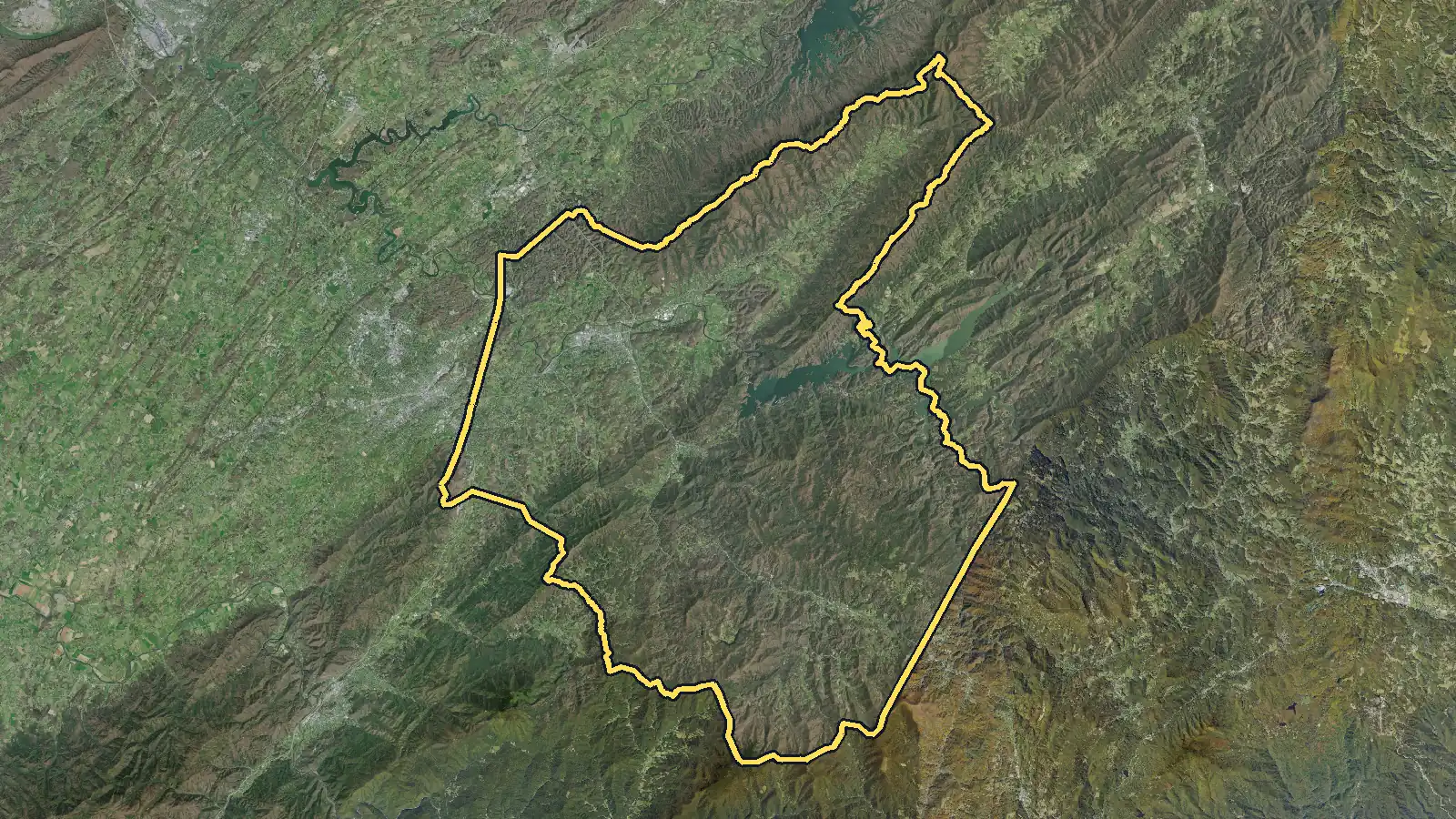
Where we buy
Areas we cover in Carter County
- Elizabethton
402vacant lots
These pages cover the largest lot markets in Carter County. We buy land anywhere else in the county too: send the parcel details through the form below.
Selling here
How selling land works in Carter County
County zoning is reviewed before a house goes up
County Planning and Zoning reviews county zoning and residential building permits before a house goes up. The same office administers subdivision rules and Critical Area regulations, and it reviews FEMA floodplains. Its zoning page groups land into agricultural, residential, business, and industrial districts. A-1 is agriculture. R-1 is the low-density single-family district. A zoning label is not a promise that a lot can get a septic permit or a water tap. Septic and well permits are sent to TDEC, not handled at the zoning counter. Dirt work has a separate rule: grading may need a county stormwater permit, and disturbing one acre or more, or a smaller piece of a larger plan that totals one acre, may also need TDEC's Construction General Permit. [2],[3]
A steep slope can block a septic permit
Yes. A slope steeper than 30 percent can keep a lot from qualifying for a septic percolation test. The state soil handbook says that slope does not qualify unless an approved soil consultant and TDEC staff do a special investigation. A slope over 50 percent is unsuitable. TDEC's field office for this county takes the permit. Anyone installing a septic system needs one. A TDEC scientist does a site evaluation and may ask for a soils map from a licensed soil consultant. Review must finish within 45 days of a complete application. A new conventional permit is $400 up to 1,000 gallons a day. Public water is separate. First Utility District began in 1950 and serves more than 3,700 customers in parts of the county, not every lot. We buy vacant lots even when there is no water, sewer, or road work yet. We check utilities, access, and title before we offer. [7],[4],[5],[6],[19]
Unpaid property tax can reach a court sale
The Trustee collects the county property tax, and the Clerk and Master handles delinquent bills and tax sales when a balance stays unpaid. February 28 is the last day to pay the prior year's tax without interest. On March 1 the tax becomes delinquent, and 1.5 percent interest is added that day and on the first day of each later month. A bill more than 13 months past due goes to the Clerk and Master. If a court case or sale has started, request the current payoff and case status because deadlines and court costs are specific to that file. The Assessor values property, the Trustee collects tax, the Register records deeds, and the Register does not perform title searches. [9],[11],[10],[8],[12],[16]
Greenbelt rollback is saved tax, not a fine
Greenbelt rollback is the tax the owner saved, not a fine. The Agricultural, Forest and Open Space Land Act lets qualifying land be taxed on use value. When that land leaves the program, the assessor figures the gap between use-value tax and market-value tax. Agricultural and forest land looks back three years. Open space land looks back five years. A farm or forest tract generally has to be at least 15 acres. A first application is due by March 15. If a sale knocks the land out of greenbelt, the seller owes the rollback unless a written contract says otherwise. A buyer who writes, at the sale, that they will keep the use, and then does not file within 90 days, becomes the one who owes it. The assessor sends written notice. The rollback is payable then and turns delinquent on March 1 of the next year. [14],[15]
Appraisal, tax, and sale price are different numbers
An appraisal is not the tax bill, and a sale median is not an exact market price. Median appraised value is $42,100, and the middle half falls in $25,700–$72,300. Residential land is assessed at 25 percent of appraised value. The median lot is 1.00 acres (43,560 square feet). The most common size group is the mini-estate (2-3 acres), about 14% of the lots. There are 4,959 vacant residential parcels across Carter County. 83% of owners mail from inside Tennessee, and 17% use an address outside Tennessee. Across 103 lot sales, the median was $37,000 and the middle half ran $17,200–$65,000. Those are the most recent accepted warranty deeds, one parcel each, vacant at the sale and still vacant, at $1,000 or more. They are not every 2025 sale. [1],[13]
Step by step
How do I sell my land in Carter County?
From your first message to money in hand, with nothing left out. Requesting an offer costs nothing and commits you to nothing.
See every detail of the process-
Tell us about your land
Fill out the short form (about 60 seconds) or email us. A land specialist reaches out to confirm the details, usually the same business day.
-
Get your cash offer within 24 hours
We review the property and send a written, no-obligation cash offer within 24 hours. It is a real number, not a range. Take it or leave it, with no pressure either way.
-
Sign electronically
If you accept, everyone signs the purchase agreement electronically. There is nothing to print or mail at this stage.
-
We inspect, the title company verifies
Our team inspects the land and an independent title company runs a title search for liens or taxes owed. If the land does not pass inspection, you are never charged anything.
-
Close and get paid
The title company prepares the closing documents for notarization and issues your funds by standard check, overnight check, or wire transfer. A typical sale closes in 10 days.
Questions
Selling land in Carter County: common questions
Can I sell a lot here if it has no septic permit?
Yes. A missing septic permit does not block a cash sale of vacant land. A new system still needs a TDEC construction permit, and a scientist may ask for a soils map before one is issued. A slope over 30 percent can fail the percolation screen unless TDEC staff and a soil consultant investigate it.
Will a steep mountain lot still sell for cash?
It can. Slope is a build problem, not an automatic bar to a sale. TDEC treats a slope over 30 percent as unfit for a percolation test unless a soil consultant and division staff do a special investigation. Over 50 percent is unsuitable. County zoning is a separate check. A-1 and R-1 are two of the districts on the zoning page.
What if my vacant lot sits in a flood zone?
You can still sell it. Read the map first. The county is in the National Flood Insurance Program, community 470024, and the current effective map date is February 14, 2025. Planning and Zoning reviews FEMA floodplains. A mapped zone can change how a house is built. It does not, by itself, stop a sale of vacant land. FEMA approved the county hazard plan through January 31, 2029.
Who pays greenbelt rollback if I sell?
If the sale knocks the land out of greenbelt, the seller owes the rollback unless a written contract shifts it. A buyer who promises in writing to keep the use, then misses the 90-day filing, owes it instead. Agricultural and forest rollback covers the prior three years. Open space covers five. The assessor calculates it. It is the tax that was saved, not an extra fine.
Can I sell with unpaid property taxes?
Often, yes. The trustee still collects the bill until it is more than 13 months past due, and then the Clerk and Master takes it and can sell the land. Interest of 1.5 percent starts March 1 and repeats on the first of each month. Liens or back taxes can be paid from the sale proceeds if you agree. We cover closing costs.
Who records the deed and checks the title?
The Register of Deeds records the deed but states that its office does not perform title searches or give legal advice. An independent licensed title company handles our title and closing work. The only contingency is our land inspection. If that inspection fails, it costs you nothing. You can sign electronically or by mail and receive funds by check or wire.
Owner resources
Guides for your situation
- Can You Build on a Vacant Lot?
Maybe. A vacant lot is buildable only if the proposed use fits the rules that apply to that parcel and the site can satisfy access, utility, environmental, and permit requirements. Start with the local planning or zoning office, confirm that the parcel is a legal lot, and get a written parcel-specific answer. A zoning label or tax parcel number alone is not approval to build.[1][2]
- Water, Sewer, Septic, and Wells on Vacant Lots
A vacant lot may use public water, a private well, public sewer, or an onsite septic system, but nearby pipes and neighboring homes do not prove what the parcel can use. Ask each utility for a written availability decision, ask the permitting office whether connection is mandatory, and obtain a qualified site evaluation before saying septic will fit. Keep every response, permit, plan, test, and receipt.
- How Cash Land Buyers Price Offers
A cash-land offer may start with verified sales of land with similar use, then adjust those sales for meaningful differences.[1] Buyers may also account for access, utilities, legal use, size, shape, flood and soil questions, title issues, demand, and costs and risk they will carry. No universal assessed-value percentage applies. Compare each written offer by expected net proceeds, contingencies, seller work, and timing—not one asking price or headline number.
Your written offer
Get your cash offer
Four short steps, about 60 seconds. We review your property and send a written, no-obligation cash offer within 24 hours. You can take it or leave it.
What happens after you send this
- A land specialist reaches out, usually the same business day, to confirm the details.
- You get a written cash offer within 24 hours: a real number, not a range.
- You decide. Requesting an offer costs nothing and commits you to nothing.
You will never be asked to pay us anything. No deposit, no processing fee, no closing-cost advance.
How we made this page
Parcel Buyers is a land-buying company based in Florida. We buy vacant land directly from owners and publish these local pages so owners can see what land in their area is doing before they sell, to us or anyone else. We count the tax-roll figures ourselves from state data, take local rules and fees from the official sources listed below, and use AI tools to help research and draft the text. Every number links to its source, and we update the page when the data changes.
Method and sources
Parcel and assessment figures cover all parcels in Carter County. Source [1] is our own count of the Tennessee Comptroller of the Treasury's county parcel and assessment files (assessment data dated August 28, 2026): a vacant lot is a residential parcel with no buildings, mobile home or improvement value; values are the county assessor's appraised (market) value; sale prices count only 2025 warranty-deed sales of a single lot that was vacant when it sold, at $1,000 or more, with bulk deeds and development-land deals removed. Treat medians as a guide to recent recorded amounts, not as an offer or an appraisal. Page updated September 30, 2026.
- [1] Tennessee Comptroller of the Treasury (data); Parcel Buyers (analysis), Tennessee Comptroller of the Treasury, Office of Local Government parcel and assessment data (accessed 2026-10-01)
- [2] Carter County Planning and Zoning, Planning and Zoning (accessed 2026-09-30)
- [3] Carter County Planning and Zoning, Stormwater MS-4 (accessed 2026-09-30)
- [4] Tennessee Department of Environment and Conservation, Johnson City Environmental Field Office (accessed 2026-09-30)
- [5] Tennessee Department of Environment and Conservation, Septic System Construction Permit (accessed 2026-09-30)
- [6] Tennessee Department of Environment and Conservation, Subsurface sewage disposal system FAQs (accessed 2026-09-30)
- [7] Tennessee Department of Environment and Conservation, Soil Handbook for Subsurface Sewage Disposal Systems (accessed 2026-09-30)
- [8] Carter County Assessor of Property, Assessor of Property (accessed 2026-09-30)
- [9] Carter County Trustee, County Trustee (accessed 2026-09-30)
- [10] Carter County Register of Deeds, Register of Deeds (accessed 2026-09-30)
- [11] Carter County Clerk and Master, Clerk and Master (accessed 2026-09-30)
- [12] Tennessee Comptroller of the Treasury, Assessment Schedule (accessed 2026-09-30)
- [13] Tennessee Comptroller of the Treasury, How to Calculate Your Tax Bill (accessed 2026-09-30)
- [14] Tennessee State Board of Equalization, Greenbelt (accessed 2026-09-30)
- [15] Tennessee State Board of Equalization, Greenbelt Manual, October 2024 (accessed 2026-09-30)
- [16] UT County Technical Assistance Service, Interest on delinquent taxes (accessed 2026-09-30)
- [17] Federal Emergency Management Agency, NFIP Community Status Book, Carter County (accessed 2026-09-30)
- [18] FEMA Region 4, Carter County Hazard Mitigation Plan approval letter (accessed 2026-09-30)
- [19] First Utility District of Carter County, First Utility District of Carter County (accessed 2026-09-30)
- [20] Tennessee Valley Authority, Watauga Reservoir Land Management Plan (accessed 2026-10-01)