North Carolina
Sell your land in Pitt County for cash
Parcel Buyers buys vacant land in Pitt County for cash, including parcels that still need septic, floodplain or permit review near the Tar River. You get a written, no-obligation cash offer within 24 hours, and closings run through an independent title company, typically in about 10 days, with no fees or commissions.
By Parcel Buyers · · Lot figures from the 2026 North Carolina parcel and assessment data · How we made this page
Quick answers
- Who buys land for cash in Pitt County?
- Parcel Buyers is a direct land buyer that makes written, no-obligation cash offers on vacant lots and acreage in Pitt County, North Carolina, usually within 24 hours. Sales close through an independent title company, typically in about 10 days, with no fees or commissions to the seller.
- How many vacant lots are in Pitt County?
- The 2026 North Carolina parcel and assessment data lists 10,562 vacant residential lots in Pitt County; 10% are mini-estate (2-3 acres)s, and the median lot is 0.57 acre.
- How is a cash offer for land in Pitt County set?
- We start from recent sales of similar lots nearby, like the 2025 prices on this page, then adjust for water and sewer, road access, flood zone, lot size and any title issues, and for the time and cost of reselling. You get one written number, not a range.
- How do I know a land buyer in Pitt County is legitimate?
- A real buyer closes through an independent, licensed title company and never asks you to pay anything up front. We never charge sellers a fee, deposit or closing-cost advance, and the title company pays you by check or wire at closing.
Local data
What is land in Pitt County worth?
These are county-qualified sale prices. A direct cash offer is usually lower, because a cash buyer closes in days and takes on the time and cost of reselling the lot.
| Vacant residential lots | 10,562 parcels classified vacant residential on the 2026 North Carolina parcel and assessment data [1] |
|---|---|
| Most common lot size | Mini-estate (2-3 acres) (70,000–140,000 sq ft): 10% of vacant lots; next, quarter-acre lot at 9%. Median lot: 0.57 acre (24,830 sq ft). [1] |
| Typical county assessed value | $20,000 median county assessed value for a vacant lot; the middle half fall between $7,900 and $35,000 [1] |
| Recent lot sale prices | Too few county-qualified vacant-lot sales in 2025 to report a reliable median for Pitt County [1] |
| Owners who live elsewhere | 11% of vacant lots have an owner mailing address outside North Carolina (most often MD, TX, NY) [1] |
| Tar River floodplain | The Tar River runs through Pitt County, and county permitting rules require a Flood Development Permit before building on any lot part that falls inside a mapped floodplain. This is a flood-review fact, not a flood finding for one parcel. [4] |
| County assessment record | Pitt County Tax Administration lists, appraises and assesses real and personal property and collects current and delinquent taxes. County assessed value is a tax-administration figure, not a market appraisal or offer price. [2] |
| Owner mailing pattern | Look at the mailing addresses behind these parcels and 89% trace to North Carolina while 11% trace somewhere else in the U.S. That's where correspondence goes, nothing more; it says nothing about occupancy or intent to sell. [1],[2] |
| Deeds and recording fees | Recording a deed here costs $26 for its first 15 pages, and a plat costs $21 a sheet; NCGS 161-10 fixes both rates the same way in every North Carolina county. Neither number says anything about a parcel's condition or value. [3] |
| Who issues the building permit | Greenville, Farmville and Winterville issue their own building permits inside their limits; Pitt County issues permits for unincorporated areas and other towns' extraterritorial jurisdiction. Septic approval still applies wherever it's required. [4] |
| Septic and well review | Pitt County Environmental Health oversees private wells and septic systems and must approve a septic plan, including an Improvement Permit, before a building permit can be issued. Lot size alone doesn't establish approval. [5],[4] |
| Soil and water conservation | The Pitt Soil and Water Conservation District works on erosion control, drainage and a Beaver Management Assistance Program that addresses flooding tied to beaver dams on county waterways, alongside county zoning review. [6] |
| Property-tax enforcement | Every North Carolina county runs the same tax clock: bills come due September 1, interest starts if nothing's paid by January 6, and an unpaid lien can eventually be foreclosed in court, much like a mortgage default plays out. [7],[8] |
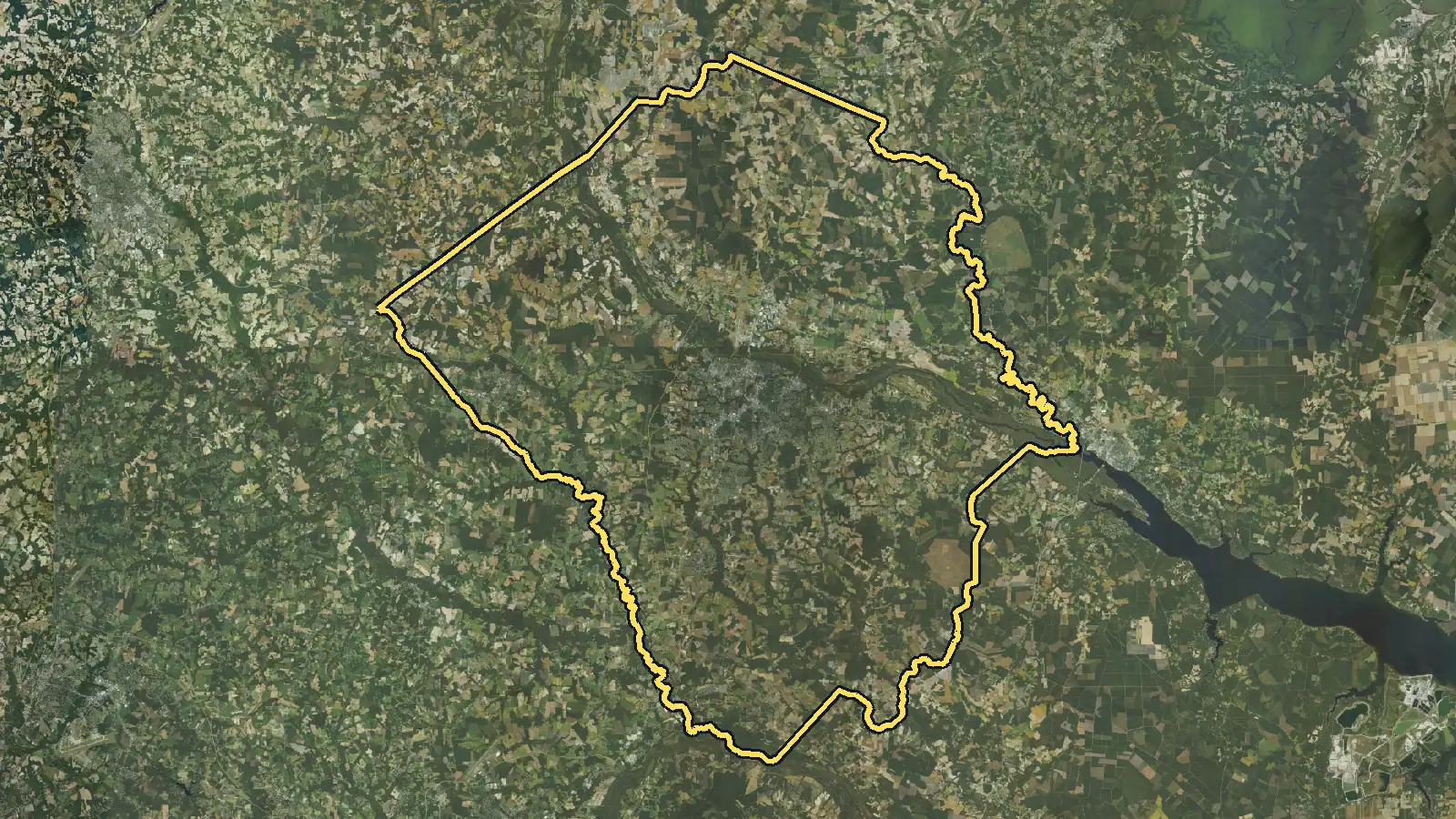
Where we buy
Areas we cover in Pitt County
- Greenville
1,900vacant lots
- Ayden
515vacant lots
- Farmville
431vacant lots
These pages cover the largest lot markets in Pitt County. We buy land anywhere else in the county too: send the parcel details through the form below.
Selling here
How selling land works in Pitt County
Start with the Pitt County parcel record
10,562 parcels sit in Pitt County's published vacant-land dataset, with a median size of 0.57 acres and a median county assessed value of $20,000. That count comes from matching parcel numbers, legal descriptions, acreage and assessed value across the tax roll; it is a scope-wide summary, and it says nothing about the condition, zoning, access or flood exposure of any single lot in it, including lots near the Tar River. Owner-address figures work the same way: 89% of records carry a North Carolina mailing address, 11% carry an address somewhere else, and neither figure is evidence of who actually uses the land. Deeds and plats held at the Register of Deeds can settle questions the tax record leaves open. [1],[2],[3]
Confirm permits, septic and flood status before you build
Vacant land here is not automatically buildable. Greenville, Farmville and Winterville issue their own building permits inside town limits; Pitt County issues permits for unincorporated areas. Every building permit needs zoning approval, and county rules require a Flood Development Permit on any part of a lot inside a mapped floodplain, which matters directly on land near the Tar River. Septic systems need Environmental Health approval, including an Improvement Permit and an Authorization to Construct, before a building permit can move forward; lot size does not substitute for a site evaluation. The Pitt Soil and Water Conservation District separately runs programs such as beaver-dam flood mitigation that can affect drainage on a specific tract. None of these approvals can be confirmed by phone alone; each needs its own site-specific review. [4],[5],[6]
Treat taxes, fees and title as parcel-specific
Miss the January 6 cutoff on a North Carolina tax bill and interest starts running from there, under a due date fixed at September 1 for every county in the state; left unresolved long enough, the lien can move into a court foreclosure. Whatever figure appears on an older notice will be short once interest and costs are added, so a current payoff straight from the tax office is the number that matters. Recording costs at the Register of Deeds follow the identical statewide schedule: $26 for the first 15 pages of most instruments, $21 per plat sheet. None of that substitutes for a title review, where deeds, plats, easements and restrictions on record can change what a buyer is willing to pay, and a flaw in that record is not always one a seller can fix in time for closing. [7],[8],[3]
A direct sale is one option
Skipping the permit queue entirely is also possible: an owner does not need a finished survey, an approved septic plan or a cleared lot to get a cash offer started. On our end, utilities, access and title get checked first, and the written offer that follows puts no obligation on the seller, with no commission and no fee, and closing costs covered by us. The land inspection is the one contingency, and it costs nothing if it fails. Assuming the seller signs, closing with an independent, licensed title company typically lands about 10 days out, though title work can shift that. Signing can be done electronically or by mail, payment arrives by check or wire, and proceeds can clear liens or back taxes at closing if the owner agrees. Selling through a broker, selling privately to a neighbor, or not selling at all remain open too.
Step by step
How do I sell my land in Pitt County?
From your first message to money in hand, with nothing left out. Requesting an offer costs nothing and commits you to nothing.
See every detail of the process-
Tell us about your land
Fill out the short form (about 60 seconds) or email us. A land specialist reaches out to confirm the details, usually the same business day.
-
Get your cash offer within 24 hours
We review the property and send a written, no-obligation cash offer within 24 hours. It is a real number, not a range. Take it or leave it, with no pressure either way.
-
Sign electronically
If you accept, everyone signs the purchase agreement electronically. There is nothing to print or mail at this stage.
-
We inspect, the title company verifies
Our team inspects the land and an independent title company runs a title search for liens or taxes owed. If the land does not pass inspection, you are never charged anything.
-
Close and get paid
The title company prepares the closing documents for notarization and issues your funds by standard check, overnight check, or wire transfer. A typical sale closes in 10 days.
Questions
Selling land in Pitt County: common questions
How many vacant parcels does the Pitt County dataset cover?
10,562 parcels. That's the size of the published scope, where the typical lot runs 0.57 acres and carries a $20,000 county assessed value. It's a scope total, not a tally of every lot that might be vacant and not a price tag on any one of them.
Does the county assessed value decide what Pitt County land is worth?
No, it's a tax figure, set for billing purposes rather than for a sale. Access, septic feasibility, flood-zone position, zoning, title condition and carrying costs weigh into what a buyer actually offers for a given tract.
Who issues the building permit for a lot in Pitt County?
It depends on location. Greenville, Farmville and Winterville issue their own building permits inside town limits; Pitt County issues permits for unincorporated areas. Septic and zoning approvals still apply wherever they're required.
Can a vacant lot in Pitt County use a septic system or private well?
Possibly, but it needs its own review. Environmental Health must approve a septic plan, including an Improvement Permit, before a building permit is issued, and lot size alone does not establish that a system will pass.
What happens if property taxes are behind on a Pitt County lot?
Once a bill goes unpaid past January 6, interest starts adding up, and the county can eventually take an unpaid lien to court for foreclosure. Any older balance you've seen won't reflect that, so call the Pitt County tax office for today's number.
Owner resources
Guides for your situation
- How Cash Land Buyers Price Offers
A cash-land offer may start with verified sales of land with similar use, then adjust those sales for meaningful differences.[1] Buyers may also account for access, utilities, legal use, size, shape, flood and soil questions, title issues, demand, and costs and risk they will carry. No universal assessed-value percentage applies. Compare each written offer by expected net proceeds, contingencies, seller work, and timing—not one asking price or headline number.
- Can You Sell Land With a Lien?
Yes. Land with a lien can often be sold, but signing a deed does not by itself erase a valid claim. The lien may need to be paid, released, discharged, or otherwise resolved under the law that applies. With the seller's consent, an approved payoff can come from sale proceeds at closing. If the balance or lien is wrong, dispute it before closing and require proof of the cure.
- Can You Build on a Vacant Lot?
Maybe. A vacant lot is buildable only if the proposed use fits the rules that apply to that parcel and the site can satisfy access, utility, environmental, and permit requirements. Start with the local planning or zoning office, confirm that the parcel is a legal lot, and get a written parcel-specific answer. A zoning label or tax parcel number alone is not approval to build.[1][2]
Your written offer
Get your cash offer
Four short steps, about 60 seconds. We review your property and send a written, no-obligation cash offer within 24 hours. You can take it or leave it.
What happens after you send this
- A land specialist reaches out, usually the same business day, to confirm the details.
- You get a written cash offer within 24 hours: a real number, not a range.
- You decide. Requesting an offer costs nothing and commits you to nothing.
You will never be asked to pay us anything. No deposit, no processing fee, no closing-cost advance.
How we made this page
Parcel Buyers is a land-buying company based in Florida. We buy vacant land directly from owners and publish these local pages so owners can see what land in their area is doing before they sell, to us or anyone else. We count the tax-roll figures ourselves from state data, take local rules and fees from the official sources listed below, and use AI tools to help research and draft the text. Every number links to its source, and we update the page when the data changes.
Method and sources
Parcel and assessment figures cover all parcels in Pitt County. Source [1] is our own aggregate count of NC OneMap parcel points or frozen county extracts and the county sale layers named in the source data. Vacant-lot counts use nC has no statewide vacant code. Legacy wave-1 rows retain the frozen county-extract rules in DATA-NOTES-NC.md. The NC2 rule keeps records with improvement value 0, parcel value at least $1,000, known acreage no more than 10, struct not Y, and an owner name that does not match the government, HOA/common-area, church, conservation or utility exclusions. If more than 10% of the pre-struct scope has struct Y, the area uses its verified explicit vacant code or is dropped. Counts do not establish physical vacancy, residential zoning, access, legal-lot status or buildability. Names and addresses are not stored in outputs. Lot sizes use gIS acres on the extract (else record acres, else the parcel polygon area) x 43,560, bucketed with the Parcel Buyers lot sizing chart ([low, high) square feet). Values use county assessed value on the extract from each county's last reappraisal, which is not the same year in every county. Owner locations use owner mailing-address state on the extract; in_state = North Carolina. Junk state codes count as unknown, Canadian provinces as foreign. Onslow's extract carries no mailing state, so Onslow areas report in_state, other_us and foreign as not published (unknown 1.0). Treat medians as a guide to county records, not as an offer or an appraisal. Page updated November 7, 2026.
- [1] NC OneMap and county tax offices (data); Parcel Buyers (analysis), NC OneMap statewide parcel points (county tax data), with wave-1 qualified county sale layers (accessed 2026-10-03)
- [2] Pitt County, North Carolina, Tax Administration (accessed 2026-11-07)
- [3] Pitt County, North Carolina, Register of Deeds (accessed 2026-11-07)
- [4] Pitt County, North Carolina, Permitting & Inspections (accessed 2026-11-07)
- [5] Pitt County, North Carolina, Environmental Health (accessed 2026-11-07)
- [6] Pitt County, North Carolina, Pitt Soil and Water Conservation District (accessed 2026-11-07)
- [7] North Carolina General Assembly, G.S. 105-360 — Due Date and Interest for Nonpayment of Taxes (accessed 2026-11-07)
- [8] North Carolina General Assembly, G.S. 105-374 — Foreclosure of Tax Lien by Action in Nature of Action to Foreclose a Mortgage (accessed 2026-11-07)