Lake County, Florida
Sell your land in Altoona for cash
Parcel Buyers buys vacant land for cash in unincorporated Altoona, including lots that would need a well and septic system under Lake County's central-utility connection rules. You get a written, no-obligation cash offer within 24 hours, and closings run through an independent title company, typically in about 10 days, with no fees or commissions.
By Parcel Buyers · · Lot figures from the 2026 Florida property tax roll · How we made this page
Quick answers
- Who buys land for cash in Altoona?
- Parcel Buyers is a direct land buyer that makes written, no-obligation cash offers on vacant lots and acreage in Altoona, Lake County, usually within 24 hours. Sales close through an independent title company, typically in about 10 days, with no fees or commissions to the seller.
- What did vacant lots in Altoona sell for in 2025?
- In 2025, vacant lots in Altoona sold for a median of $17,500 across 15 arm's-length sales; the middle half sold for $12,800 to $131,500.
- How many vacant lots are in Altoona?
- The 2026 Florida property tax roll lists 658 vacant residential lots in Altoona; 28% are quarter-acre lots, and the median lot is 0.23 acre.
- How is a cash offer for land in Altoona set?
- We start from recent sales of similar lots nearby, like the 2025 prices on this page, then adjust for water and sewer, road access, flood zone, lot size and any title issues, and for the time and cost of reselling. You get one written number, not a range.
- How do I know a land buyer in Altoona is legitimate?
- A real buyer closes through an independent, licensed title company and never asks you to pay anything up front. We never charge sellers a fee, deposit or closing-cost advance, and the title company pays you by check or wire at closing.
- Who is buying lots in Altoona?
- In 2025, companies bought 7% of the vacant lots that sold in Altoona. Individuals bought the rest.
- Are vacant lots in Altoona in a FEMA high-risk flood zone?
- About 2.1% of vacant lots in Altoona have their center point in a FEMA high-risk flood zone (effective maps dated August 28, 2008 to February 19, 2014). This is map screening, not a determination; check FEMA's Map Service Center for your parcel.
- How many vacant lots in Altoona got a home on the tax roll in 2025?
- 16 vacant lots in Altoona changed from vacant-residential use to a home with new-construction evidence on the 2026 preliminary tax roll.
Local data
Altoona land at a glance
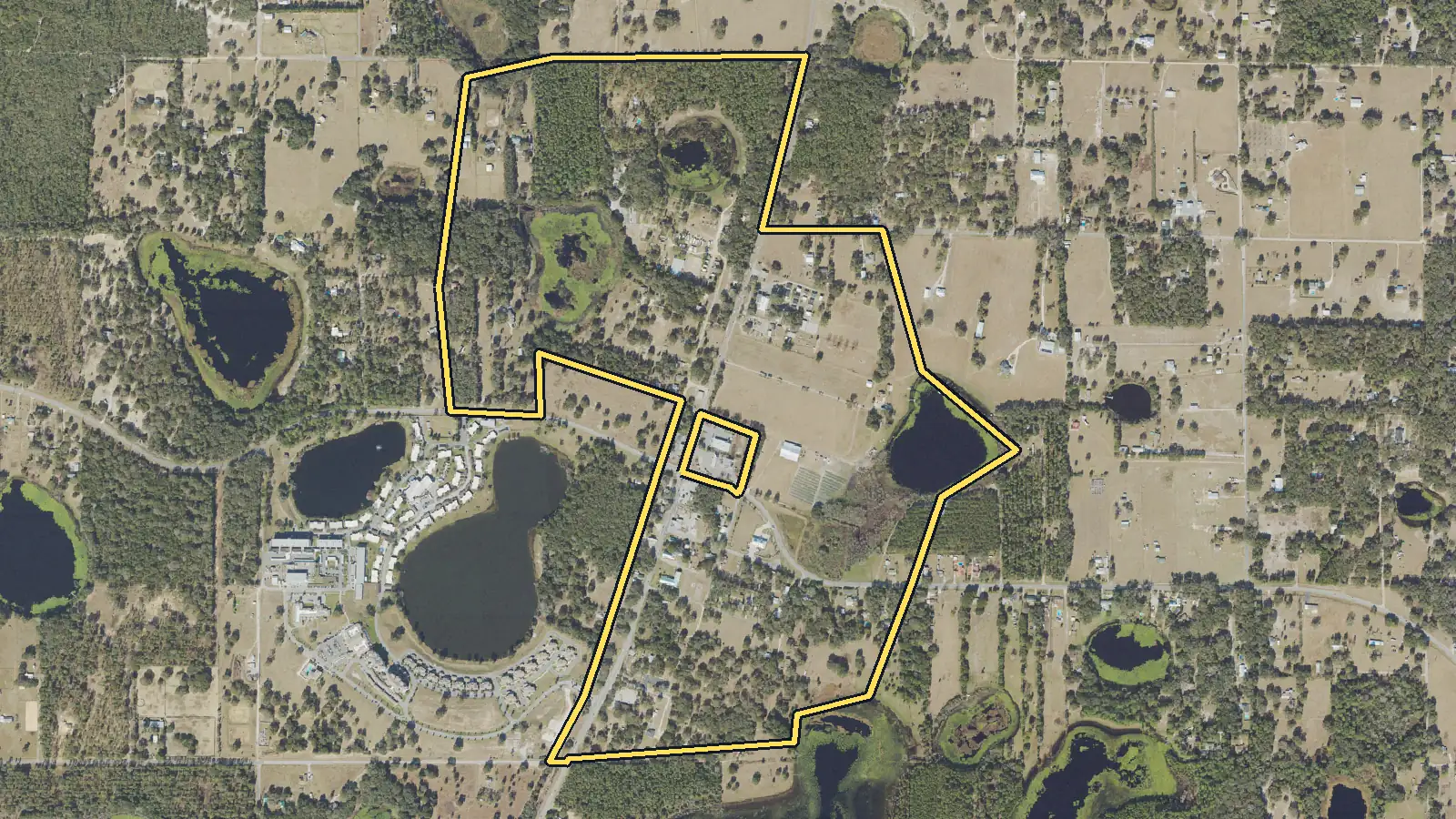
Tax-roll figures cover parcels whose property address city is Altoona in Lake County. Local rules and services are sourced below.
| Vacant residential lots | 658 parcels classified vacant residential on the 2026 tax roll [1] |
|---|---|
| Most common lot size | Quarter-acre lot (9,000–13,000 sq ft): 28% of vacant lots; next, micro lot at 22%. Median lot: 0.23 acre (10,000 sq ft). [1] |
| Typical assessed value | $9,600 median just (market) value for a vacant lot; the middle half fall between $4,500 and $14,400 [1] |
| Recent lot sale prices | $17,500 median across 15 arm's-length sales of vacant lots in Altoona (Jan 2025–Dec 2025); the middle half sold for $12,800–$131,500 [1] |
| Who bought lots in 2025 | Companies made 7% of those purchases; individuals made the rest [1] |
| Owners who live elsewhere | 23% of vacant lots have an owner mailing address outside Florida (most often PA, NY, OH) [1] |
| Unincorporated Lake County | A 2020 Lake County staff report places its Altoona site in "the Altoona area of unincorporated Lake County." The county Office of Planning and Zoning reviews and permits land development there. [2],[3] |
| Zoning on one Altoona lot | The report's 0.45-acre site west of State Road 19 is zoned Agriculture (A), has Rural future land use and lies in the Wekiva-Ocala Rural Protection Area overlay. All four neighbors carry the same zoning. [2] |
| Setbacks can be decisive | In that 2020 variance case, a shipping container placed in front of the house stood 26.1 feet from the property line instead of 100 feet, and 59 feet from the road centerline instead of 62. [2] |
| Utility proximity rules | Lake County's building permit application cites LDR Section 6.12.01: development within 300 feet of central water or 1,000 feet of central sewer must connect. Otherwise the form asks for a well or septic tank. [4],[5] |
| Onsite permits are separate | The Florida Department of Health in Lake County, not the county zoning office, handles septic system permits and well permits. Its environmental health program also regulates onsite sewage systems. [5],[3] |
| Flood permit threshold | Lake County requires a Floodplain Construction Authorization Permit for floodplain development, including clearing, filling and grading. Finished floors must be at least 18 inches above base flood elevation. [6] |
| Lake Dorr | The Forest Service places its two-acre Lake Dorr cabin site on the lake's south shore, about 1.5 miles northeast of Altoona. Lake Dorr is in Ocala National Forest, and its recreation area has a boat ramp. [7] |
| Vacant lots that got a home on the tax roll in 2025 | 16 recorded with new-construction evidence. [1] |
| 2026 so far (Jan-May) | County-level for Lake County: 174 recorded vacant-lot sales; median $125,200. [1] |
| FEMA high-risk flood-zone screen | About 2.1% of vacant lots in Altoona have their center point in a FEMA high-risk flood zone (effective maps dated August 28, 2008 to February 19, 2014). This is map screening, not a determination; check FEMA's Map Service Center for your parcel. |
| Springs BMAP small-lot screen | About 0% of located vacant lots in Altoona are 1 acre or less and have their center point in an adopted Florida springs BMAP. |
Pricing
What is a lot in Altoona worth?
In 2025, vacant lots in Altoona sold for a median of $17,500 across 15 arm's-length sales; the middle half sold for $12,800 to $131,500. [1]
These are open-market sale prices. A direct cash offer is usually lower, because a cash buyer closes in days and takes on the time and cost of reselling the lot.
See what similar lots sold for
What moves the price in Altoona
County zoning, not the Altoona name, controls use
County rules decide what an Altoona lot can be used for. The area is unincorporated, so the Lake County Office of Planning and Zoning handles planning, review and permitting of land development under the county's comprehensive plan. In a 2020 county case, a 0.45-acre site and all four parcels around it were zoned Agriculture (A) with Rural future land use, inside the Wekiva-Ocala Rural Protection Area overlay. Zoning is set parcel by parcel, and the county's online OPRS system takes zoning and use inquiries for a specific property. [2],[3]
Setbacks decide where structures fit
Setbacks limit where anything can be built on a lot. In the 2020 Altoona case, county rules required a shipping container placed in front of the house to sit 100 feet from the property line; it stood 26.1 feet away. It was also 59 feet from the road centerline, short of the 62-foot front setback in LDR Table 3.02.05. After a 2019 county code case, the Special Master ordered the owners to permit or remove the container, so they applied for a variance. [2],[3]
Well and septic feasibility can make or break a homesite
Whether a lot needs a well and septic system depends first on how far it is from central lines. Lake County's building permit application, citing LDR Section 6.12.01, requires development within 300 feet of central water or 1,000 feet of central sewer to connect to that supplier. Otherwise the applicant lists a well or a septic tank, and the form says wells need a separate permit. The Florida Department of Health in Lake County issues septic system permits and well permits, so a homesite's utility plan runs through two agencies. [4],[5]
Sales span small lots and rural tracts
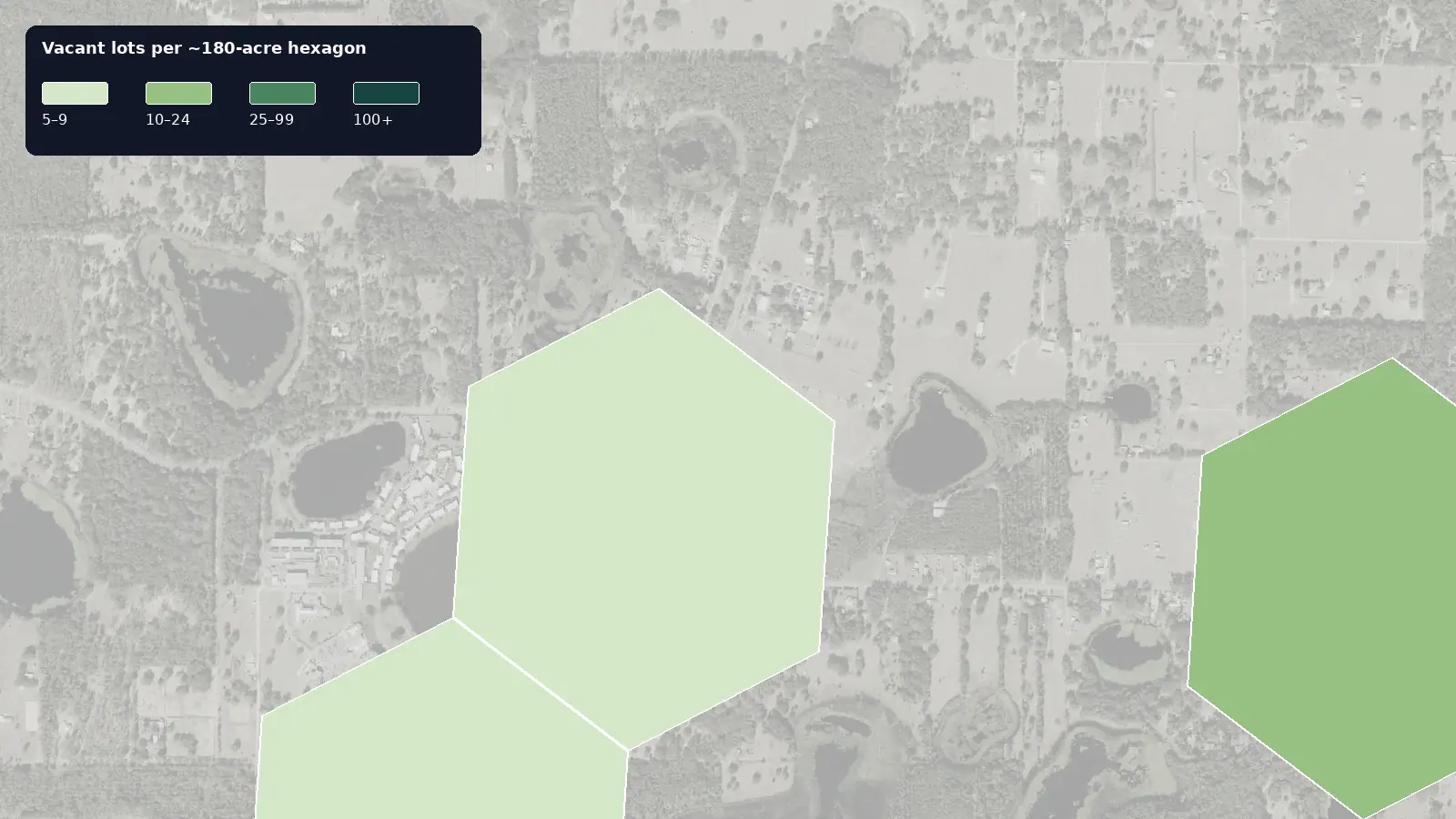
The Altoona property-address scope contains 658 vacant residential parcels. Its median measured parcel is 0.23 acre, and the most common category is a quarter-acre lot at 28%. In 2025, 15 arm's-length, single-parcel vacant-lot sales had a median of $17,500, with the middle half at $12,800–$131,500. The roll's median just value of $9,600 is a tax-roll figure, not a market appraisal. [1]
Common situations
Selling land in Altoona in these situations
You inherited a rural parcel with no survey
You can sell it without ordering a survey first. The parcel number or the deed is enough to start. We check utilities, access and title on every parcel before offering, and the sale closes through an independent, licensed title company. Building permits stay with a future owner: Lake County requires a Floodplain Construction Authorization Permit for floodplain work, and DOH-Lake issues the septic and well permits. [3],[5],[6]
An old septic system may be on the property
You do not need to repair or certify an old system before selling. The only contingency is our land inspection, and a failed inspection costs the seller nothing. Onsite sewage systems and septic permits are regulated by the Florida Department of Health in Lake County, so a builder who wants to reuse or replace an old system works with DOH-Lake after the sale. [5]
You live far away and stopped using the land
A remote sale is possible. 23% of vacant parcels in this property-address scope have an owner mailing address outside Florida. You can sign electronically and close by mail, and you are paid by check or wire. You do not need to travel to Altoona or visit the Lake County offices in Tavares. [1],[3]
Step by step
How do I sell my land in Altoona?
From your first message to money in hand, with nothing left out. Requesting an offer costs nothing and commits you to nothing.
See every detail of the process-
Tell us about your land
Fill out the short form (about 60 seconds) or email us. A land specialist reaches out to confirm the details, usually the same business day.
-
Get your cash offer within 24 hours
We review the property and send a written, no-obligation cash offer within 24 hours. It is a real number, not a range. Take it or leave it, with no pressure either way.
-
Sign electronically
If you accept, everyone signs the purchase agreement electronically. There is nothing to print or mail at this stage.
-
We inspect, the title company verifies
Our team inspects the land and an independent title company runs a title search for liens or taxes owed. If the land does not pass inspection, you are never charged anything.
-
Close and get paid
The title company prepares the closing documents for notarization and issues your funds by standard check, overnight check, or wire transfer. A typical sale closes in 10 days.
Questions
Selling land in Altoona: common questions
Is Altoona an incorporated city?
No. Altoona is in unincorporated Lake County, so county rules apply. The county Office of Planning and Zoning reviews and permits land development in unincorporated areas, and the Florida Department of Health in Lake County issues septic system and well permits.
Can an Altoona lot use a well and septic system?
It depends on how close central lines are. Lake County requires development within 300 feet of central water or 1,000 feet of central sewer to connect to that supplier. Farther out, the permit form lets the owner choose a well and a septic tank. DOH-Lake issues both the septic system permit and the well permit.
Why do setbacks matter on rural land?
They decide where a structure can sit. In a 2020 Altoona case, county rules called for 100 feet between the property line and a storage container placed in front of the house. It stood 26.1 feet away, so the owners needed a variance. The required distance depends on the zoning and the type of structure.
Could a flood zone prevent construction?
Not by itself, but it adds permit steps. Lake County requires a Floodplain Construction Authorization Permit for floodplain development, and a finished floor must sit at least 18 inches above the base flood elevation. Elevation certificates may be required. The county says the 100-year flood has a 1% chance of happening in any year.
Can I sell without fixing access or installing utilities?
Yes. Parcel Buyers buys vacant lots and land for cash, including lots with no water, sewer or road work. You do not need to drill a well, install septic or settle a setback question first. There are no fees or commissions, and we cover closing costs.
Owner resources
Guides for your situation
- Can You Build on a Vacant Lot?
Maybe. A vacant lot is buildable only if the proposed use fits the rules that apply to that parcel and the site can satisfy access, utility, environmental, and permit requirements. Start with the local planning or zoning office, confirm that the parcel is a legal lot, and get a written parcel-specific answer. A zoning label or tax parcel number alone is not approval to build.[1][2]
- Selling Land With Boundary or Survey Problems
Land with a boundary or survey problem can still be offered for sale, but closing may depend on how the buyer, lender, and title insurer handle it. The contract and closing requirements determine whether a survey is needed. A fence does not by itself establish the record boundary. A survey can identify gaps, overlaps, occupation lines, and encroachments; a competing Florida title claim may require a quiet-title action.[1][6][7]
- Selling a Vacant Lot With Code Enforcement Liens
Yes, a Florida vacant lot with a code enforcement lien can often be sold, but first confirm the violation, daily fine, compliance status, and written payoff with the city or county that issued the order. A fine can accrue until the violator complies or judgment is entered in an enforcement suit.[1] A reduction is not automatic. A clear-title closing normally needs a current payoff and a documented satisfaction or release path.
More places in Lake County
Your written offer
Get your cash offer
Four short steps, about 60 seconds. We review your property and send a written, no-obligation cash offer within 24 hours. You can take it or leave it.
What happens after you send this
- A land specialist reaches out, usually the same business day, to confirm the details.
- You get a written cash offer within 24 hours: a real number, not a range.
- You decide. Requesting an offer costs nothing and commits you to nothing.
You will never be asked to pay us anything. No deposit, no processing fee, no closing-cost advance.
Nearby areas we buy
- Paisley
1,058 vacant lots · 2025 median lot sale $25,000
- Mount Dora
1,478 vacant lots · 2025 median lot sale $40,000
- Lake County
25,667 vacant lots countywide
How we made this page
Parcel Buyers is a land-buying company based in Florida. We buy vacant land directly from owners and publish these local pages so owners can see what land in their area is doing before they sell, to us or anyone else. We count the tax-roll figures ourselves from state data, take local rules and fees from the official sources listed below, and use AI tools to help research and draft the text. Every number links to its source, and we update the page when the data changes.
Method and sources
Tax-roll figures cover parcels whose property address city is Altoona. Source [1] is our own count of the Florida Department of Revenue's 2026 preliminary property tax roll: "vacant residential" means land-use code 000; lot sizes use the land square footage on the roll; values are the county property appraiser's just (market) value as of January 1, 2026; sale prices count only arm's-length sales of a single lot that was vacant when it sold and was still vacant on January 1, 2026 (bulk and multi-parcel deeds removed). Page updated October 2, 2026. The reviewed 2026 recorded-sale window runs from January through May 2026; unreviewed recent sales are excluded. County-level figures are used on this place page. Flood and springs-BMAP figures screen tax-roll parcel center points, not parcel boundaries. They are aggregate map screens, not flood-zone, insurance, buildability, elevation, septic, or permitting determinations.
- [1] Florida Department of Revenue (data); Parcel Buyers (analysis), Parcel Buyers analysis of the 2026 preliminary Name-Address-Legal (NAL) property tax roll (accessed 2026-10-03)
- [2] Lake County, Ball Property Variance Staff Report (accessed 2026-10-02)
- [3] Lake County, Planning and Zoning (accessed 2026-10-02)
- [4] Lake County, Building Permit Application Requirements (accessed 2026-10-02)
- [5] Florida Department of Health in Lake County, Environmental Public Health (accessed 2026-10-02)
- [6] Lake County, Flood Facts (accessed 2026-10-02)
- [7] U.S. Forest Service, Lake Dorr Cabin (accessed 2026-10-02)