Florida
Sell your land in Gulf County for cash
Parcel Buyers buys vacant lots and land in Gulf County for cash, including coastal parcels that need flood, utility, septic or title review before construction. You get a written, no-obligation cash offer within 24 hours, and closings run through an independent title company, typically in about 10 days, with no fees or commissions.
By Parcel Buyers · · Lot figures from the 2026 Florida property tax roll · How we made this page
Quick answers
- Who buys land for cash in Gulf County?
- Parcel Buyers is a direct land buyer that makes written, no-obligation cash offers on vacant lots and acreage in Gulf County, Florida, usually within 24 hours. Sales close through an independent title company, typically in about 10 days, with no fees or commissions to the seller.
- What did vacant lots in Gulf County sell for in 2025?
- In 2025, vacant lots in Gulf County sold for a median of $100,000 across 191 arm's-length sales; the middle half sold for $50,000 to $200,000.
- How many vacant lots are in Gulf County?
- The 2026 Florida property tax roll lists 7,147 vacant residential lots in Gulf County; 17% are quarter-acre lots, and the median lot is 0.36 acre.
- How is a cash offer for land in Gulf County set?
- We start from recent sales of similar lots nearby, like the 2025 prices on this page, then adjust for water and sewer, road access, flood zone, lot size and any title issues, and for the time and cost of reselling. You get one written number, not a range.
- How do I know a land buyer in Gulf County is legitimate?
- A real buyer closes through an independent, licensed title company and never asks you to pay anything up front. We never charge sellers a fee, deposit or closing-cost advance, and the title company pays you by check or wire at closing.
- Who is buying lots in Gulf County?
- In 2025, companies bought 12% of the vacant lots that sold in Gulf County, including 1% bought by homebuilders. Individuals bought the rest.
- What was the median recorded 2025 sale price by lot size in Gulf County?
- The median recorded 2025 sale price for a quarter-acre lot in Gulf County was $110,000 across 45 sales.
- Are vacant lot prices in Gulf County going up or down?
- Vacant lot prices in Gulf County were roughly flat (-4.8%): the median moved from $105,000 across 227 recorded sales in 2024 to $100,000 across 191 recorded sales in 2025. These are recorded sales, not list prices. From January to June 2026, 84 vacant lots in Gulf County sold at a recorded median of $118,800.
- How much are estimated annual ad valorem taxes on a typical vacant lot in Gulf County?
- A typical vacant lot in Gulf County has estimated 2025 ad valorem taxes about $558 a year; most lots here also pay non-ad valorem charges (listed below).
- Are vacant lots in Gulf County in a FEMA high-risk flood zone?
- About 54.6% of vacant lots in Gulf County have their center point in a FEMA high-risk flood zone (effective maps dated June 18, 2013 to October 24, 2024). This is map screening, not a determination; check FEMA's Map Service Center for your parcel.
- How many vacant lots in Gulf County got a home on the tax roll in 2025?
- 326 vacant lots in Gulf County changed from vacant-residential use to a home with new-construction evidence on the 2026 preliminary tax roll.
Local data
What is land in Gulf County worth?
In 2025, vacant lots in Gulf County sold for a median of $100,000 across 191 arm's-length sales; the middle half sold for $50,000 to $200,000. [1]
These are open-market sale prices. A direct cash offer is usually lower, because a cash buyer closes in days and takes on the time and cost of reselling the lot.
Recorded 2025 sale prices by lot size in Gulf County
| Lot-size class | 2025 sales | 2025 median lot sale |
|---|---|---|
| Quarter-acre lot9,000–12,999 sq ft | 45 | $110,000 |
| Half-acre lot19,000–23,999 sq ft | 28 | $65,000 |
| Third-acre lot13,000–15,999 sq ft | 19 | $210,000 |
| Oversized half-acre24,000–29,999 sq ft | 15 | $40,000 |
| Mini-estate (2-3 acres)70,000–139,999 sq ft | 15 | $35,000 |
| Standard city lot7,000–8,999 sq ft | 14 | $153,000 |
| Micro lot2,000–4,999 sq ft | 10 | $193,800 |
These are open-market sale prices. A direct cash offer is usually lower, because a cash buyer closes in days and takes on the time and cost of reselling the lot.
| Vacant residential lots | 7,147 parcels classified vacant residential on the 2026 tax roll [1] |
|---|---|
| Most common lot size | Quarter-acre lot (9,000–13,000 sq ft): 17% of vacant lots; next, half-acre lot at 12%. Median lot: 0.36 acre (15,680 sq ft). [1] |
| Typical assessed value | $57,000 median just (market) value for a vacant lot; the middle half fall between $24,300 and $130,000 [1] |
| Recent lot sale prices | $100,000 median across 191 arm's-length sales of vacant lots in Gulf County (Jan 2025–Dec 2025); the middle half sold for $50,000–$200,000 [1] |
| Who bought lots in 2025 | Companies made 12% of those purchases, including 1% by homebuilders; individuals made the rest [1] |
| Owners who live elsewhere | 37% of vacant lots have an owner mailing address outside Florida (most often GA, AL, TN) [1] |
| The appraiser maintains parcel values | The Gulf County Property Appraiser assesses county property as of January 1 and provides the local parcel-record system. [2] |
| Taxes become delinquent April 1 | The Tax Collector adds a 3% penalty to unpaid real-estate taxes on April 1 and sells tax certificates by June 1. [3] |
| The clerk records deeds and runs sales | The Gulf County Clerk is the county recorder and conducts tax-deed sales under Chapter 197 of the Florida Statutes. [4],[5] |
| County building code is the 2023 edition | Florida's current statewide code is the 2023 Florida Building Code, eighth edition, effective December 31, 2023. Gulf County's Building Department reviews plans, issues permits and performs inspections under it. [6],[11] |
| DEP took over septic permits | Since January 2, 2025, Florida DEP has issued Gulf County onsite-sewage permits; the county still checks local density and ordinance compliance. [6],[7] |
| Floodplain development needs a permit | Gulf County says any development in a floodplain requires a building permit under Article V of the county Land Development Regulation. [8] |
| The substantial-improvement line is 50% | County flood guidance says work costing 50% or more of a building's assessed tax value must meet the same construction requirements as a new building. [8] |
| St. Joseph Peninsula State Park | St. Joseph Peninsula State Park covers most of the 10-mile Cape San Blas Peninsula in Gulf County. Its 2,716 protected acres span the narrow strip, with gulf beach on one side and marsh on the other. [10] |
| 2025 sale price by lot size | The median recorded 2025 sale price for a quarter-acre lot in Gulf County was $110,000 across 45 sales. [1] |
| Lot sales, 2025 vs 2024 | 2025: 191 recorded sales, $100,000 median; 2024: 227 recorded sales, $105,000 median. Median -4.8%; count -15.9%. [1] |
| Vacant lots that got a home on the tax roll in 2025 | 326 recorded with new-construction evidence. [1] |
| Years of lot supply at the 2025 building pace | 21.9 years; simple ratio, not a forecast. [1] |
| Owner-type shares | Individuals 71.7%; companies 23.1%; trusts 4.7%; estates/heirs 0.6%; government/associations 0.1%. [1] |
| Typical annual ad valorem taxes | A typical vacant lot in Gulf County has estimated 2025 ad valorem taxes about $558 a year; most lots here also pay non-ad valorem charges (listed below). |
| 2026 so far (Jan-Jun) | 84 recorded vacant-lot sales; median $118,800. [1] |
| FEMA high-risk flood-zone screen | About 54.6% of vacant lots in Gulf County have their center point in a FEMA high-risk flood zone (effective maps dated June 18, 2013 to October 24, 2024). This is map screening, not a determination; check FEMA's Map Service Center for your parcel. |
| Springs BMAP small-lot screen | About 0% of located vacant lots in Gulf County are 1 acre or less and have their center point in an adopted Florida springs BMAP. |
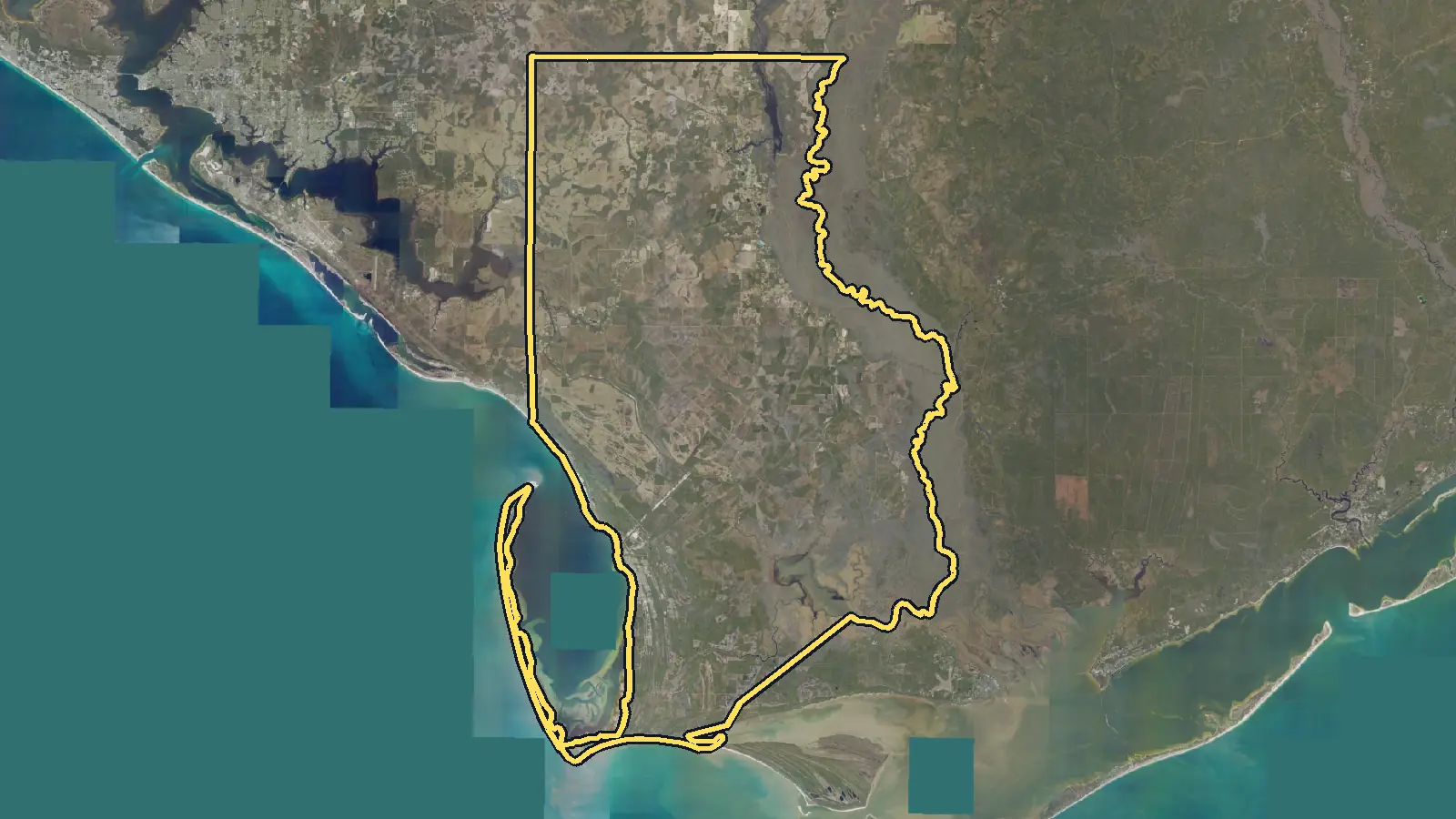
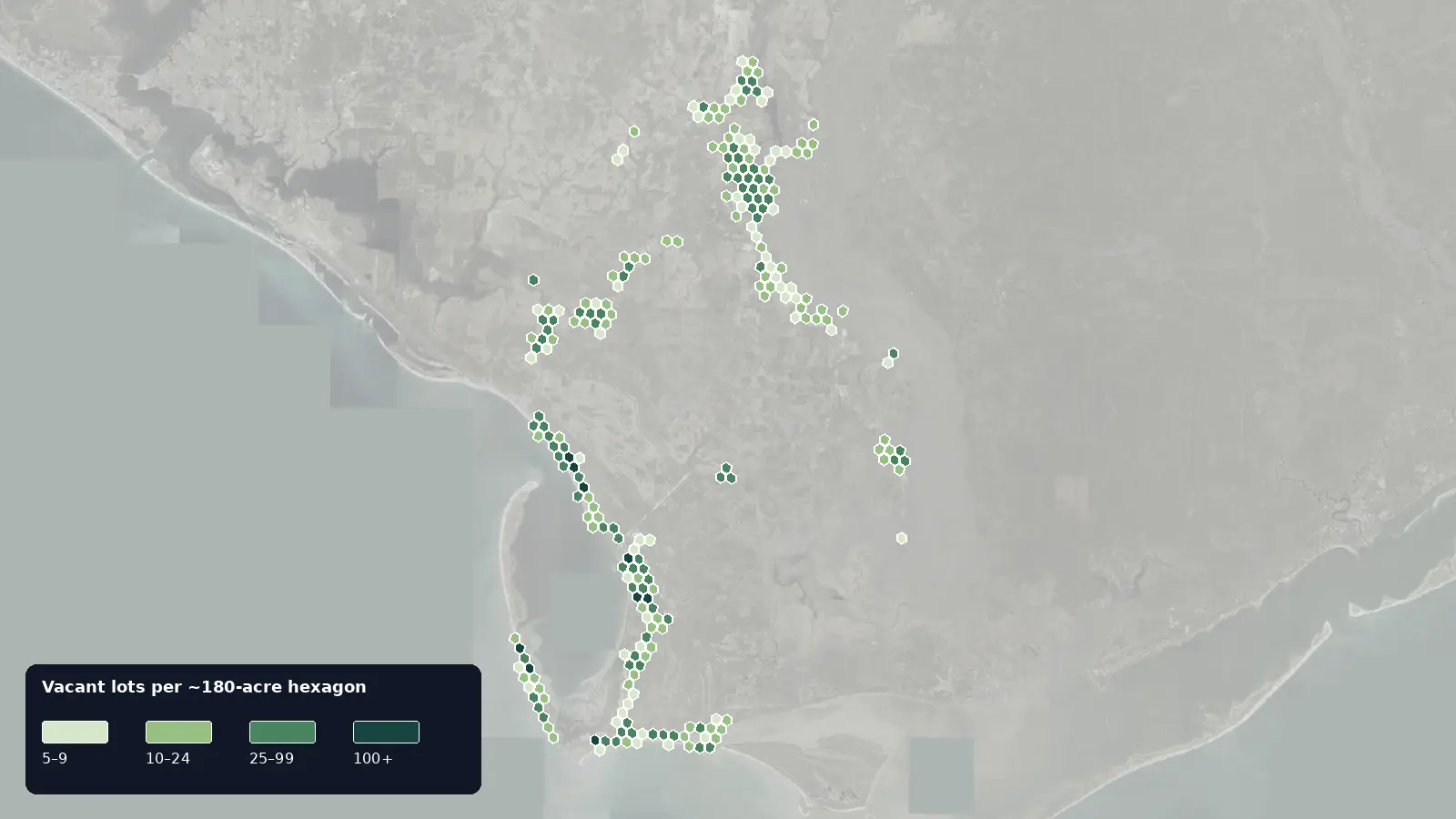
Land by town in Gulf County
| Town | Vacant lots | 2025 lot sales | Median 2025 lot sale |
|---|---|---|---|
| Port St. Joe | 4,050 | 129 | $156,000 |
| Wewahitchka | 3,097 | 62 | $34,000 |
Florida Department of Revenue-backed rows use the 2026 preliminary tax roll. Most towns are counted by property-address city, a few by ZIP code (each town page states its scope), so areas can overlap. Lots we cannot place in a town count only in the county total.
Where we buy
Areas we cover in Gulf County
- Port St. Joe
4,050vacant lots · 2025 median lot sale $156,000
- Wewahitchka
3,097vacant lots · 2025 median lot sale $34,000
These pages cover the largest lot markets in Gulf County. We buy land anywhere else in the county too: send the parcel details through the form below.
Selling here
How selling land works in Gulf County
Use county parcel and recording records together
Use county parcel and recording records together. The Property Appraiser provides the parcel-record system, while the Clerk serves as county recorder and links its Court and Official Records search. Check both records before relying on a map or street address. We check title, utilities and access on every parcel before offering, and the independent title company completes the final title search before closing. [2],[4]
Flood rules are part of the build budget
Flood rules are part of the build budget. Gulf County states that any development in a floodplain requires a building permit under Article V of the county Land Development Regulation. The county's substantial-improvement rule uses a 50% line: reconstruction, rehabilitation, an addition or another improvement costing 50% or more of the building's assessed tax value must meet the same construction requirements as a new building. Check the parcel's mapped flood zone and the county's current permit requirements before planning construction. [8],[6]
Septic approval moved, but county review did not disappear
Septic approval moved, but county review did not disappear. Gulf County stopped issuing septic permits on January 1, 2025, and Florida DEP's Northwest Florida transition began January 2. DEP now requires its application, site plan, building floor plan and a site evaluation. The county warns owners to confirm that an application also meets Gulf County ordinances and density rules before submitting to DEP; otherwise a later county building permit may be denied. A parcel with no sewer connection therefore needs both wastewater feasibility and local land-use review before a builder can treat it as ready. [6],[7]
Delinquent taxes follow a set certificate and deed path
Delinquent taxes follow a set certificate and deed path. Gulf County says unpaid real-estate taxes become delinquent April 1 with a 3% penalty. The delinquent list is advertised for three consecutive weeks, and the Tax Collector sells certificates by June 1. A certificate is a lien, not ownership. If it remains unredeemed through the waiting period, the holder can seek a tax deed and the Clerk conducts the sale. The Clerk warns that a tax deed does not guarantee clear, marketable title. An owner considering a normal sale should obtain the current payoff before added costs and deadlines advance. [3],[5]
Step by step
How do I sell my land in Gulf County?
From your first message to money in hand, with nothing left out. Requesting an offer costs nothing and commits you to nothing.
See every detail of the process-
Tell us about your land
Fill out the short form (about 60 seconds) or email us. A land specialist reaches out to confirm the details, usually the same business day.
-
Get your cash offer within 24 hours
We review the property and send a written, no-obligation cash offer within 24 hours. It is a real number, not a range. Take it or leave it, with no pressure either way.
-
Sign electronically
If you accept, everyone signs the purchase agreement electronically. There is nothing to print or mail at this stage.
-
We inspect, the title company verifies
Our team inspects the land and an independent title company runs a title search for liens or taxes owed. If the land does not pass inspection, you are never charged anything.
-
Close and get paid
The title company prepares the closing documents for notarization and issues your funds by standard check, overnight check, or wire transfer. A typical sale closes in 10 days.
Questions
Selling land in Gulf County: common questions
Who issues a septic permit in Gulf County now?
Florida DEP does. The Northwest Florida transition began January 2, 2025. A new-system application needs a site plan, building floor plan and site evaluation. Gulf County still requires the proposed system and development to meet local ordinances and density rules before it will issue related building permits.
Can I sell a Gulf County lot in a flood zone?
Yes. A flood-zone designation does not prevent a land sale, but it can affect build design and value. Gulf County says any floodplain development requires a building permit under Article V of the county Land Development Regulation. A buyer will review the flood zone and current county permit requirements before offering.
Where do I search for a deed or recorded easement?
Use the Gulf County Clerk's Court and Official Records search. The Clerk is the county recorder. The Property Appraiser record helps identify the parcel, but it does not replace a title search.
Can I sell land with unpaid Gulf County taxes?
Often, yes. Ask the Tax Collector for the current payoff and check the Clerk for a tax-deed case. Taxes become delinquent April 1, and certificates are sold by June 1. Liens or back taxes can be paid from sale proceeds at closing with your consent.
Does Hurricane Michael still matter when pricing land?
It can matter through current site conditions and code requirements, not as a blanket discount. Hurricane Michael struck the Panhandle on October 10, 2018. A present-day buyer should use current flood maps, elevation, access, utilities and the 2023 Florida Building Code rather than assume every parcel has the same storm exposure.
Owner resources
Guides for your situation
- Can You Build on a Vacant Lot?
Maybe. A vacant lot is buildable only if the proposed use fits the rules that apply to that parcel and the site can satisfy access, utility, environmental, and permit requirements. Start with the local planning or zoning office, confirm that the parcel is a legal lot, and get a written parcel-specific answer. A zoning label or tax parcel number alone is not approval to build.[1][2]
- How to Sell Land During a Divorce
Florida land can be sold during a divorce when the people with authority to convey title sign and the sale follows every applicable agreement and court order. Divorce law may treat land as marital even when only one spouse appears on the deed.[1][2] If ownership, signing authority, or the division of proceeds is unsettled, have a Florida attorney and the closing title company resolve those issues before closing.
- How to Sell Land in a Flood Zone
Flood-zone land can be sellable and sometimes buildable. A FEMA flood zone describes mapped risk; it is not a building permit. The buyer must verify the current effective Flood Insurance Rate Map and any map changes, then ask the local floodplain administrator what elevation, floodway, coastal, permit, and design rules apply.[1][2][4] Vacant land itself is not covered by an NFIP policy; flood insurance covers qualifying buildings and contents, not land value.[5][6]
Your written offer
Get your cash offer
Four short steps, about 60 seconds. We review your property and send a written, no-obligation cash offer within 24 hours. You can take it or leave it.
What happens after you send this
- A land specialist reaches out, usually the same business day, to confirm the details.
- You get a written cash offer within 24 hours: a real number, not a range.
- You decide. Requesting an offer costs nothing and commits you to nothing.
You will never be asked to pay us anything. No deposit, no processing fee, no closing-cost advance.
How we made this page
Parcel Buyers is a land-buying company based in Florida. We buy vacant land directly from owners and publish these local pages so owners can see what land in their area is doing before they sell, to us or anyone else. We count the tax-roll figures ourselves from state data, take local rules and fees from the official sources listed below, and use AI tools to help research and draft the text. Every number links to its source, and we update the page when the data changes.
Method and sources
Tax-roll figures cover all parcels in Gulf County. Source [1] is our own count of the Florida Department of Revenue's 2026 preliminary property tax roll: "vacant residential" means land-use code 000; lot sizes use the land square footage on the roll; values are the county property appraiser's just (market) value as of January 1, 2026; sale prices count only arm's-length sales of a single lot that was vacant when it sold and was still vacant on January 1, 2026 (bulk and multi-parcel deeds removed). Page updated October 2, 2026. Lot-size sale rows use the same qualified 2025 sale cohort and canonical square-foot classes; classes with fewer than 10 sales are omitted. Holding-cost estimates use 2025 taxable values and 2025 millage for FDOR vacant-residential code 000 parcels. They cover ad valorem taxes only, not a parcel-specific bill or non-ad valorem assessments. The reviewed 2026 recorded-sale window runs from January through June 2026; unreviewed recent sales are excluded. Flood and springs-BMAP figures screen tax-roll parcel center points, not parcel boundaries. They are aggregate map screens, not flood-zone, insurance, buildability, elevation, septic, or permitting determinations.
- [1] Florida Department of Revenue (data); Parcel Buyers (analysis), Parcel Buyers analysis of the 2026 preliminary Name-Address-Legal (NAL) property tax roll (accessed 2026-10-03)
- [2] Gulf County Property Appraiser, Property Appraiser FAQs (accessed 2026-10-02)
- [3] Gulf County Tax Collector, Property Tax Services (accessed 2026-10-02)
- [4] Gulf County Clerk of Court and Comptroller, Official Records and County Recorder Services (accessed 2026-10-02)
- [5] Gulf County Clerk of Court and Comptroller, Tax Deed Sales and Surplus Funds (accessed 2026-10-02)
- [6] Gulf County, Building Department (accessed 2026-10-02)
- [7] Florida Department of Environmental Protection, Onsite Sewage Permitting FAQ (accessed 2026-10-02)
- [8] Gulf County, Property Protection Measures and Floodplain Permit Requirements (accessed 2026-10-02)
- [9] NOAA Weather Prediction Center, Hurricane Michael, October 6-12, 2018 (accessed 2026-10-02)
- [10] Florida Department of Environmental Protection, Gulf County coastal access guide (accessed 2026-10-02)
- [11] Florida Building Commission, Florida Building Commission (BCIS) homepage (accessed 2026-10-31)