Calhoun County, Florida
Sell your land in Clarksville for cash
Parcel Buyers buys vacant lots and acreage in unincorporated Clarksville for cash, including rural land that may need a private well, septic system and county development approval. You get a written, no-obligation cash offer within 24 hours, and closings run through an independent, licensed title company, typically in about 10 days, with no fees or commissions.
By Parcel Buyers · · Lot figures from the 2026 Florida property tax roll · How we made this page
Quick answers
- Who buys land for cash in Clarksville?
- Parcel Buyers is a direct land buyer that makes written, no-obligation cash offers on vacant lots and acreage in Clarksville, Calhoun County, usually within 24 hours. Sales close through an independent title company, typically in about 10 days, with no fees or commissions to the seller.
- How many vacant lots are in Clarksville?
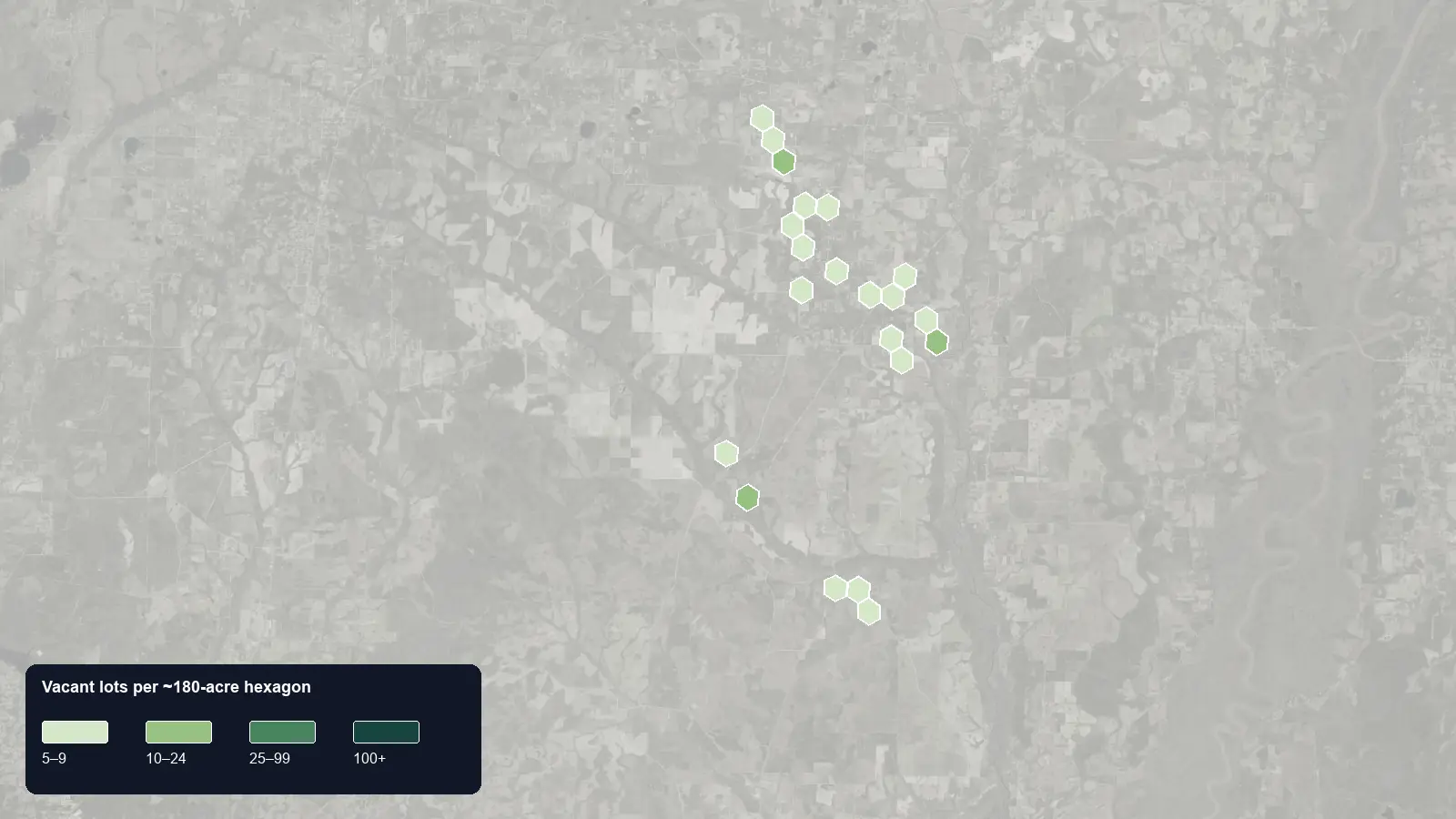
- The 2026 Florida property tax roll lists 262 vacant residential lots in Clarksville; 23% are mini-estate (2-3 acres)s, and the median lot is 1.98 acre.
- How is a cash offer for land in Clarksville set?
- We start from recent sales of similar lots nearby, like the 2025 prices on this page, then adjust for water and sewer, road access, flood zone, lot size and any title issues, and for the time and cost of reselling. You get one written number, not a range.
- How do I know a land buyer in Clarksville is legitimate?
- A real buyer closes through an independent, licensed title company and never asks you to pay anything up front. We never charge sellers a fee, deposit or closing-cost advance, and the title company pays you by check or wire at closing.
- How much are estimated annual ad valorem taxes on a typical vacant lot in Clarksville?
- A typical vacant lot in Clarksville has estimated 2025 ad valorem taxes about $99 a year; most lots here also pay non-ad valorem charges (listed below).
- Are vacant lots in Clarksville in a FEMA high-risk flood zone?
- About 14.5% of vacant lots in Clarksville have their center point in a FEMA high-risk flood zone (effective maps dated December 17, 2010 to November 14, 2025). This is map screening, not a determination; check FEMA's Map Service Center for your parcel.
- How many vacant lots in Clarksville got a home on the tax roll in 2025?
- 3 vacant lots in Clarksville changed from vacant-residential use to a home with new-construction evidence on the 2026 preliminary tax roll.
Local data
Clarksville land at a glance
Tax-roll figures cover parcels whose property address city is Clarksville in Calhoun County. Local rules and services are sourced below.
| Vacant residential lots | 262 parcels classified vacant residential on the 2026 tax roll [1] |
|---|---|
| Most common lot size | Mini-estate (2-3 acres) (70,000–140,000 sq ft): 23% of vacant lots; next, acreage tract (10+ acres) at 11%. Median lot: 1.98 acre (86,030 sq ft). [1] |
| Typical assessed value | $9,600 median just (market) value for a vacant lot; the middle half fall between $5,000 and $22,400 [1] |
| Recent lot sale prices | Too few arm's-length vacant-lot sales in 2025 to report a reliable median for Clarksville [1] |
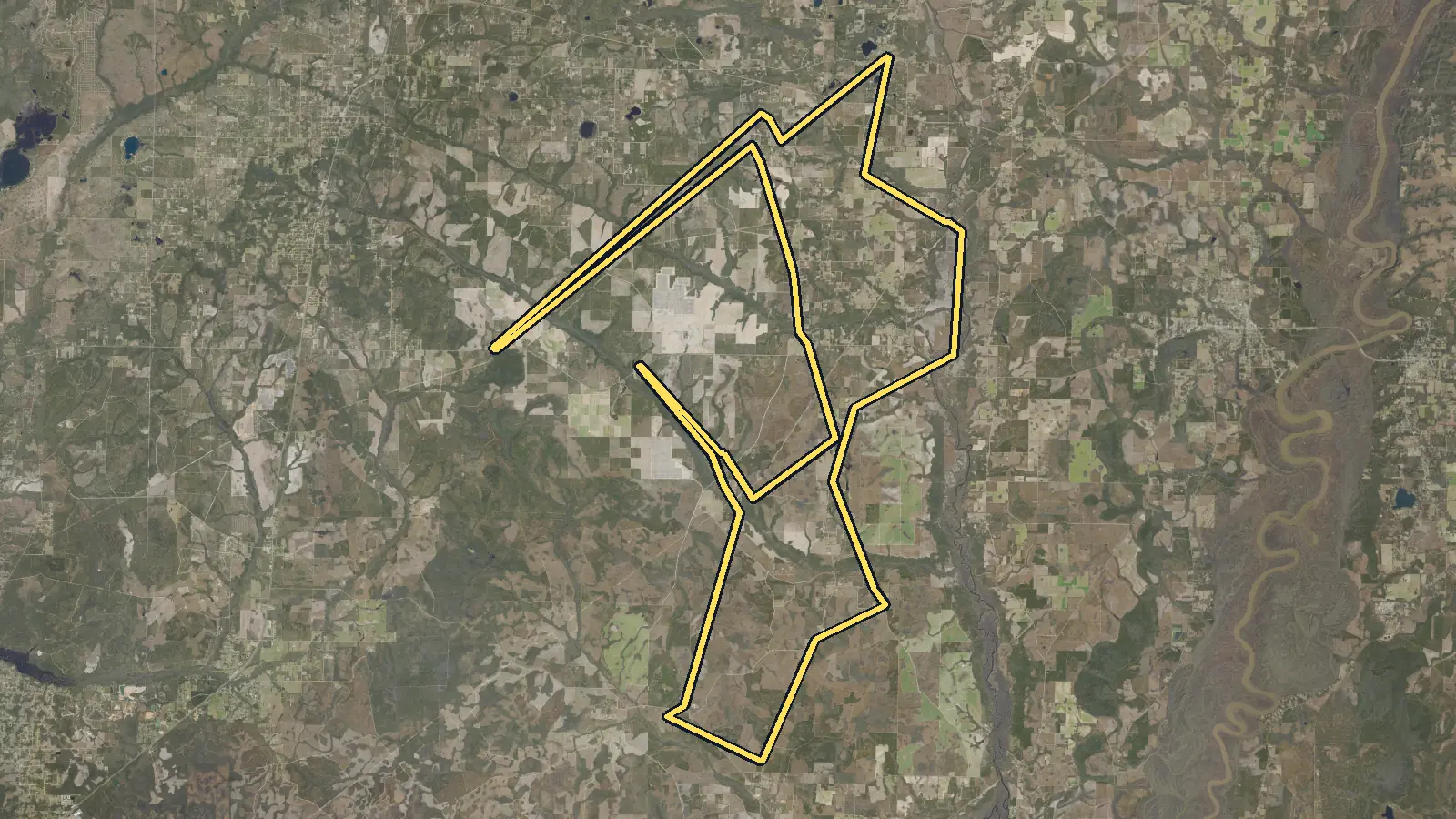
| Unincorporated community | Calhoun County's recovery plan identifies Clarksville as one of 25 unincorporated communities. County planning and building rules therefore control development rather than a Clarksville city government. [2],[3] |
| County building permits | Calhoun County's Building Department posts residential building, driveway, electrical, plumbing, roofing and other permit applications. Its office hours are 7 a.m. to 4 p.m. Central time, Monday through Friday. [3] |
| Rural density depends on utilities | The county plan allows rural density from one home per 5 acres up to one per acre with a private well and septic, or up to two per acre with central water or water and sewer. [4] |
| DEP septic permits | DEP began issuing septic permits in 16 Northwest Florida counties on January 2, 2025. The application needs a site evaluation, which DEP or a hired private evaluator can complete. [6],[7] |
| Wetland and building setbacks | County rural-residential standards require a 50-foot setback from wetlands or the mean high-water line, a 25-foot front setback and at least 600 square feet of heated and cooled building area. [5] |
| Flood review | The comprehensive plan bars development within 50 feet of wetlands and requires Special Flood Hazard Area work to follow federal and county floodplain rules. [4],[5] |
| Chipola River at Clarksville | USGS maintains monitoring location 02359037 on the Chipola River at Clarksville. The mapped river corridor makes floodplain, high-water setback and legal-access review specific to nearby parcels. [8],[5] |
| Vacant lots that got a home on the tax roll in 2025 | 3 recorded with new-construction evidence. [1] |
| Typical annual ad valorem taxes | A typical vacant lot in Clarksville has estimated 2025 ad valorem taxes about $99 a year; most lots here also pay non-ad valorem charges (listed below). |
| 2026 so far (Jan-Mar) | County-level for Calhoun County: 4 recorded vacant-lot sales; median $46,000. [1] |
| FEMA high-risk flood-zone screen | About 14.5% of vacant lots in Clarksville have their center point in a FEMA high-risk flood zone (effective maps dated December 17, 2010 to November 14, 2025). This is map screening, not a determination; check FEMA's Map Service Center for your parcel. |
| Springs BMAP small-lot screen | About 0% of located vacant lots in Clarksville are 1 acre or less and have their center point in an adopted Florida springs BMAP. |
Pricing
What is a lot in Clarksville worth?
These are open-market sale prices. A direct cash offer is usually lower, because a cash buyer closes in days and takes on the time and cost of reselling the lot.
See what similar lots sold for
What moves the price in Clarksville
Rural land-use density changes with utility service
Acreage does not translate directly into the same number of homesites. Calhoun County's plan places Clarksville among traditional rural communities and sets a range from one dwelling per 5 acres to one per acre when a private well and onsite septic are used. The plan allows up to two homes per acre where central water is available and also up to two with both central water and sewer. Those are planning limits, not a promise that a split will be approved. Road access, parcel history, survey lines, flood conditions and the actual availability of central service still affect the result. [4]
Well, septic and setbacks define the usable homesite
A future rural home may need both a private well and an onsite septic system. DEP began issuing septic permits in Northwest Florida's Phase I counties on January 2, 2025, and its permitting guidance requires a site plan and a site evaluation, done by DEP or a hired private evaluator. County rural-residential rules add a 25-foot front setback, a combined 20-foot side setback with no side under 7 feet and a 50-foot setback from wetlands or the mean high-water line. On an irregular lot, those requirements can leave much less usable area than the gross acreage suggests. [6],[7],[5]
The Chipola corridor adds flood and access questions
River proximity creates parcel-specific flood and access questions. USGS identifies monitoring station 02359037 as the Chipola River at Clarksville, placing the named waterway directly in the community's land context. County rules require a 50-foot setback from wetlands or the mean high-water line and require mapped Special Flood Hazard Area development to follow floodplain standards. A buyer therefore separates true legal river access from a nearby-water description and reviews the route, mapped flood zone, high-water boundary, wetland edge and dry building area before assigning a river premium. [8],[4],[5]
Sparse 2025 sales do not show a dependable trend
The qualifying 2025 sale set is too small to support a reliable Clarksville price trend or median. It includes only arm's-length, single-parcel vacant-land transfers that met the project filter, so it should not be expanded with family deeds or multi-parcel transactions just to create a number. The roll reports 262 vacant residential parcels in the property-address-city scope and identifies mini-estate (2-3 acres)s as the largest size group. Those facts describe inventory, not value. A usable offer depends on acreage, county land class, paved access, well and septic feasibility, wetland setbacks and flood exposure. [1],[4],[5],[7]
Common situations
Selling land in Clarksville in these situations
You inherited rural acreage with no development file
Yes, inherited Clarksville acreage can be sold even when the family has no survey, septic permit or building plan. Closing runs through an independent, licensed title company, and we check utilities, access and title before offering; county land classification, well and septic feasibility, wetland setbacks and the flood map also matter. Because Clarksville is unincorporated, Calhoun County is the planning and building contact. Parcel Buyers buys vacant land with no water, sewer or road work and covers closing costs. [2],[3],[4],[7]
The parcel may need to be split before family can sell
A split should be reviewed before anyone promises a homesite. The county plan ties rural density to acreage and utility service, ranging from one home per 5 acres to higher density where service exists. Setbacks and road access can further limit the result. The family can also sell the tract as it is rather than complete a split first. We check access, utilities and title before offering, and closing runs through an independent, licensed title company. [4],[5]
You own land near the river but live elsewhere
Yes, a remote owner can sell without visiting Clarksville. USGS confirms a Chipola River monitoring location at the community, so the review can include river proximity, mapped flood conditions, high-water setbacks and legal access rather than relying on a listing description. County land-use and septic records can also be reviewed before an offer. Documents may be signed electronically or by mail, and payment can be made by check or wire after closing. [8],[5],[7]
Step by step
How do I sell my land in Clarksville?
From your first message to money in hand, with nothing left out. Requesting an offer costs nothing and commits you to nothing.
See every detail of the process-
Tell us about your land
Fill out the short form (about 60 seconds) or email us. A land specialist reaches out to confirm the details, usually the same business day.
-
Get your cash offer within 24 hours
We review the property and send a written, no-obligation cash offer within 24 hours. It is a real number, not a range. Take it or leave it, with no pressure either way.
-
Sign electronically
If you accept, everyone signs the purchase agreement electronically. There is nothing to print or mail at this stage.
-
We inspect, the title company verifies
Our team inspects the land and an independent title company runs a title search for liens or taxes owed. If the land does not pass inspection, you are never charged anything.
-
Close and get paid
The title company prepares the closing documents for notarization and issues your funds by standard check, overnight check, or wire transfer. A typical sale closes in 10 days.
Questions
Selling land in Clarksville: common questions
Is Clarksville incorporated, and who issues permits?
No. Calhoun County identifies Clarksville as an unincorporated community. The county Planning Department publishes the land-use rules, and the Calhoun County Building Department accepts residential permit applications.
Can I build with a private well and septic system?
Possibly. The county plan allows rural residential use with private well and onsite septic, but density, soil, site layout and permits still apply. DEP issues the septic permit and requires a site evaluation, done by DEP or a hired private evaluator.
How close can a home sit to wetlands?
County rules require a 50-foot setback from wetlands or the mean high-water line in the rural-residential standards. The same rules use a 25-foot front setback, so a survey and environmental boundary can materially change the building area.
Can I sell acreage in a mapped flood area?
Yes. Flood mapping can affect elevation, access, setbacks and the usable homesite without preventing a sale. County planning requires Special Flood Hazard Area development to follow federal and local floodplain rules.
Does the 2025 sale set show a Clarksville price trend?
No. The qualifying vacant-land set is too small for a reliable median or trend. Acreage, land class, paved access, well and septic feasibility, wetland setbacks and flood exposure need parcel-specific review.
Owner resources
Guides for your situation
- How Cash Land Buyers Price Offers
A cash-land offer may start with verified sales of land with similar use, then adjust those sales for meaningful differences.[1] Buyers may also account for access, utilities, legal use, size, shape, flood and soil questions, title issues, demand, and costs and risk they will carry. No universal assessed-value percentage applies. Compare each written offer by expected net proceeds, contingencies, seller work, and timing—not one asking price or headline number.
- How to Sell Land in a Flood Zone
Flood-zone land can be sellable and sometimes buildable. A FEMA flood zone describes mapped risk; it is not a building permit. The buyer must verify the current effective Flood Insurance Rate Map and any map changes, then ask the local floodplain administrator what elevation, floodway, coastal, permit, and design rules apply.[1][2][4] Vacant land itself is not covered by an NFIP policy; flood insurance covers qualifying buildings and contents, not land value.[5][6]
- Water, Sewer, Septic, and Wells on Vacant Lots
A vacant lot may use public water, a private well, public sewer, or an onsite septic system, but nearby pipes and neighboring homes do not prove what the parcel can use. Ask each utility for a written availability decision, ask the permitting office whether connection is mandatory, and obtain a qualified site evaluation before saying septic will fit. Keep every response, permit, plan, test, and receipt.
More places in Calhoun County
Your written offer
Get your cash offer
Four short steps, about 60 seconds. We review your property and send a written, no-obligation cash offer within 24 hours. You can take it or leave it.
What happens after you send this
- A land specialist reaches out, usually the same business day, to confirm the details.
- You get a written cash offer within 24 hours: a real number, not a range.
- You decide. Requesting an offer costs nothing and commits you to nothing.
You will never be asked to pay us anything. No deposit, no processing fee, no closing-cost advance.
Nearby areas we buy
- Altha
1,254 vacant lots
- Blountstown
983 vacant lots
- Calhoun County
3,221 vacant lots countywide
How we made this page
Parcel Buyers is a land-buying company based in Florida. We buy vacant land directly from owners and publish these local pages so owners can see what land in their area is doing before they sell, to us or anyone else. We count the tax-roll figures ourselves from state data, take local rules and fees from the official sources listed below, and use AI tools to help research and draft the text. Every number links to its source, and we update the page when the data changes.
Method and sources
Tax-roll figures cover parcels whose property address city is Clarksville. Source [1] is our own count of the Florida Department of Revenue's 2026 preliminary property tax roll: "vacant residential" means land-use code 000; lot sizes use the land square footage on the roll; values are the county property appraiser's just (market) value as of January 1, 2026; sale prices count only arm's-length sales of a single lot that was vacant when it sold and was still vacant on January 1, 2026 (bulk and multi-parcel deeds removed). Page updated October 4, 2026. Holding-cost estimates use 2025 taxable values and 2025 millage for FDOR vacant-residential code 000 parcels. They cover ad valorem taxes only, not a parcel-specific bill or non-ad valorem assessments. The reviewed 2026 recorded-sale window runs from January through March 2026; unreviewed recent sales are excluded. County-level figures are used on this place page. Flood and springs-BMAP figures screen tax-roll parcel center points, not parcel boundaries. They are aggregate map screens, not flood-zone, insurance, buildability, elevation, septic, or permitting determinations.
- [1] Florida Department of Revenue (data); Parcel Buyers (analysis), Parcel Buyers analysis of the 2026 preliminary Name-Address-Legal (NAL) property tax roll (accessed 2026-10-03)
- [2] Calhoun County, Florida, Calhoun County Long-Term Recovery Plan (accessed 2026-10-04)
- [3] Calhoun County, Florida, Building Department (accessed 2026-10-04)
- [4] Calhoun County, Florida, Calhoun County Comprehensive Plan 2010-2025 (accessed 2026-10-04)
- [5] Calhoun County Planning Department, Land Classification Allowable Uses and Setbacks (accessed 2026-10-04)
- [6] Florida Department of Environmental Protection, Onsite Sewage Program Phase I Transition (accessed 2026-10-04)
- [7] Florida Department of Environmental Protection, Onsite Sewage FAQ: Permitting (accessed 2026-10-04)
- [8] U.S. Geological Survey, Chipola River at Clarksville: USGS-02359037 (accessed 2026-10-04)