Colorado
Sell your land in Denver County for cash
Parcel Buyers buys vacant lots and land for cash across Denver County, including small parcels whose zone-lot, zoning or title status needs checking. You get a written, no-obligation cash offer within 24 hours, and closings run through an independent title company, typically in about 10 days, with no fees or commissions.
By Parcel Buyers · · Lot figures from the 2026 Colorado parcel and assessment data · How we made this page
Quick answers
- Who buys land for cash in Denver County?
- Parcel Buyers is a direct land buyer that makes written, no-obligation cash offers on vacant lots and acreage in Denver County, Colorado, usually within 24 hours. Sales close through an independent title company, typically in about 10 days, with no fees or commissions to the seller.
- How many vacant lots are in Denver County?
- The 2026 Colorado parcel and assessment data lists 2,706 vacant residential lots in Denver County; 20% are sliver / remnants, and the median lot is 0.19 acre.
- How is a cash offer for land in Denver County set?
- We review the lot itself, including its size, location, access, available services, title and the time and cost of a direct purchase. You get one written number, not a range.
- How do I know a land buyer in Denver County is legitimate?
- A real buyer closes through an independent, licensed title company and never asks you to pay anything up front. We never charge sellers a fee, deposit or closing-cost advance, and the title company pays you by check or wire at closing.
Local data
What is land in Denver County worth?
| Vacant residential lots | 2,706 parcels classified vacant residential on the 2026 Colorado parcel and assessment data [1] |
|---|---|
| Most common lot size | Sliver / remnant (0–2,000 sq ft): 20% of vacant lots; next, micro lot at 17%. Median lot: 0.19 acre (8,120 sq ft). [1] |
| Owners who live elsewhere | 22% of vacant lots have an owner mailing address outside Colorado (most often TX, NE, KS) [1] |
| Assessor record | The Assessor provides ownership, legal-description and property information and reappraises real property every two years in odd-numbered years; it does not set the tax rate. [2] |
| Recorded land documents | The Clerk and Recorder records land transactions, deeds of trust and other documents that require an official entry in the county records database. [3] |
| Two zoning codes | Denver administers the current zoning code plus Former Chapter 59 for about 17% of the city-county. The governing code must be confirmed for the parcel. [5] |
| Zone lot versus tax parcel | A zoning-code zone lot can differ from a subdivision lot, block or Assessor tax parcel, so a parcel number alone does not establish one legal building site. [5] |
| Colorado tax dates | Colorado's standard schedule allows full payment by April 30 or two equal installments due by the last day of February and June 15. [6] |
| Denver International Airport | Denver International Airport covers about 33,600 acres, roughly 24 miles northeast of downtown Denver. Its 12-mile Peña Boulevard access road connects the terminal to Interstate 70. [7] |
State of Colorado Public parcels were accessed on 2026-10-01 from https://gis.colorado.gov/public/rest/services/Address_and_Parcel
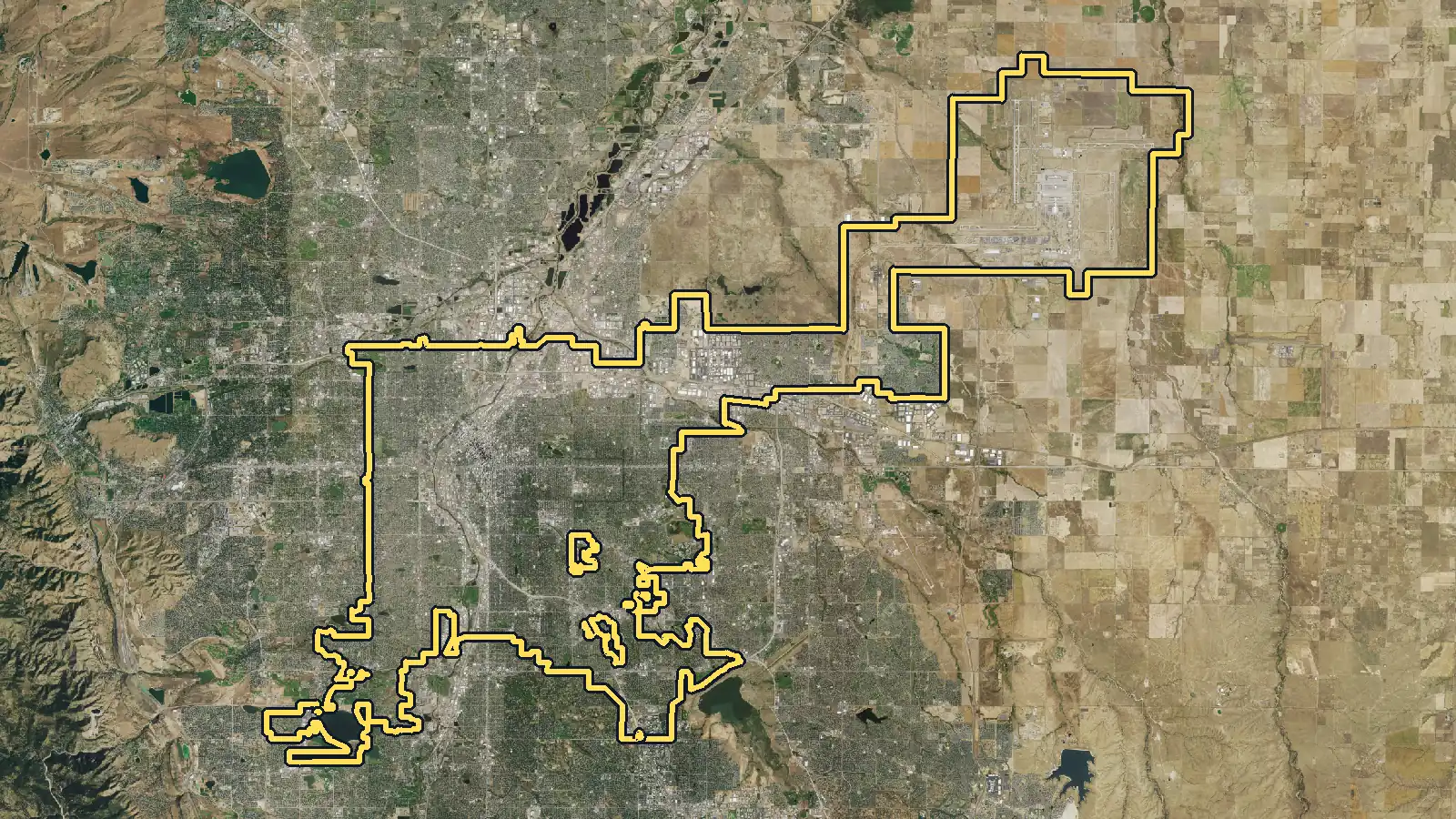
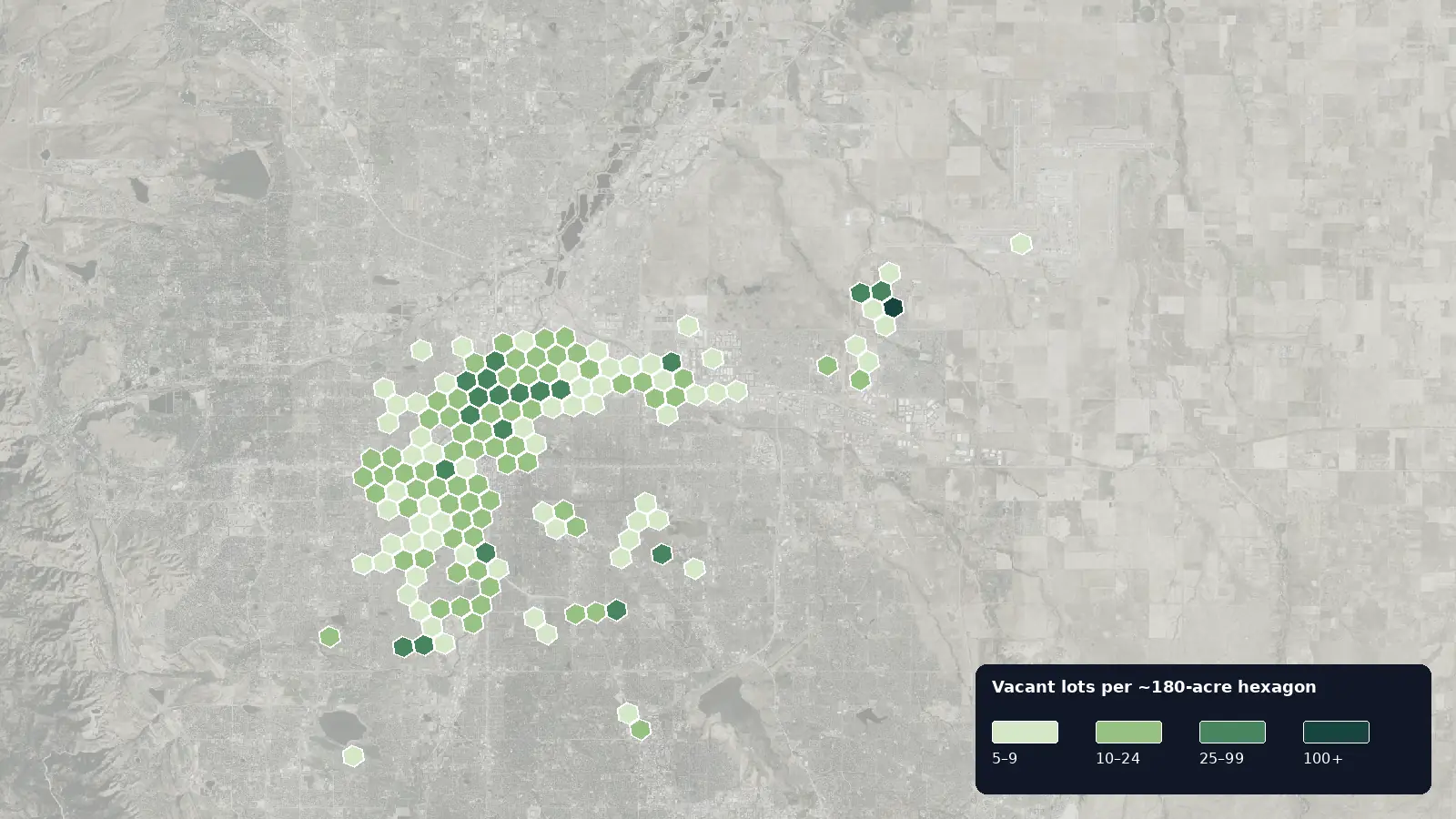
Where we buy
Areas we cover in Denver County
These pages cover the largest lot markets in Denver County. We buy land anywhere else in the county too: send the parcel details through the form below.
Selling here
How selling land works in Denver County
Start with the parcel, recorded title and zone lot
Three records answer three different questions. The Assessor provides the reported owner, legal description and assessment information. The Clerk and Recorder records land transactions, deeds of trust and other documents in the county records database. Community Planning and Development handles zoning and permits. Denver says a zone lot may differ from both an Assessor tax parcel and a subdivision lot. A parcel shown separately for tax purposes therefore does not by itself prove that it is a separate zone lot. We verify title, access and the controlling zone lot before making an offer. [2],[3],[5]
Small urban parcels need a builder-lot review
Denver County's 2026 extract contains 2,706 parcels in the county's VACANT LAND class, with a median lot size of 0.19. sliver / remnants are the largest size group at 20%. Those countywide numbers describe the filtered roll, not a promise that every parcel can hold a house. Denver also says a zone lot may differ from an Assessor tax parcel or subdivision lot. A buyer therefore still needs legal access, a usable zone lot, adequate dimensions, utility feasibility and a permit path. We underwrite the individual parcel instead of assigning the same value to every vacant tax account. [1],[5],[4]
Zoning and construction review are separate steps
Community Planning and Development reviews zoning, building plans, permits and inspections. Most construction requires permits, and the governing zoning code must be identified before a seller treats the lot as buildable. Denver has both the current zoning code and Former Chapter 59, which still applies to about 17% of the city-county. Even when the proposed use is residential, setbacks, lot configuration, parking, access and other standards can change what fits. A concept that appears possible on an online map can still need formal review. For a cash offer, we account for that entitlement and design risk rather than representing that the county has approved a future house. [4],[5]
Taxes and remote ownership can be handled at closing
Colorado's standard property-tax schedule permits full payment by April 30 or half payments by the last day of February and June 15. A current bill is still needed because an old statement will not show later interest, payments or liens. Mailing records also show that 22% of the filtered vacant parcels have an owner address outside Colorado. Remote ownership does not prevent a voluntary sale. The title company can confirm the seller, obtain recorded documents, calculate approved payoffs and coordinate signatures. With the seller's consent, confirmed taxes or liens can be paid from sale proceeds instead of requiring a separate trip to the county. [6],[1],[3]
Step by step
How do I sell my land in Denver County?
From your first message to money in hand, with nothing left out. Requesting an offer costs nothing and commits you to nothing.
See every detail of the process-
Tell us about your land
Fill out the short form (about 60 seconds) or email us. A land specialist reaches out to confirm the details, usually the same business day.
-
Get your cash offer within 24 hours
We review the property and send a written, no-obligation cash offer within 24 hours. It is a real number, not a range. Take it or leave it, with no pressure either way.
-
Sign electronically
If you accept, everyone signs the purchase agreement electronically. There is nothing to print or mail at this stage.
-
We inspect, the title company verifies
Our team inspects the land and an independent title company runs a title search for liens or taxes owed. If the land does not pass inspection, you are never charged anything.
-
Close and get paid
The title company prepares the closing documents for notarization and issues your funds by standard check, overnight check, or wire transfer. A typical sale closes in 10 days.
Questions
Selling land in Denver County: common questions
Where should I verify ownership of Denver County land?
Start with the Assessor for the reported owner, legal description and property information, then use the Clerk and Recorder for recorded land transactions and other documents. The closing still runs through an independent title company, which completes the title work before money changes hands.
Does a Denver tax parcel automatically equal one buildable lot?
No. Denver explains that a zoning-code zone lot can differ from a tax parcel or subdivision lot. Confirm the controlling zone lot, zoning code, dimensions, access and permit requirements before treating a vacant parcel as a separate homesite.
Which zoning code applies to my Denver County parcel?
It depends on the parcel. Denver administers the current zoning code and Former Chapter 59, which still covers about 17% of the city-county. Community Planning and Development can identify the governing code and the review path for a proposed use.
When are Colorado real-property taxes normally due?
The standard schedule is full payment by April 30 or two equal installments, with the first due by the last day of February and the second by June 15. Verify the current account before closing because unpaid amounts can accrue interest and other charges.
Can I sell Denver County land while living outside Colorado?
Yes. 22% of owners in the filtered vacant-parcel set have an out-of-state mailing address. Parcel Buyers supports electronic signing and mail-away closings through an independent title company, with payment by check or wire.
Owner resources
Guides for your situation
- Can You Sell Land With a Lien?
Yes. Land with a lien can often be sold, but signing a deed does not by itself erase a valid claim. The lien may need to be paid, released, discharged, or otherwise resolved under the law that applies. With the seller's consent, an approved payoff can come from sale proceeds at closing. If the balance or lien is wrong, dispute it before closing and require proof of the cure.
- Can You Build on a Vacant Lot?
Maybe. A vacant lot is buildable only if the proposed use fits the rules that apply to that parcel and the site can satisfy access, utility, environmental, and permit requirements. Start with the local planning or zoning office, confirm that the parcel is a legal lot, and get a written parcel-specific answer. A zoning label or tax parcel number alone is not approval to build.[1][2]
- Selling Land With Boundary or Survey Problems
Land with a boundary or survey problem can still be offered for sale, but closing may depend on how the buyer, lender, and title insurer handle it. The contract and closing requirements determine whether a survey is needed. A fence does not by itself establish the record boundary. A survey can identify gaps, overlaps, occupation lines, and encroachments; a competing Florida title claim may require a quiet-title action.[1][6][7]
Your written offer
Get your cash offer
Four short steps, about 60 seconds. We review your property and send a written, no-obligation cash offer within 24 hours. You can take it or leave it.
What happens after you send this
- A land specialist reaches out, usually the same business day, to confirm the details.
- You get a written cash offer within 24 hours: a real number, not a range.
- You decide. Requesting an offer costs nothing and commits you to nothing.
You will never be asked to pay us anything. No deposit, no processing fee, no closing-cost advance.
How we made this page
Parcel Buyers is a land-buying company based in Florida. We buy vacant land directly from owners and publish these local pages so owners can see what land in their area is doing before they sell, to us or anyone else. We count the tax-roll figures ourselves from state data, take local rules and fees from the official sources listed below, and use AI tools to help research and draft the text. Every number links to its source, and we update the page when the data changes.
Method and sources
Parcel and assessment figures cover all parcels in Denver County. Source [1] is our own aggregate count of the State of Colorado Public Parcels county extracts or, for Pueblo, Huerfano and El Paso, the official county source named in the source data. Vacant-lot counts use existing OIT counties retain their documented 0100/0400 or county vacant-class rules. Pueblo uses the county proxy Improvem_1 = 0, LandActual > 0, TaxExempt = no and MobileHome = no; 11 of 120 sampled rows intersected a county building footprint (9.2% error band). Huerfano uses use_code 100/400 with actual_imp = 0. El Paso uses numeric LANDCODE 100 with blank/zero IMPCount (the current export encodes zero as blank) and drops legal descriptions starting TR, TRACT or OUTLOT. These are source-record screens, not physical-vacancy or buildability findings. Lot sizes use existing OIT counties retain the documented acreage, square-foot or geometry method. Pueblo uses county SHAPE.STArea() square feet. Huerfano converts land_size_ according to land_units (SF stays square feet; AC is multiplied by 43,560) and otherwise uses positive master_acr. El Paso converts county Acreage to square feet. All are bucketed with the Parcel Buyers lot sizing chart ([low, high) square feet). Values use county-specific assessor fields: OIT apprValTot for the original counties, Pueblo LandActual, Huerfano total_actu and El Paso MARKETVALUE. These are assessor values, not sale prices, offers or parcel appraisals by Parcel Buyers. Owner locations use owner mailing state of record from each approved source; in_state = Colorado. Mailing state does not prove residence, owner type, motivation or willingness to sell. Owner names were used only in-memory or in a server-side grouped query for the 10% concentration gate and were never stored. Sale figures use existing OIT counties retain their documented calendar-2025 last-sale screen. Pueblo has no sale field. Huerfano has no price field; sale_date supports a 2025 qualifying parcel-row transfer count only, not a price or deed count. El Paso prices require a 2025 last-sale date, $1,000+, and AsrSaleCmnt exactly Vacant Land or Arms-Length Sale; medians publish only at n >= 10. Treat medians as a guide to county records, not as an offer or an appraisal. Page updated October 7, 2026.
State of Colorado Public parcels were accessed on 2026-10-01 from https://gis.colorado.gov/public/rest/services/Address_and_Parcel
- [1] Colorado county assessor and GIS sources and State of Colorado OIT (data); Parcel Buyers (analysis), Colorado county assessor and GIS parcel sources (Pueblo, Huerfano and El Paso) and State of Colorado OIT Colorado Public Parcels (accessed 2026-10-03)
- [2] City and County of Denver, Denver Assessor assessment frequently asked questions (accessed 2026-10-07)
- [3] City and County of Denver, Denver Clerk and Recorder duties and land records (accessed 2026-10-07)
- [4] Denver Community Planning and Development, Plan review, permits and inspections (accessed 2026-10-07)
- [5] City and County of Denver, Denver building and zoning codes (accessed 2026-10-07)
- [6] Colorado General Assembly, HB 25-1199 final fiscal note and current property-tax schedule (accessed 2026-10-07)
- [7] City and County of Denver, 2026 Annual Disclosure Statement (accessed 2026-10-07)